
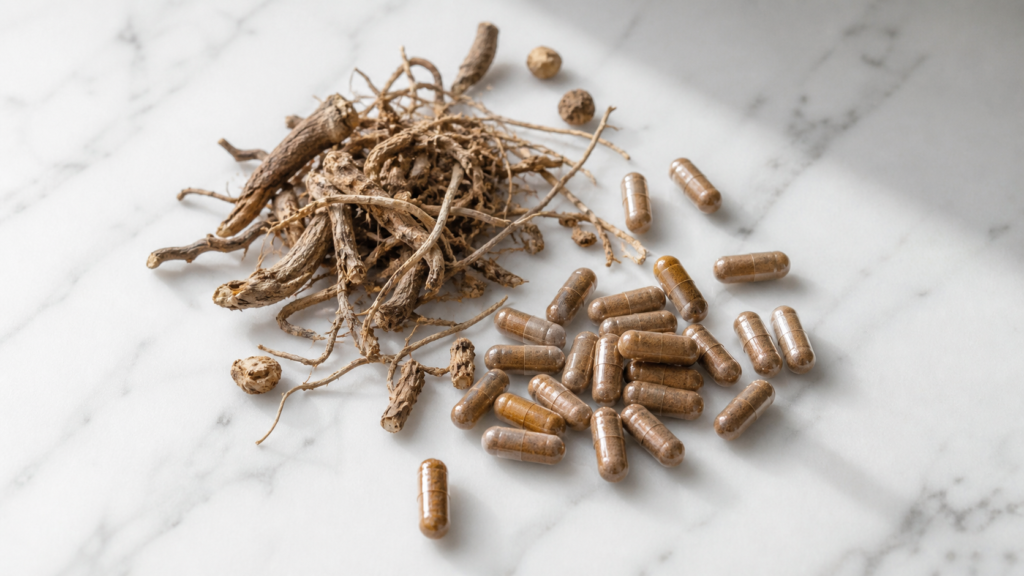
valerian root was the last supplement i tried before i gave up on the “natural sleep aids” category entirely. i’d done chamomile, magnesium, melatonin, ashwagandha — each one with diminishing returns and increasing cynicism. valerian was the one a friend kept insisting worked for her, so i ordered a bottle mostly to have something to report back.
it worked. not immediately, not dramatically, but after about two weeks of taking it consistently before bed i was falling asleep faster and waking up less. i also smelled faintly terrible, which nobody had mentioned. that’s a separate conversation.
the question most people actually have isn’t whether valerian root works for sleep — there’s decent evidence it does for a lot of people — it’s which form, what dose, and what to look for on a label. that’s what took me the longest to figure out, and what i’d want someone to tell me before i bought three bottles of the wrong thing.
why it does something at all
i was skeptical of valerian for a long time because “herbal supplement” and “sleep” in the same sentence usually means placebo with a nice label. what changed my mind was understanding the specific mechanism — which is actually pretty well-documented compared to a lot of this category.
valerian contains a compound called valerenic acid that acts on GABA receptors. if you’ve ever heard benzodiazepines described as “GABA agonists” — same general idea, much gentler version. GABA is basically your nervous system’s off switch, and valerian nudges it in the right direction without the dependency risk or the morning grogginess that comes with prescription sedatives. it’s not going to knock you out. it’s more like lowering the activation threshold so sleep becomes easier to fall into rather than something you’re fighting for.
the research is more consistent than i expected. a 2020 meta-analysis covering 60 studies concluded valerian can be a safe and effective treatment for sleep problems. the catch — and this is important — is that outcomes varied a lot depending on which form of valerian was used. which is why the “best valerian root for sleep” question isn’t just marketing fluff. the form actually matters.
whole root vs extract — the thing most people skip
this is probably the most useful thing i can tell you and it’s almost never on the bottle in a useful way.
valerian products come as either dried whole root — just ground up root in a capsule — or as standardized extract, where they’ve isolated specific compounds and concentrated them. standardized extract sounds more rigorous. turns out it might work worse.
that same meta-analysis found that studies using whole root or rhizome consistently showed improved sleep, while studies using extracts got mixed results — some positive, some no effect at all. the likely explanation is that valerian’s effects come from multiple compounds working together, not just valerenic acid on its own. pull out one thing and standardize it, and you lose whatever synergy was happening between the others. the whole root, messy and unrefined, seems to work more reliably than the cleaner-sounding extract version.
when you’re reading labels: look for “dried valerian root” or “valerian root powder” in the ingredients. if it says “standardized to 0.8% valerenic acid” — not necessarily useless, but a spottier track record in actual research.
dose and timing
the range that shows consistent effects in research is 450-600mg of whole root, thirty to sixty minutes before bed. most studies that found positive results ran for at least two to four weeks before reporting reliable improvement.
that second part is what trips most people up. valerian is not melatonin. you don’t take it and feel something the first night. most people notice mild effects in week one, more consistent change somewhere in weeks two to four. three nights of nothing is not meaningful data — you haven’t given it time. this is the same slow-build pattern as magnesium glycinate, which also requires consistency before the effect becomes reliable.
taking it as-needed doesn’t work for this reason. daily consistency is what produces the effect. treating it like a “take it when desperate” option is the fastest way to conclude it doesn’t do anything — because at that dose frequency, it probably won’t.

capsules vs tea vs tincture
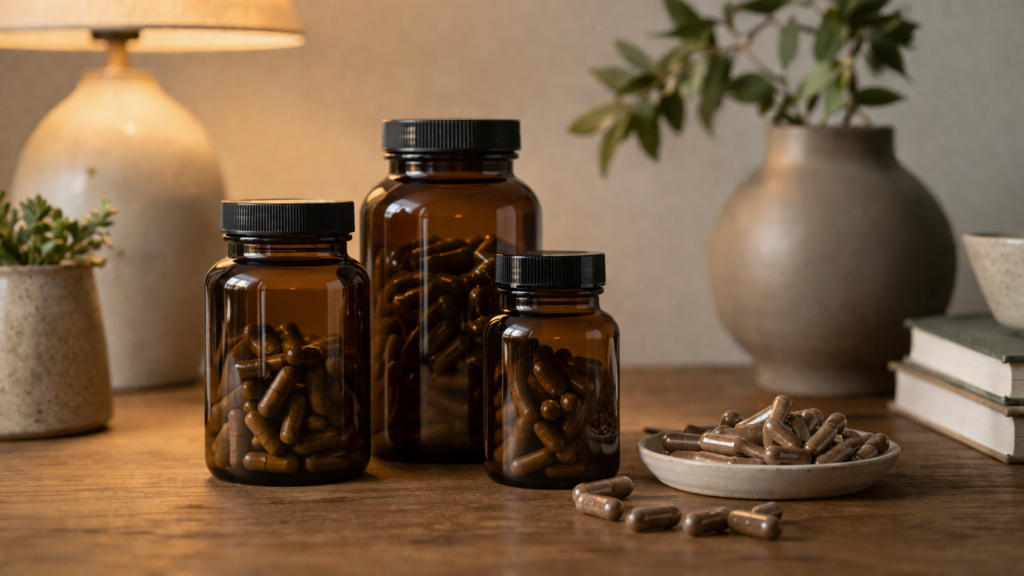
capsules are what most people should use, for one very practical reason: valerian smells genuinely awful. somewhere between gym bag and forest floor on a humid day. capsules contain it completely. if you open a bottle and it smells totally neutral — mild red flag, actually. a strong smell suggests there’s real root in there. a bottle of nothing in particular smelling like nothing in particular might be exactly that.
tea works and is the traditional form. the issue is inconsistent dosing — how much active compound ends up in your cup varies a lot by brand and steep time. ten minutes minimum, and check whether the brand specifies root content per bag rather than just gesturing at “valerian blend.”
tinctures are alcohol-based liquid extracts, dropped into water. they absorb quickly, dose accurately, taste strong. fine as an option if the alcohol base isn’t a concern for you.
combinations that work better than solo
valerian with hops is the most researched pairing — not beer, dried hops extract — with several studies showing better outcomes than either alone. hops has mild sedating properties through mechanisms that happen to complement valerian’s effects.
valerian and lemon balm together has decent evidence specifically for anxiety-driven sleep problems. lemon balm inhibits an enzyme that breaks down GABA, so pairing it with something that increases GABA produces a stronger combined effect than either does on its own.
passionflower combined with valerian shows up in sleep studies with positive results — passionflower works specifically on rumination and anxious thought patterns, which makes it a useful complement to valerian’s more direct sedating effect. if your main problem is a mind that won’t stop rather than physical restlessness, this combination is worth trying.
how it fits with other things you might be taking
valerian and magnesium glycinate both work on the GABA side of sleep — overlapping mechanisms, but not redundant. taking both is fine and probably additive. just start them at different times if you want to know which one is actually doing what.
ashwagandha works through cortisol reduction rather than GABA, addressing the stress-activation piece instead of the calming piece. combining them makes sense if your sleep problem has both an anxiety component and a physical tension component — they’re working on different parts of the same problem.
glycine works on body temperature and sleep architecture — different mechanism again. these stack reasonably because they’re not duplicating effects.
what to avoid combining: prescription sedatives, benzodiazepines, anything your doctor has put you on for anxiety or sleep — talk to them first. the additive sedative effect can be more significant than people expect. alcohol is in this category too. one drink plus valerian is more sedating than either alone, which sounds fine until you factor in how alcohol fragments the second half of sleep and specifically suppresses rem.
what to look for on the label
whole root over extract. “dried valerian root” or “valerian root powder” in the ingredient list rather than “standardized to X% valerenic acid.”
dose in the 450-600mg range per serving. outside this range isn’t necessarily wrong but it’s further from what the research actually used.
third-party testing — NSF certified, USP verified, or Informed Sport on the label means an independent lab has verified the contents match the claims. for herbal supplements especially, where potency varies with growing conditions and processing, this matters more than it does for a straightforward mineral supplement.
who it helps most and when to give up on it
valerian works best for sleep problems where the underlying issue is difficulty settling — a nervous system that won’t downregulate, anxiety-driven insomnia, physical tension that persists into bed. that’s the GABA piece it’s directly addressing.
it doesn’t touch sleep problems driven by other things — screens keeping melatonin suppressed, temperature, inconsistent schedule, sleep apnea. if you’ve taken it daily for four weeks at the right dose and nothing has shifted, it’s worth asking whether the thing driving your sleep problem is actually GABA-related or whether it’s something valerian can’t reach.
give it four weeks of daily use before deciding. keep the other fundamentals in place — consistent wake time, cool room, actual wind-down before bed. valerian works best on top of a sleep environment that’s at least trying, not instead of one.
the Sleep Foundation has a thorough overview of valerian root for sleep if you want to go deeper into the research.
the smell thing, one more time: real, unavoidable, and actually a sign of a decent product. capsules handle it entirely. you’ll be fine.
This article is for informational purposes only and does not constitute medical advice. Always consult a qualified healthcare professional before making changes to your health routine.