Best Sleeping Position for Sciatica: Because My Leg Apparently Hates Bedtime
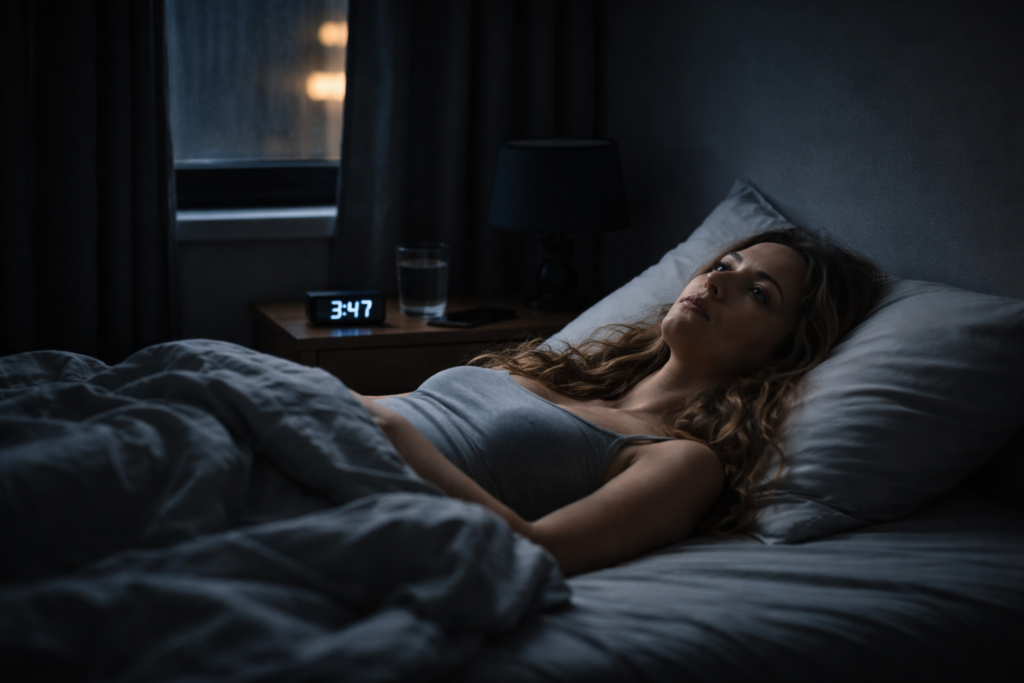
there is a very specific kind of betrayal that happens when you are exhausted, actually exhausted, the kind where your eyes feel gritty and your brain has stopped making useful thoughts, and then your leg decides bedtime is the perfect moment to become electric.
not sore. sore would be fine. sore is normal. sore is “I walked too much” or “I lifted a box in a stupid way.”
sciatica is different.
it starts somewhere around the lower back or butt, then travels down the leg like it has somewhere important to be. sometimes it burns. sometimes it zaps. sometimes it feels like a deep, rude ache behind the thigh. and sometimes it does all of those things in one night because apparently consistency is too much to ask.
I used to think the answer was just “find the best sleeping position for sciatica” and then everything would be solved. like there was one sacred position. one perfect arrangement. one pillow angle known only to physical therapists and people with adjustable beds.
there isn’t.
but there are positions that usually make things less terrible.
the short version, if you are reading this in bed and already annoyed: the best sleeping position for sciatica is usually on your side, on the side that hurts less, with a firm pillow between your knees. if that does not work, try sleeping on your back with pillows under your knees. if lying flat feels awful and sitting slightly reclined feels better, a recliner or wedge pillow may be your friend for a while.
not forever. not as a personality. just for now.
and yes, this depends on why your sciatic nerve is angry in the first place. Mayo Clinic explains that sciatica often happens when something near the lower spine, like a herniated disk or extra bone growth, puts pressure on nerve roots. That is why the pain can run from the low back into the buttock and down the leg. It is not “just leg pain.” it is nerve pain with travel plans.
which is why your sleep position matters.
not because posture is magic. because pressure and twisting are real.
the side-sleeping thing, but actually set up right
side sleeping is where I would start.
not because it sounds fancy. it does not. it sounds like something your aunt would tell you while handing you a random cushion. but it works for a lot of people because it can take some pressure off the lower back and pelvis.
here is the version worth trying:
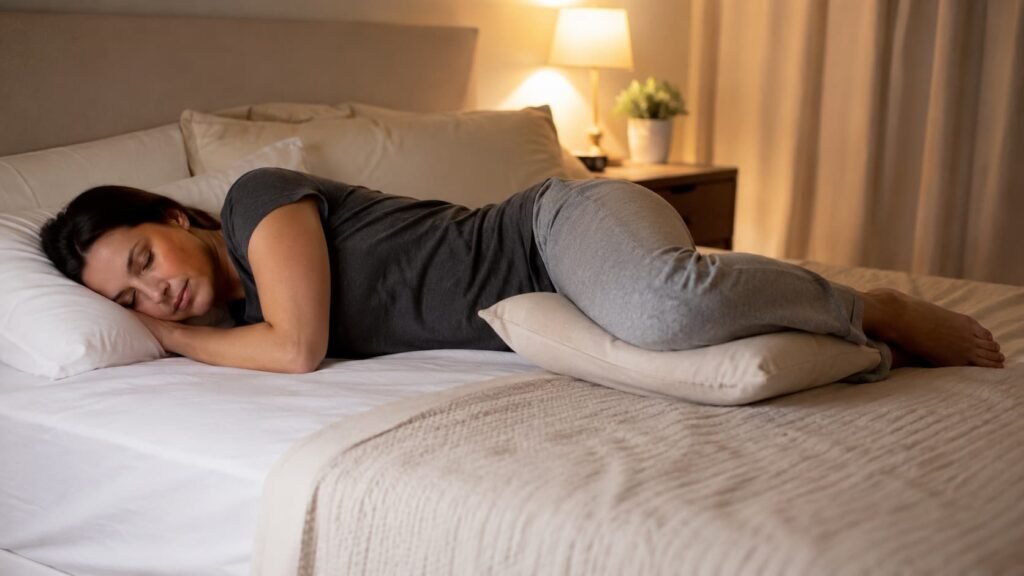
lie on the side that hurts less. for a lot of people, that means if the right leg is screaming, sleep on the left side. bend the knees a little. not fetal-position dramatic. just soft. then put a firm pillow between the knees so the top knee does not drop forward.
that dropping-forward thing is sneakier than it sounds.
you think you are lying on your side. really, your top leg is pulling your hip forward, your pelvis is rotating, your lower back is quietly joining the chaos, and the nerve is sitting there like, absolutely not.
the pillow is doing the unglamorous work of keeping your top leg from dragging your hip forward.
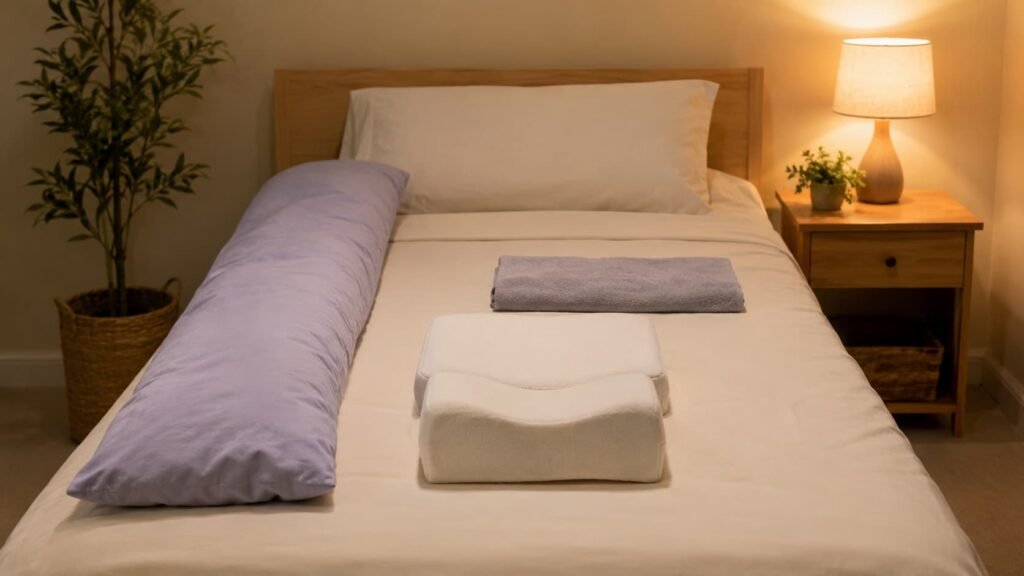
if your top knee keeps falling forward anyway, use a longer body pillow and hold onto it like you are not messing around.
Cleveland Clinic gives similar advice about using pillows for support when sleeping with sciatica, especially between the knees, because it helps align the hips and reduces pressure around the pelvis. which is the polite medical way of saying: stop letting your body fold itself into a bad camping chair all night.
also, support the ankles if you can. I hate that this matters, but it does. if your knees are supported and your top foot drops down, the leg can still tug the hip forward. this is why a body pillow sometimes works better than a small knee pillow. it keeps the whole leg from wandering off and causing problems.
you do not need a special “sciatica pillow” with aggressive branding and a photo of someone smiling too much. a firm regular pillow can work. a body pillow can work. a folded blanket can work if it holds its shape. the point is not the product. the point is keeping the hips stacked.
boring. effective. annoyingly specific.
——
back sleeping, but please lift the knees
sleeping flat on your back sounds like it should be neutral and healthy and peaceful.
sometimes it is.
sometimes it feels like your lower back is being pulled into a shape it did not agree to.
if you are going to sleep on your back with sciatica, try putting one or two pillows under your knees. not under your feet. not a decorative little pillow floating vaguely nearby. actually under the knees, enough that the legs soften and the lower back can relax a little.
this can reduce the arch in your lower back. for some people, that takes pressure off the irritated area enough to let the leg calm down.
the setup is simple:
head and neck supported. shoulders on the mattress. knees slightly raised. feet relaxed. no dramatic pillow mountain. no forcing your lower back flat like you are trying to win a posture contest.
just less strain.
if one pillow feels like nothing, add another. if two pillows make your hips feel jammed, use a folded blanket instead. the best sleeping position for sciatica is not the one that looks good in a diagram. it is the one where your symptoms quiet down.
that is the test.
if the pain moves farther down the leg, gets sharper, or brings more tingling into the foot, I would change position. if the pain feels less intense or less far-reaching, you may be closer.
not scientific enough for a textbook, maybe. very useful at 1 a.m.
the recliner counts. I am sorry and also congratulations.
some people with sciatica sleep better in a recliner than in bed.
this feels illegal somehow. like adulthood has gone wrong. but it can make sense.
a slightly reclined position, or a position where the hips and knees are bent a bit, can feel better for certain types of lower-back irritation. especially if standing tall or lying flat makes symptoms worse, but bending forward gives relief.
that can happen with spinal stenosis for some people. not everyone. but some.
so yes, a recliner can be a temporary sleep strategy. so can a wedge pillow. so can an adjustable bed if you have one. I would not buy an expensive bed at midnight while in pain, because midnight shopping is how people end up with strange devices and regret. but if you already have a recliner and it helps, use it.
sleep matters.
just watch the signal your leg gives you. if reclining makes the pain calmer, fine. if it makes the pain shoot farther down, burn harder, or add numbness, that is not your setup.
same rule as always: less nerve drama wins.
stomach sleeping is where things get tense
I know stomach sleepers do not want to hear this.
you people are loyal. you will defend stomach sleeping with the energy of someone defending a childhood friend.
but stomach sleeping is usually not the best sleeping position for sciatica. it can increase the arch in the lower back, twist the neck, and leave one hip turned out for hours. if your sciatic nerve is already irritated, this is not exactly a peace offering.
if you truly cannot fall asleep any other way, make it less bad.
use a thin pillow under your head, or no pillow if that feels better. put a flat pillow under your pelvis or lower belly. try not to hike one knee way up toward your chest, because that can twist the pelvis and lower back.
and if stomach sleeping makes your leg symptoms worse, believe the symptoms.
not the habit. not the fact that you have slept this way since 2009. the symptoms.
the mattress is probably involved. rude, but true.
I do not love mattress advice because it always turns into a sales pitch five seconds later.
so here is the non-sales version.
if your mattress sags under your hips, your lower back may twist all night. if your mattress is hard as a sidewalk, your hip and shoulder may take too much pressure, especially when side sleeping. a medium-firm mattress often works better for back pain and sciatica than either extreme, but comfort still matters.
you are looking for support plus cushioning.
not cloud. not concrete.
same with pillows. the head pillow matters more than people admit. if it is too high, your neck and upper back get pushed forward. if it is too low, your head drops and your spine tilts. if you sleep on your side, the pillow should fill the space between your shoulder and head. if you sleep on your back, it should support your neck without folding your chin toward your chest.
none of this is glamorous.
it is just reducing unnecessary irritation. which is basically the entire sciatica bedtime strategy.
set things up before you are already mad
the worst time to build a pillow system is after the pain has already woken you up.
you are groggy. annoyed. one leg is buzzing. the pillowcase is somehow twisted. the blanket is trapping your foot. everything feels personal.
do the pillow arrangement before you are tired enough to start bargaining with the mattress.
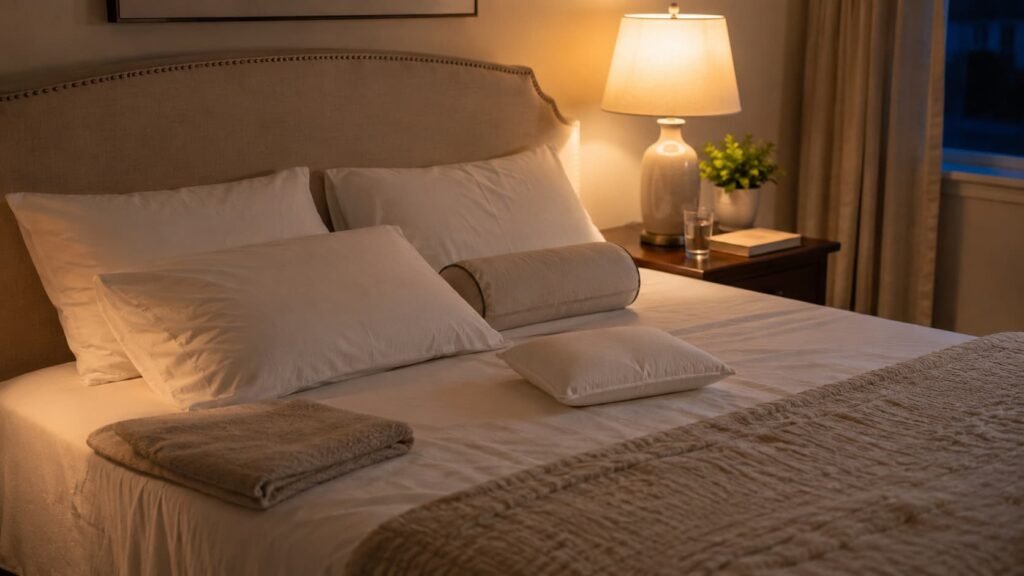
it sounds ridiculous until you are not rebuilding your entire bed at 2:40 a.m.
keep one pillow ready for between your knees. one extra pillow or folded blanket ready for under your knees if you roll onto your back. maybe a small towel near the bed if you need waist support while side sleeping.
if there is a gap between your waist and the mattress when you lie on your side, a small folded towel there can help. not always. but sometimes it keeps your spine from dipping sideways. again, tiny adjustment. weirdly big difference.
this is the part nobody wants to do because it feels too simple.
then it helps and you get annoyed that you spent three weeks suffering before trying it.
——
why night makes sciatica feel louder
during the day, pain has competition.
emails. errands. the sink. traffic. someone asking where the scissors are even though they are exactly where they always are.
at night, there is nothing. no distraction. no movement. just the nerve and your thoughts, which are usually not at their best after midnight.
also, lying still can put steady pressure on the same irritated spots. and if you have been sitting all day, especially in a chair that slowly turns your posture into punctuation, the nerve may already be irritated before you even get into bed.
AAOS describes sciatica as nerve pain often caused by compression around the lumbar spine, and notes it can feel sharp, electrical, burning, or like pins and needles. which is exactly why “just sleep it off” is such useless advice. you are trying. the nerve is not cooperating.
a short walk before bed can help some people. not a workout. not a heroic stretching routine. just five slow minutes so your back and hips remember they are allowed to move.
heat helps some people. cold helps others. I wish this was cleaner. it is not. try one for fifteen or twenty minutes and notice what happens. if heat makes it throb, stop. if cold makes everything tighten, stop. your body is allowed to have preferences.
stretching is the same. gentle is fine. aggressive is suspicious. if a stretch sends lightning down your leg, that is not “deep release.” that is your nerve asking for legal representation.
——
small midnight checklist, because sometimes thinking is too much
right-side sciatica? try left side with a pillow between the knees.
left-side sciatica? try right side with a pillow between the knees.
both sides feel awful? try back sleeping with knees elevated.
flat on your back feels terrible but sitting reclined helps? try a recliner or wedge pillow.
stomach sleeping is your only option? thin pillow, pillow under pelvis, no dramatic hip twist.
pain moving farther down the leg? change position.
pain calming down or staying more contained? maybe stay there and let your body settle.
that is enough. you do not need to solve your whole spine tonight.
——
when pillows are not enough
most mild sciatica improves with time and conservative care, but there are red flags you should not ignore.
get medical help quickly if you have sudden leg weakness, loss of feeling, trouble controlling bowel or bladder function, severe worsening pain, fever, or pain after a serious injury. Mayo Clinic specifically lists sudden numbness or weakness, pain after violent injury, and bowel or bladder control problems as reasons to seek immediate care.
also, if it has been more than a week and the pain is severe or getting worse, do not keep pretending this is just a pillow puzzle.
sometimes you need physical therapy. sometimes medication. sometimes imaging. sometimes a clinician looking at your actual body instead of you reading twelve tabs at midnight and diagnosing yourself through vibes.
for more sleep-related pain stuff, you might also want to read how to sleep with lower back pain, why sleeping with a pillow between your knees can help, or why it takes so long to fall asleep if pain has turned bedtime into a whole mental event.
useful outside references: Mayo Clinic on sciatica symptoms and causes, Cleveland Clinic on sleeping with sciatica, and AAOS OrthoInfo on sciatica.
——
so, best sleeping position for sciatica. if I had to make it painfully simple:
side that hurts less.
pillow between knees.
hips stacked.
spine not twisted.
if that fails, back sleeping with knees supported.
if that fails and reclining helps, recline.
that is the whole thing, mostly.
not perfect. not magical. not guaranteed to make your sciatic nerve become a calm and reasonable citizen by morning.
but it gives the nerve fewer reasons to complain. and sometimes that is enough. enough to stop clenching your jaw. enough to quit flipping sides every four minutes. enough to drift off before you start wondering whether your mattress has personally betrayed you.
tonight, do the simple version.
put the pillow between your knees.
let your hips stack.
stop trying to win sleep.
just make the leg a little quieter.
This article is for informational purposes only and does not constitute medical advice. Always consult a qualified healthcare professional before making changes to your health routine.