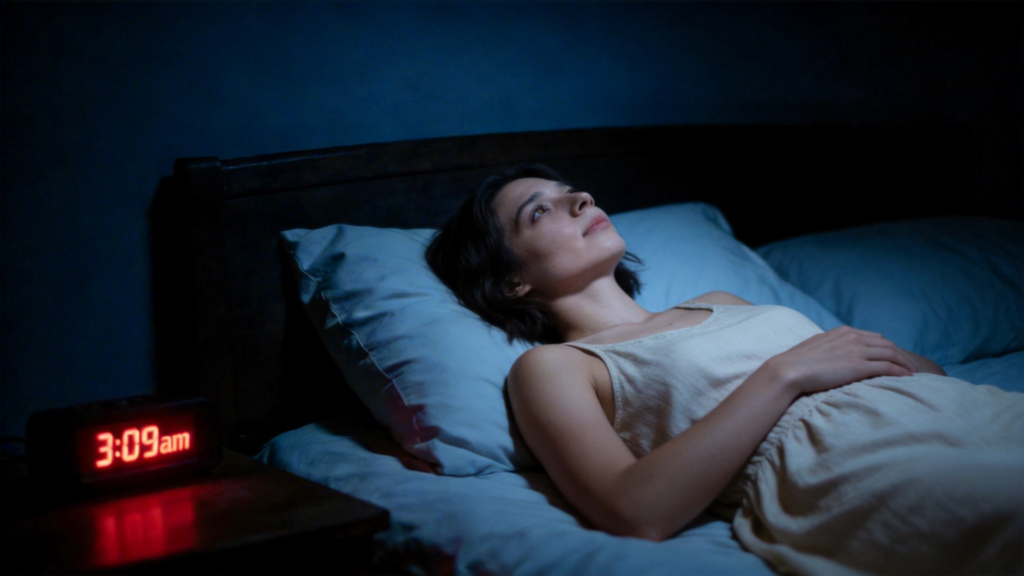
Can sleep paralysis kill you? You wake up and nothing works — can’t move, can’t make a sound, something in the corner of the room that might be real. And somewhere in the middle of that your brain asks a very serious question: is this actually it.
I want to lead with that before anything else. if you’re reading this right after an episode, that’s the part that matters.
you’re okay.
you were okay the whole time, even when it felt nothing like that.
but “you’re okay” doesn’t always land when you’ve just been through something that felt like the opposite of okay. so here’s the actual explanation. the one that made things feel less terrifying once I understood it.
What actually happens during sleep paralysis
every night, during REM sleep — the deep stage where dreaming happens — your brain deliberately cuts the signal to your voluntary muscles. arms, legs, your whole body basically. paralyzed, on purpose, so you don’t physically act out whatever’s happening in your dreams. without that, you’d be thrashing around and walking into walls every single night of your life.
sleep paralysis is just that process running slightly late.
your mind came back online. your body didn’t get the memo yet. for a few seconds, or a minute, maybe two — you’re lying there fully aware of the room around you, but still locked in that REM-state paralysis your brain was running while you slept.
that’s it. that’s the whole thing.
not a seizure. not something catastrophic happening in your chest. just a timing gap between two systems that are usually perfectly in sync, and occasionally aren’t.
I kept expecting there to be more to it when I first started looking into this. there isn’t. it’s almost boring once you see it clearly. almost.
The breathing part — because this is where most people’s brain goes
During sleep paralysis, the paralysis only affects voluntary muscles. your diaphragm is not one of those. neither are your eye muscles. both of those keep going through the entire episode, no exceptions.
which means you are breathing.
even when it feels completely impossible that you are, you are. air is moving. oxygen is getting in. your body is doing what it’s supposed to do.
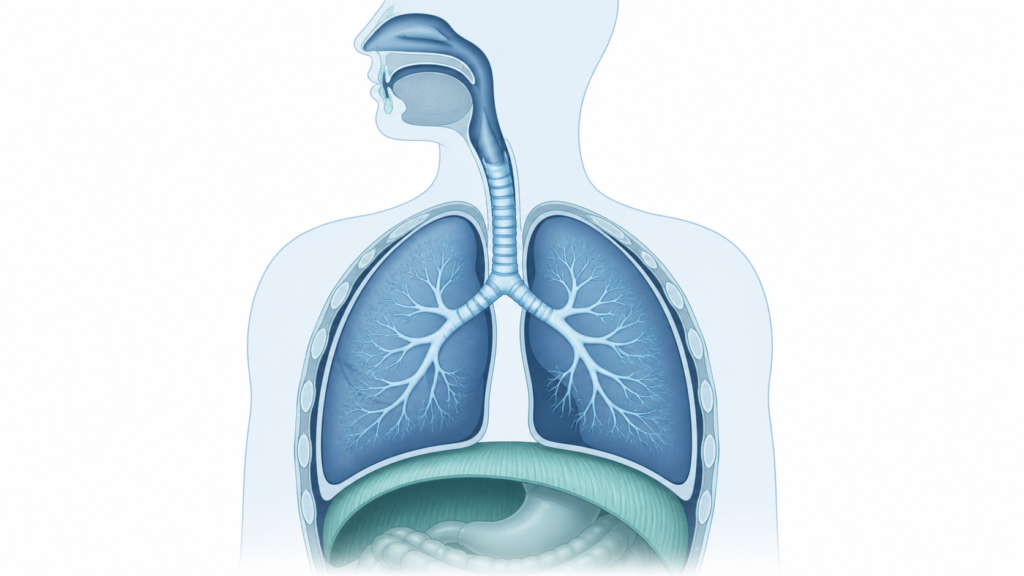
Your diaphragm keeps working through every episode — airway open, oxygen moving.
the suffocation feeling is a hallucination. I know that sounds dismissive — it doesn’t feel like a hallucination, it feels extremely physical and extremely real — but that’s what it is. sleep paralysis almost always comes with a chest pressure sensation, like something heavy sitting on you. your brain, which woke up already running threat-detection at full intensity, takes “pressure on chest” and translates it to “I can’t breathe.”
the translation is wrong. the alarm went off. the building is fine.
I kept that specific framing in my head for a while during bad patches. the breathing is real. the suffocation is the alarm. it helped more than I expected it to.
Why it feels so specifically terrible — not just scary, like something deeper and older than scary
the hallucinations are a big part of it.
sleep researchers have been cataloguing these for decades and they cluster into three types pretty consistently. the intruder one — a presence in the room, threatening, sometimes visible at the edges of your vision. the chest pressure one we already covered. and then there’s this category of floating or out-of-body sensations that some people get instead.
your threat-detection system — the part of your brain that evolved over a very long time to notice things trying to kill you — takes all of that in and responds the way it was built to respond. full alert. heart rate up. every instinct in your body screaming that you need to move, now, immediately.
and you can’t.
that’s the part that makes it unbearable instead of just strange. the response fires and it has nowhere to go. so it compounds. trying harder to move makes it worse. the more activated your nervous system gets, the more vivid everything feels, and the longer the whole thing tends to last.
none of that is physical danger. it’s just your threat system doing its job with exceptional commitment toward something that isn’t actually a threat.
Could the stress response itself be dangerous, though
The stress response during sleep paralysis is intense but temporary — and this was the question I actually needed answered. not “is sleep paralysis dangerous” in some vague sense — specifically, could the spike in heart rate and cortisol do damage.
for healthy people: no. a temporary stress response from something frightening is something your cardiovascular system handles constantly. horror movies. near-misses in traffic. nightmares. the mechanism is the same category of thing, even if sleep paralysis is more prolonged and more intense.
there’s one real exception worth naming. if you have a pre-existing cardiac arrhythmia or another heart condition — that’s a conversation to have with your actual doctor, not because sleep paralysis is uniquely dangerous but because significant stress responses are worth factoring in when you have a known heart condition. if that’s not you, this isn’t your concern.
for everyone else: the episode ends. heart rate comes back down. cortisol clears. no lasting harm from the episode itself.
What makes it happen more than once
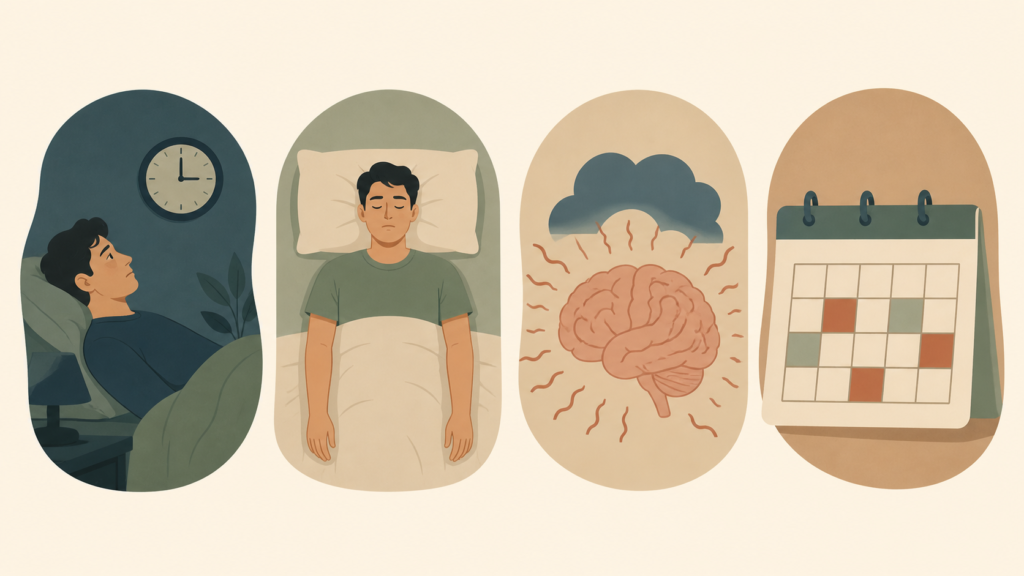
The most common triggers: sleep debt, back sleeping, anxiety, and an inconsistent schedule.
one or two times in your life — nearly a third of people experience this at some point. not something to analyze too hard.
multiple times a month, or more — that’s your sleep flagging something. usually not something dramatic. usually something pretty fixable.
the biggest one is just not sleeping enough. sleep debt destabilizes your REM cycles and messy REM is where sleep paralysis lives. wake times shifting around between weekdays and weekends is another version of the same problem — your internal clock can’t settle and the transitions get choppy.
sleeping on your back comes up consistently as a trigger. nobody’s entirely sure of the mechanism but the pattern is well documented. if you’re a back sleeper who gets frequent episodes, it’s worth trying to change that first before anything else — cheapest experiment you can run.
anxiety is a big one and an underappreciated one. it changes how you move through sleep stages in ways that make REM fragmented and the transitions rougher. if anxiety is in the picture, managing that tends to reduce episode frequency as a side effect.
alcohol is another. it suppresses REM in the first half of the night and triggers a rebound in the second half — which is why sleep after drinking feels simultaneously long and unrefreshing, and also why it can set off episodes.
and if you’re having frequent episodes alongside daytime tiredness and never feeling rested, sleep apnea is worth looking at. undiagnosed apnea pulls you out of REM repeatedly through the night. each of those disruptions is a window where sleep paralysis can happen.
This mechanism has been well documented in sleep research — the American Academy of Sleep Medicine classifies sleep paralysis as a benign parasomnia with no evidence of lasting physical harm.
How to get out of one faster
the instinct — try really hard to move, force your body to respond — almost never works and usually extends the episode. you’re just telling your nervous system the emergency is still active.
go smaller instead. not your whole arm. your eyes. the corner of your mouth. one finger. small muscle groups break through first and once one thing moves, the rest tends to follow. the paralysis doesn’t lift all at once — it cracks and then gives.
breathing helps too. long exhales, longer than the inhale. this isn’t a relaxation trick — it physiologically activates the parasympathetic nervous system, the calm-down side. same reason this kind of breathing helps with anxiety. you’re signaling to your nervous system at a biological level that the threat is over. the paralysis tends to release faster when the alarm quiets down.
the hardest version of this advice, and also the one that works best: stop fighting it entirely. just wait. you know it ends — it has never not ended — and mentally surrendering to that instead of struggling against it tends to shorten things considerably. I know that sounds completely unreasonable when you’re in the middle of one. it gets less unreasonable once you’ve survived enough of them to trust the pattern.
sleep paralysis cannot kill you. couldn’t have killed you. won’t kill you next time.
the breathing keeps going. the paralysis releases. it ends.
what it does do is generate an extremely convincing illusion of danger. your brain is very good at that, especially at 3am, especially when you can’t move, especially when there’s something in the corner you’re ninety percent sure isn’t real but also right now is very hard to dismiss.
knowing what’s actually happening — the timing glitch, the misfired alarm, the hallucination that feels like suffocation but isn’t — gives your brain something real to hold onto instead of just the fear. that matters more than it sounds like it should.
you’re okay. you were okay the whole time. and if it keeps happening, that’s worth looking at — not because you’re in danger, but because your REM sleep clearly needs some attention.
the short version
- sleep paralysis cannot kill you — breathing keeps going through every episode, no exceptions
- it’s a timing glitch: your mind woke up before the REM paralysis released
- the suffocation feeling is a hallucination — your airway stays open the entire time
- episodes always end on their own, usually within seconds to a minute or two
- to end one faster: go for small movements first, slow your exhale, stop fighting it
- frequent episodes usually point to disrupted REM — worth investigating, not panicking about
when to bring this up with a doctor: if episodes are happening more than once or twice a month, or if you’ve started dreading sleep because of them. frequent sleep paralysis can point to anxiety disorders, sleep apnea, or narcolepsy — all things with actual treatment options. CBT-I has the strongest evidence and tends to improve sleep paralysis frequency as a side effect of fixing sleep overall. this is serious enough to mention. it doesn’t have to be dramatic to qualify.
Questions people actually search for
Can sleep paralysis kill you?
no. the paralysis only covers voluntary muscles — your diaphragm keeps doing its thing the whole time, which means breathing doesn’t stop. the episode always ends. nothing about the mechanism itself causes lasting harm.
Could sleep paralysis kill you if it lasted a really long time?
still no. longer episodes are rare and genuinely unpleasant but they don’t cause physical damage. the paralysis your brain runs during sleep paralysis is the exact same paralysis it runs every night while you sleep normally — you just happen to be awake for it this time. a timing gap doesn’t injure anything.
Can you die from sleep paralysis if you feel like you can’t breathe?
no. the can’t-breathe sensation is the chest pressure hallucination — your airway is actually open the whole time, oxygen is moving. the feeling is the alarm going off. the building isn’t on fire.
How long does sleep paralysis last?
usually somewhere between a few seconds and a couple of minutes. occasionally it runs longer, which is miserable, but it always ends on its own. you cannot get permanently stuck in sleep paralysis — that’s not how the mechanism works.
What triggers sleep paralysis?
the ones that come up most consistently: not getting enough sleep, back sleeping, wake times shifting around a lot, anxiety, and alcohol. sleep apnea is worth looking at too if episodes are frequent — it fragments REM in a way that creates a lot of windows for this to happen.
Is it normal to feel terrified during sleep paralysis?
completely. the hallucinations that come with sleep paralysis — the intruder feeling, the chest pressure, the general sense of doom — are specifically the kind that hit your threat-detection system hardest. the fear response is proportionate to what your brain thinks is happening. what your brain thinks is happening just isn’t actually happening.
This article is for informational purposes only and does not constitute medical advice. Always consult a qualified healthcare professional before making changes to your health routine.