my dad was diagnosed with sleep apnea at 58 after my mom spent three years insisting something was wrong with how he slept. the snoring was one thing. the pauses were another — she’d lie awake next to him waiting for the next breath, sometimes nudging him when it took too long. the diagnosis wasn’t a surprise. what surprised both of them was how much of a difference something as simple as sleep position made, even before he got his CPAP sorted out.
position isn’t a cure for sleep apnea. i want to be clear about that upfront. but for a lot of people — particularly those with what’s called positional sleep apnea — it’s a meaningful variable that’s often overlooked while everyone focuses on the machine. one study found that about 75% of people with obstructive sleep apnea have a positional component, meaning their symptoms are significantly worse in certain positions than others. that’s most people. which makes understanding the best sleep position for sleep apnea more important than it might initially seem.
why position matters for sleep apnea
obstructive sleep apnea happens when the muscles of the throat relax during sleep and the airway partially or fully collapses. what makes position relevant is gravity. depending on how you’re lying, gravity either helps keep those tissues out of the airway or it works against you by pulling them directly into it.
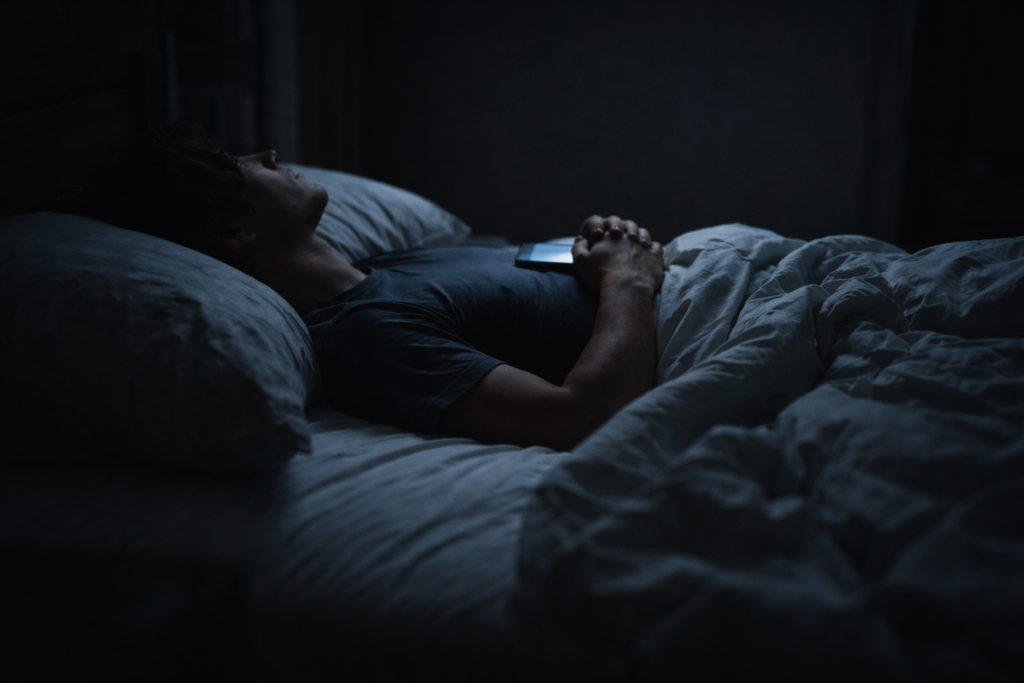
back sleeping is the clearest example of gravity working against you. when you lie flat on your back, your tongue, soft palate, and the other soft tissues of the throat are positioned so that gravity pulls them straight backward — directly toward the airway. the airway narrows. breathing becomes labored. the brain detects the oxygen drop and rouses you just enough to reopen it, which is the micro-awakening cycle that fragments sleep all night without you fully registering it.
this is why so many sleep apnea diagnoses come with the almost casual instruction to “try sleeping on your side.” it sounds too simple to matter. it actually often does matter — quite a bit.
side sleeping: the best position for most people with sleep apnea
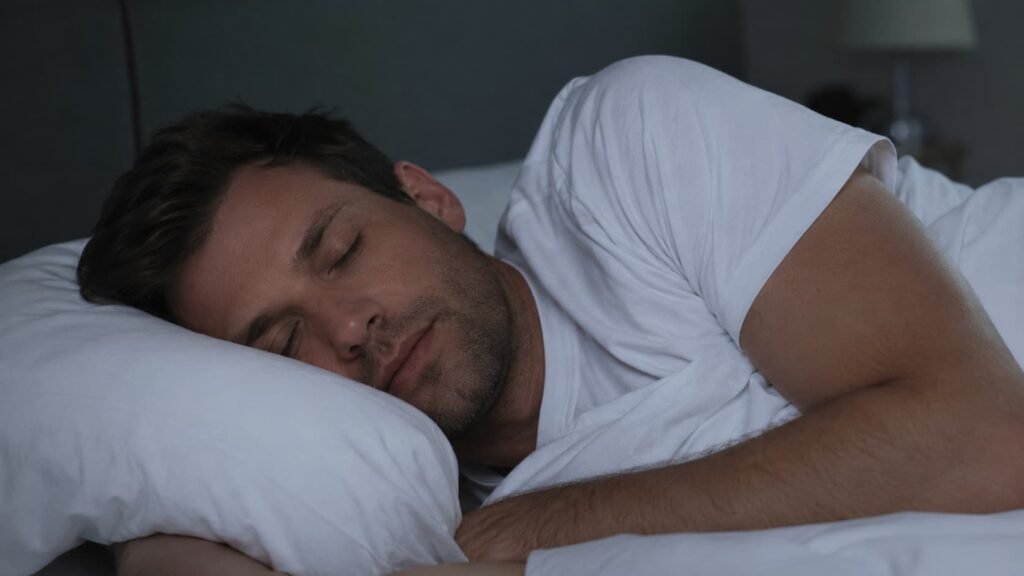
side sleeping changes the geometry. when you’re on your side, gravity pulls the tongue and soft tissues sideways rather than directly backward into the airway. the airway stays more open. breathing is less obstructed. the apnea-hypopnea index — the measure of how many breathing disruptions happen per hour — has been shown to drop significantly in side sleepers compared to back sleepers with the same condition. some studies report average reductions of 50% or more in apnea events just from the position change.
left side versus right side doesn’t have a strong consensus in the research for sleep apnea specifically. left-side sleeping is often recommended for other reasons — acid reflux, late pregnancy — but for airway management both sides appear similarly effective. the one that’s more comfortable and that you actually stay in through the night is the right choice.
if you’re a natural back sleeper and you’ve been told to switch to your side, the practical challenge is staying there. most people roll back at some point during the night without knowing it. a few things help with this: a body pillow along your back creates a physical barrier that makes rolling over uncomfortable. some people sew a tennis ball into the back of a sleep shirt — the pressure when you roll is enough to prompt a shift without fully waking you. dedicated positional therapy devices that vibrate when they detect back sleeping are also available for more stubborn cases. none of these are elegant solutions, but they work.
elevating the head: the other position worth knowing about
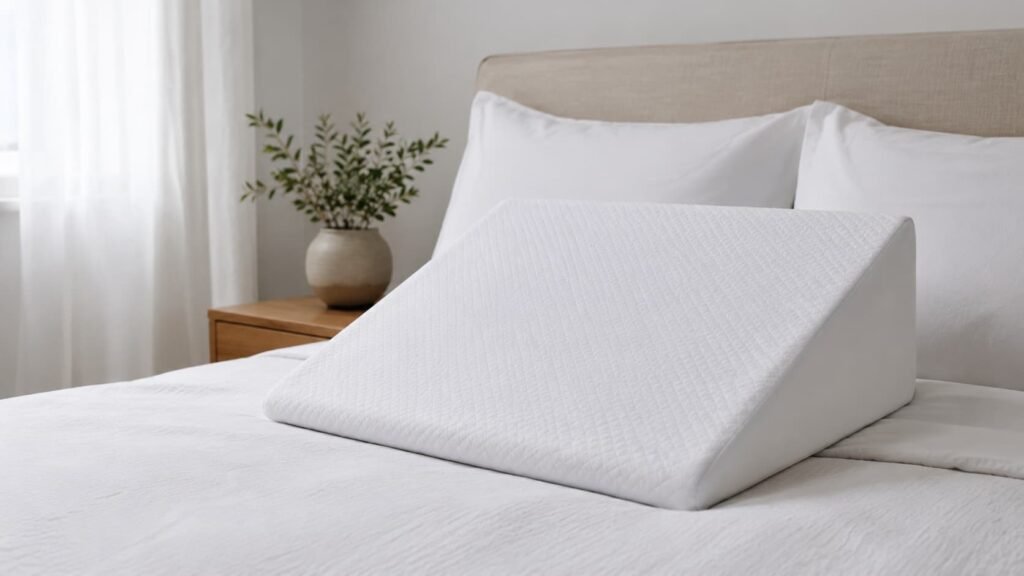
if side sleeping isn’t possible — whether from shoulder pain, hip problems, or just the deeply ingrained habit of back sleeping — elevating the head of the bed is the next best option. research supports elevating the upper body by 30 to 60 degrees as a meaningful way to reduce airway collapse even while lying on your back. the elevation counteracts some of the gravity effect by repositioning the angle at which the soft tissues sit relative to the airway.
a wedge pillow is the practical way to achieve this without physically adjusting the bed. these are available in various angles — a 30-degree wedge is a reasonable starting point — and unlike stacking regular pillows, they maintain a consistent angle through the night rather than gradually flattening. the neck position matters too: the goal is slight chin elevation, not a sharp bend forward, which can actually worsen airway compression. a pillow that supports the natural cervical curve while maintaining the elevation is what to look for.
adjustable bed frames that elevate the head section independently are another option for people who can afford them and want the most control. they allow you to find the exact angle that’s most effective and most comfortable, which varies by person.
back sleeping: why it’s the worst and what to do if you can’t avoid it
back sleeping consistently shows the worst outcomes in sleep apnea research. the AHI in the supine position is often two to three times higher than in the lateral position for the same person. if you’ve had a sleep study and the results show dramatically worse numbers when you were on your back versus your side, that’s the positional component — and it suggests that position management could have a meaningful impact on your symptoms.
one nuance worth knowing: turning your head to the side while on your back can help, even if your body stays supine. research from the NIH found that rotating the head laterally while trunk sleeping reduced OSA severity measurably — not as effectively as full lateral positioning, but better than full supine with the head straight. for people who can’t transition fully to side sleeping, this is a lower-barrier starting point.
stomach sleeping: complicated
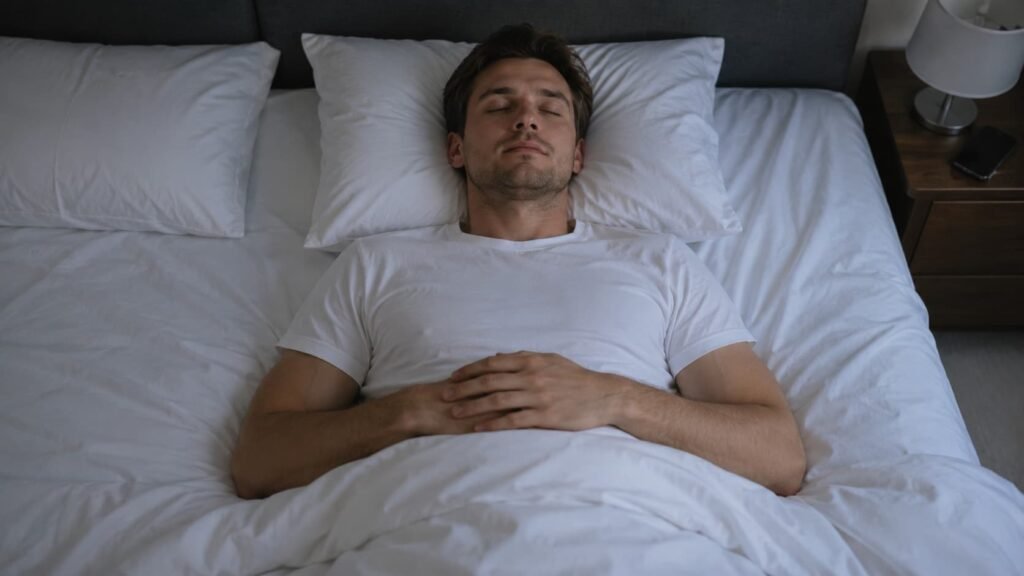
stomach sleeping is an interesting case. in theory, it should help with sleep apnea — gravity pulls the tongue and soft tissues forward rather than back, which keeps the airway more open. some small studies do show reduced apnea events in the prone position. the practical problems are significant though: neck rotation to breathe puts strain on the cervical spine, spinal alignment is generally poor, and sleeping with your face directly into a pillow creates its own breathing difficulties. most sleep specialists don’t actively recommend it even though the airway mechanics seem favorable.
if you naturally sleep on your stomach and your sleep apnea is mild, it may not be worth changing. but it’s not a position most people can sustain comfortably for a full night, and the neck and back issues tend to create their own problems over time.
position and CPAP together
if you’re using CPAP — which remains the gold standard treatment for moderate to severe sleep apnea — position still matters. certain mask types are more compatible with certain positions. full face masks are harder to use on your side because they can shift or leak against the pillow. nasal pillow masks tend to work better for side sleepers. if you’ve been struggling with CPAP comfort and you’re a side sleeper, the mask style is worth revisiting with whoever fitted you.
and for people with mild sleep apnea who are trying to manage it without CPAP — or who are waiting for an appointment — position management plus other behavioral changes is often where the meaningful short-term improvement comes from. it won’t replace treatment for anything moderate to severe, but it’s not nothing. it’s the kind of thing that makes the difference between a manageable night and a genuinely difficult one while you’re getting the rest sorted out.
if you’ve noticed you’re waking up exhausted despite what looks like enough sleep, or you’re experiencing night sweats alongside disrupted sleep, sleep apnea is worth investigating properly rather than just adjusting your pillow and hoping for the best. position helps. it doesn’t fix the underlying condition.
for a thorough overview of the research on position and sleep apnea, the Sleep Foundation’s guide to sleeping positions for sleep apnea covers the evidence base in detail.
my dad, for what it’s worth, still sleeps on his side. habit after a while. the CPAP is on the nightstand and he uses it most nights. the combination is better than either alone. that’s probably the honest conclusion for most people — position is a useful variable to optimize, and it compounds with whatever treatment approach is in place rather than substituting for one.
practical tips for making the position change stick
switching sleep positions is harder than it sounds for anyone who’s been sleeping the same way for decades. a few things that actually help:
pillow setup matters more than people realize. for side sleeping, you need a pillow that keeps your head and neck in neutral alignment — not tilted up or dropping down. a pillow that’s too flat lets your head drop toward your shoulder, putting strain on the neck. too high and it pushes your chin toward your chest. getting the pillow height right makes side sleeping significantly more sustainable through the night.
a pillow between the knees reduces hip and lower back discomfort in side sleeping, which is often what causes people to roll back without realizing it. the discomfort wakes you slightly and your body seeks the familiar position. removing the discomfort removes the prompt to roll.
consistency matters more than perfection. if you’re spending 70% of the night on your side rather than the 10% you were before, that’s a meaningful change in total apnea events even if you’re not at 100%. don’t give up because you woke up on your back. the habit builds gradually.
 temperature and environment affect how much you move during the night too. restless sleep — the kind driven by stress, alcohol, or a room that’s too warm — means more movement and more position changes, which makes staying in any position harder. addressing the other things that cause fragmented sleep creates a calmer sleep environment where you’re less likely to thrash around and end up back on your back by 3am.
and if the sleep apnea is significant enough that position management alone isn’t getting you where you need to be — the exhaustion persists, the snoring hasn’t changed, your partner is still watching for pauses — that’s the signal to get a proper sleep study done rather than continuing to optimize something that isn’t the main problem. position is one lever. for moderate to severe sleep apnea it’s usually not enough on its own.
Related reading: For symptoms beyond sleep position, read how sleep apnea can overlap with anxiety and when to seek an evaluation.
This article is for informational purposes only and does not constitute medical advice. Always consult a qualified healthcare professional before making changes to your health routine.