what screens actually do to your sleep
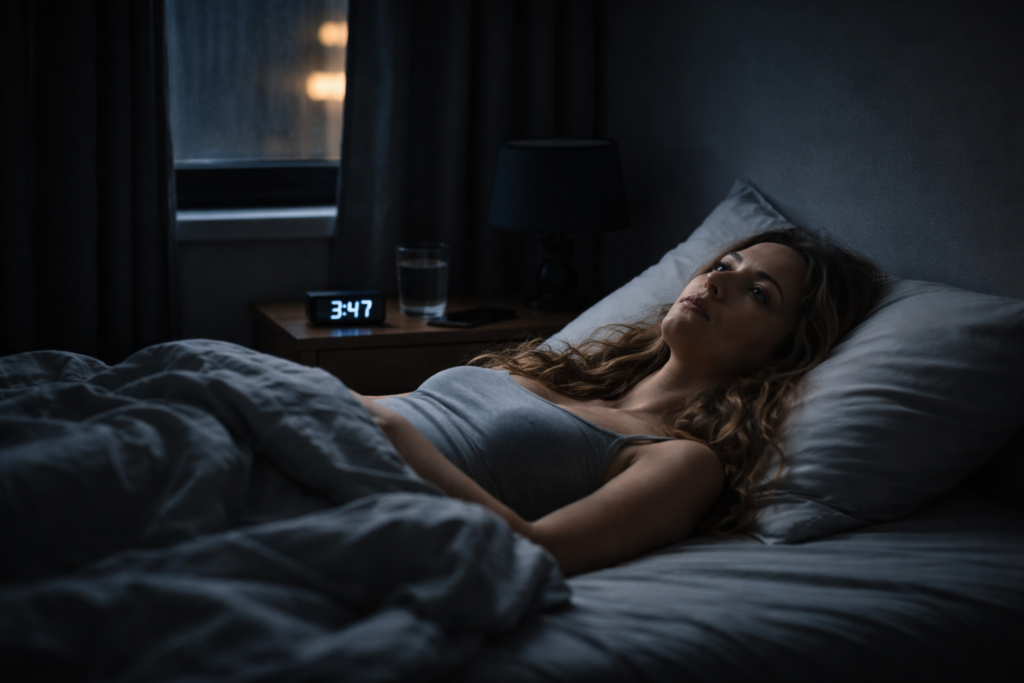
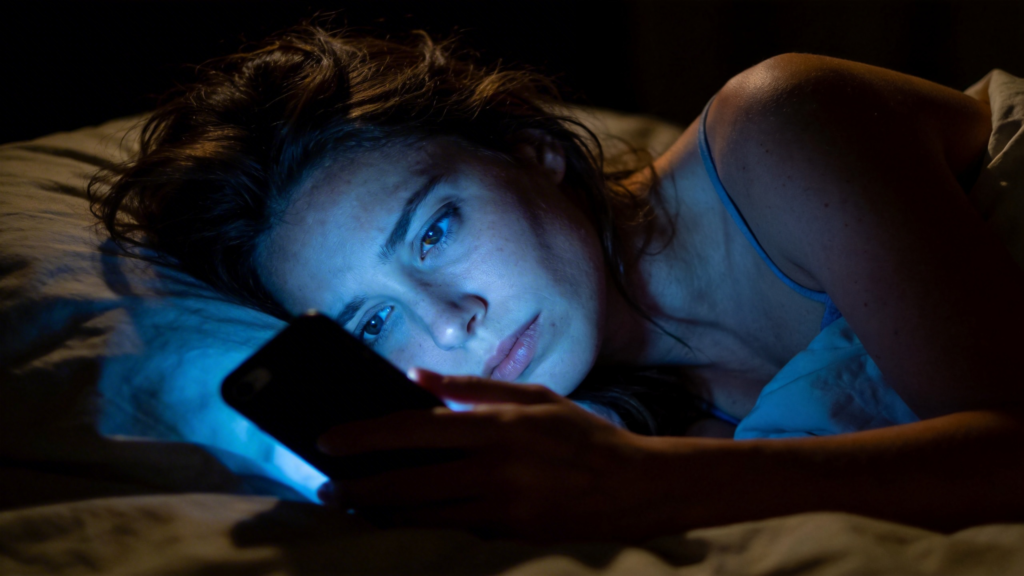
the main mechanism is light — specifically the blue wavelength light that phone, tablet, and laptop screens emit in significant amounts. your brain uses light to regulate its internal clock, and blue light in particular is very good at suppressing melatonin production. melatonin is the hormone that signals to your body that it’s getting dark, the day is winding down, sleep is coming. it doesn’t knock you out — it’s more of a slow, gradual signal that builds over the evening and makes sleep feel increasingly accessible. when you’re looking at a screen at 10 or 11pm, you’re essentially sending your brain a “it’s still daytime” signal at exactly the moment it’s supposed to be ramping up that melatonin production. the suppression isn’t subtle — research has found that evening screen exposure can delay melatonin onset by 90 minutes or more in some people. which means you’re not just staying up a bit later. your body’s whole sleep-readiness timeline is shifted. but light isn’t the only issue. there’s also the mental stimulation piece, which honestly might matter as much as the light for a lot of people. social media, news, even mildly engaging videos — these keep your brain in a reactive, alert state. you’re responding to inputs, having small emotional reactions, forming thoughts. that’s the opposite of the mental wind-down your nervous system needs before sleep becomes easy. if falling asleep takes you a long time, screen use right before bed is one of the first variables worth looking at honestly.how long before bed should you stop screen time
the recommendation you see most often is one hour. that’s the number that comes up in most sleep hygiene guidelines and it’s a reasonable starting point — but the honest answer is that it depends on how sensitive you are to the light and stimulation effects, and one hour is a minimum rather than an ideal. ninety minutes is closer to what the research actually supports for melatonin recovery. if you stop screens at 9:30pm and try to sleep at 11pm, you’re giving your melatonin levels a meaningful chance to recover before you actually need them. if you stop at 10:50 and try to sleep at 11, you’re not really doing anything useful. the “how many hours before bed should you stop screen time” question also varies by what you’re doing on the screen. passive, low-stimulation content — reading a Kindle, watching something slow and familiar — has a different effect than actively scrolling social media or playing a game or watching something with a fast edit pace. the light issue is similar across all of these, but the mental activation piece is very different. which leads to a question a lot of people ask.does a kindle count as screen time before bed
this one comes up constantly, and the answer is: it depends on which Kindle and how you’re using it. e-ink Kindles — the standard Paperwhite and similar models — use a fundamentally different display technology than phones and tablets. e-ink screens reflect light rather than emitting it, which means they produce significantly less blue light than an LCD or OLED screen. reading on a backlit e-ink Kindle at low brightness in warm light mode is genuinely much better than reading on an iPad or phone. it’s not completely zero effect, but it’s a meaningfully smaller one. the Kindle Fire and similar tablet-style Kindle devices are a different story — those are LCD screens and behave like any other tablet from a blue light perspective. the other factor is the mental stimulation angle. reading a novel on a Kindle is cognitively different from scrolling Twitter on a phone. the reading is linear, absorbing in a slow way, doesn’t involve social feedback loops or short-form rapid content. most people find it genuinely wind-down compatible in a way that phone use isn’t. so: e-ink Kindle, low brightness, warm light mode, reading fiction — reasonably okay. tablet Kindle running apps and social media — same problem as everything else.screen time before bed and kids — a slightly different problem
children’s sleep is more sensitive to evening light and stimulation than adults’ for a few reasons. melatonin production tends to be more pronounced and the sleep pressure system is more responsive — which means disrupting it has a bigger effect. kids who use screens in the hour before bed consistently show later sleep onset and shorter total sleep time in the research, and for growing children that sleep debt accumulates faster and matters more. the recommendation for children is generally stricter than for adults — some guidelines suggest no screens in the two hours before bed for school-age children. the “one more episode” negotiation is a familiar one for most parents, but the biology genuinely isn’t on the side of flexibility here. according to the Sleep Foundation, children who get more screen time before bed sleep fewer hours overall and report more sleep problems — and the effect is consistent across age groups. the practical challenge is that screens are deeply embedded in evening routines for most families. the fix isn’t perfection — it’s creating a clear cutoff that’s consistent enough to become expected. devices out of bedrooms at a certain time, chargers in a common area rather than next to beds. consistency matters more than strictness.what to do instead of screen time before bed
this is the question that actually matters, because “just put your phone down” without an alternative is advice that lasts about four days before it collapses. you need something that fills the same slot — something to do in that wind-down window that doesn’t require a screen and doesn’t require a lot of effort. reading physical books is the obvious one and it works, genuinely. the issue for most people isn’t that they don’t want to read, it’s that they haven’t made it frictionless — the book isn’t on the nightstand, the lamp isn’t positioned right, it requires a setup decision. remove the friction and it becomes easy. a physical book, a decent reading light, something not too demanding. that’s the whole system.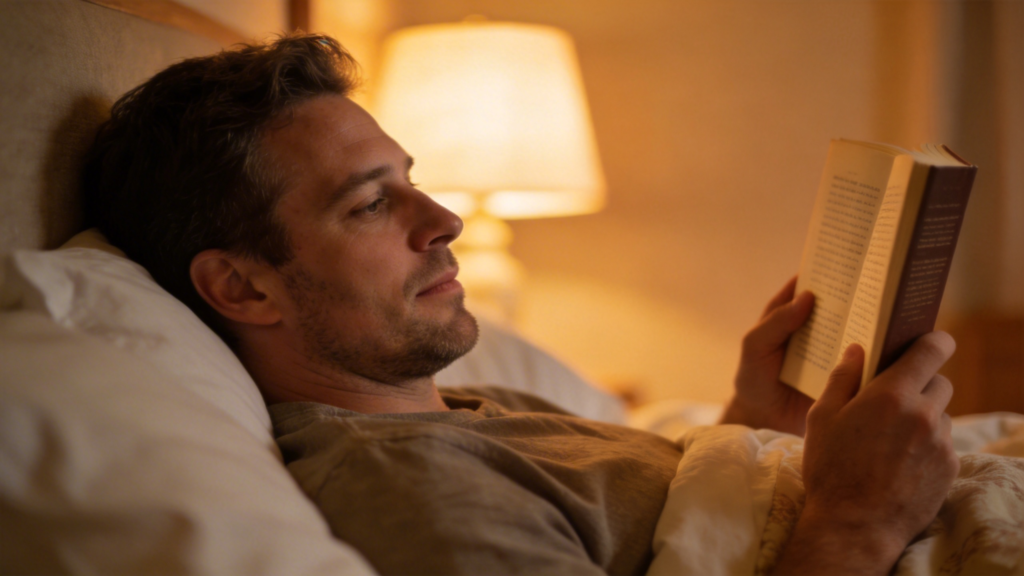 light stretching or slow yoga is another one that works well in this window. not exercise — you don’t want elevated heart rate before sleep — but the kind of slow, floor-based stretching that’s almost meditative. it occupies your body and settles your mind at the same time and requires zero equipment.
journaling — specifically a brain dump rather than structured journaling — is worth trying if your main pre-bed problem is thoughts that won’t stop. five minutes writing down everything circling around in your head. worries, to-do items, things you almost remembered, unresolved things. you’re essentially logging them so your brain stops trying to hold them in working memory. it sounds minor. it works surprisingly well. if you’ve been waking up at 3am with racing thoughts, a pre-bed brain dump is one of the more practical interventions.
podcasts and audiobooks occupy a middle ground. no screen, but audio content that can range from mildly engaging to genuinely stimulating depending on what you choose. something slow and familiar — a podcast you’ve heard before, an audiobook you’re not gripped by — can work well. a gripping true crime podcast probably keeps your brain too activated. choose based on whether it slows you down or speeds you up.
light stretching or slow yoga is another one that works well in this window. not exercise — you don’t want elevated heart rate before sleep — but the kind of slow, floor-based stretching that’s almost meditative. it occupies your body and settles your mind at the same time and requires zero equipment.
journaling — specifically a brain dump rather than structured journaling — is worth trying if your main pre-bed problem is thoughts that won’t stop. five minutes writing down everything circling around in your head. worries, to-do items, things you almost remembered, unresolved things. you’re essentially logging them so your brain stops trying to hold them in working memory. it sounds minor. it works surprisingly well. if you’ve been waking up at 3am with racing thoughts, a pre-bed brain dump is one of the more practical interventions.
podcasts and audiobooks occupy a middle ground. no screen, but audio content that can range from mildly engaging to genuinely stimulating depending on what you choose. something slow and familiar — a podcast you’ve heard before, an audiobook you’re not gripped by — can work well. a gripping true crime podcast probably keeps your brain too activated. choose based on whether it slows you down or speeds you up.
does blue light actually matter, or is it just the staying up late
there’s a legitimate debate in the sleep research community about whether blue light specifically is the main issue or whether it’s mostly just the behavioral fact of staying up later because of screens. some studies that controlled for sleep timing found the blue light effect was smaller than initially thought. this gets used as justification for “blue light glasses fix everything” and also “blue light doesn’t matter at all” — neither of which is quite right. the more accurate picture is probably: blue light suppression is real but the stimulation and delayed bedtime effects are real too, and for most people in real-world conditions all three are happening simultaneously. blue light glasses and night mode settings reduce one part of the problem. they don’t fix the staying-up-later part or the mental activation part. they’re worth using but they’re not a substitute for actually stopping screens — more of a harm reduction measure while you’re transitioning. if you use night mode and blue light filtering on your devices, keep doing it. but don’t let it become the reason you think an extra hour of screen time is fine. the melatonin suppression is reduced, not eliminated, and the mental activation piece isn’t affected by the color temperature of the screen at all.the practical version — what actually works
stop screens 60–90 minutes before you want to be asleep. not before you get into bed — before you actually want to be asleep. if that’s 11pm, screens off at 9:30 is the real target, not 10. the difference between those two windows is significant in practice. phone out of the bedroom, or at minimum across the room — not on the nightstand. the temptation to check it when you can’t sleep immediately is too strong when it’s within reach. alarm clocks are cheap. using your phone as an alarm is a reason to have it next to you, which is a reason to look at it at 2am, which is a reason to be awake at 3am. a five dollar alarm clock solves this problem entirely.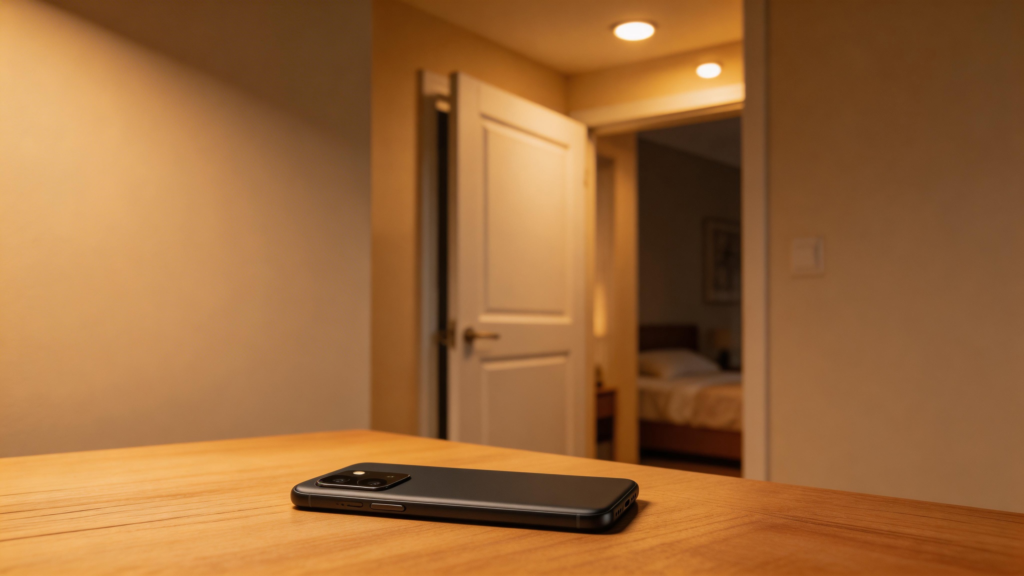 pair the screen cutoff with something you actually want to do. the wind-down window shouldn’t feel like punishment. if you genuinely enjoy reading, this becomes easy. if reading feels like homework, find something else — stretching, a bath, a slow podcast, a conversation. the nervous system doesn’t care what the activity is as long as it’s low stimulation and consistent. building a consistent pre-sleep routine is one of those changes that has compounding effects — it gets easier and more effective the longer you keep it going.
the first few nights without screens before bed feel strange because the habit is deeply grooved. that strangeness is temporary. by the end of the first week most people notice they’re falling asleep faster and feeling less wired at bedtime. not dramatically — it’s a gradual shift. but the kind of shift that makes you wonder why you didn’t do it earlier.
pair the screen cutoff with something you actually want to do. the wind-down window shouldn’t feel like punishment. if you genuinely enjoy reading, this becomes easy. if reading feels like homework, find something else — stretching, a bath, a slow podcast, a conversation. the nervous system doesn’t care what the activity is as long as it’s low stimulation and consistent. building a consistent pre-sleep routine is one of those changes that has compounding effects — it gets easier and more effective the longer you keep it going.
the first few nights without screens before bed feel strange because the habit is deeply grooved. that strangeness is temporary. by the end of the first week most people notice they’re falling asleep faster and feeling less wired at bedtime. not dramatically — it’s a gradual shift. but the kind of shift that makes you wonder why you didn’t do it earlier.
Related reading: Because late light exposure and lost sleep time can affect sleep stages, see how to support healthy REM sleep.
This article is for informational purposes only and does not constitute medical advice. Always consult a qualified healthcare professional before making changes to your health routine.