
I used to wake up and think I’d just been too warm. blanket too thick, room too stuffy, the usual stuff. kicked the covers off, fell back asleep. didn’t think much of it.
then it kept happening. same time most nights, sheets damp, heart going a little faster than it should be at 2am. and I started wondering if it was actually something, or if I was just someone who runs hot.
so I looked into it. turns out waking up sweaty is not always just a temperature thing. night sweats sleep apnea is actually a recognized connection — more real and more common than I expected.
what night sweats actually are — and what they’re not
night sweats, as an actual thing worth paying attention to, means waking up drenched — or noticeably damp — from sweating during sleep, in a way that isn’t explained by your room being hot or sleeping under too many blankets. that’s the distinction that matters. if you kick the covers off and you’re fine, that’s probably just your environment. if you wake up sweating in a cool room with normal bedding and it keeps happening, that’s worth looking at more carefully.
the causes are genuinely varied. hormonal shifts — menopause being the most common — are one major category. certain medications cause them. anxiety and stress can trigger them. infections occasionally. and then there’s the one that tends to get overlooked: disrupted breathing during sleep, which is where night sweats and sleep apnea end up connected.
night sweats sleep apnea: what’s actually going on
sleep apnea is a condition where breathing repeatedly stops and starts during sleep — sometimes for just a few seconds, sometimes longer. most people who have it don’t know they have it, because it happens while you’re unconscious and the brief arousals that follow aren’t usually remembered. your bed partner noticing your snoring, or you just feeling inexplicably exhausted every morning despite a full night in bed, are often how it surfaces.
so can sleep apnea cause night sweats? yes — and the mechanism is fairly direct. each time breathing stops, your body experiences a small oxygen drop and a stress response kicks in. cortisol and adrenaline get released to bring you back to a lighter sleep state so breathing restarts. those stress hormones raise your heart rate and activate your sympathetic nervous system — the alert, mobilized state — and one side effect of that repeated activation through the night is sweating. your body is essentially running a mini-emergency response over and over, and sweating is part of that response.
this is also why waking up at 3am with that sudden wide-awake feeling often co-occurs with night sweats — the cortisol spike that produces both is the same event. if you’re experiencing both, that overlap is worth noting.
according to research, night sweats are significantly more common in people with obstructive sleep apnea than in the general population — the association between obstructive sleep apnea and night sweats is well established in the literature, even if it doesn’t always get mentioned in the same breath.
other reasons you might be sweating through the night
sleep apnea is one explanation but not the only one, and it’s worth running through the other common causes before assuming that’s what’s going on.
room temperature and bedding are the obvious starting point — and genuinely the most common cause of waking up sweaty. your body needs to drop its core temperature to initiate and maintain sleep, and a room above about 67–68°F actively works against that. synthetic bedding materials trap heat in a way that cotton and linen don’t. these are worth ruling out first because they’re the easiest to fix and affect a lot of people who think they have a sweating problem when they actually just have a warm room.
alcohol is another one that catches people off guard. alcohol suppresses REM sleep in the first half of the night and then causes a rebound effect in the second half — your sleep gets lighter and more fragmented, body temperature regulation gets disrupted, and sweating tends to increase in that second half of the night. if you’re waking up hot at 2 or 3am after drinking, the alcohol is very likely the mechanism. 
anxiety and chronic stress produce night sweats through a similar pathway as sleep apnea — the sympathetic nervous system stays partially activated even during sleep, and sweating is part of that. if you’ve been lying awake for a long time before falling asleep and then waking up sweaty, elevated nighttime stress hormones are a plausible explanation.
hormonal changes — perimenopause and menopause in women, but also thyroid dysfunction in both sexes — are a significant category. if night sweats are accompanied by other hormonal symptoms, that pathway is worth exploring with a doctor. certain antidepressants, blood pressure medications, and steroids also commonly cause night sweats as a side effect; if yours started around the same time as a new medication, that’s worth mentioning to whoever prescribed it.
how to actually tell if sleep apnea might be involved
there are some patterns that make sleep apnea more likely as the cause of night sweats, versus something else.
snoring — especially loud, irregular snoring with gasps or pauses — is the most obvious sign. if a bed partner has noticed you stopping breathing briefly, that’s the clearest indicator. waking with a dry mouth or headache in the morning is common with sleep apnea because of the mouth-breathing and the reduced oxygen during apnea events. feeling genuinely exhausted in the morning despite sleeping a normal number of hours is another consistent pattern — the sleep isn’t restorative because it’s being interrupted constantly, even if you’re not consciously aware of the interruptions.
night sweats alone don’t diagnose sleep apnea. but night sweats alongside those other signs — snoring, morning headaches, unrefreshing sleep, waking up with that sudden alert feeling — is a pattern worth taking to a doctor. a sleep study, which can now often be done at home with a monitoring device, is the actual diagnostic tool. according to the Sleep Foundation, night sweats are one of the underrecognized symptoms of sleep apnea, and treating the apnea typically resolves the sweating along with it.
what you can actually do about night sweats
if sleep apnea is suspected or confirmed, that’s a conversation for a doctor — CPAP therapy is the standard treatment and it works well for most people, but it’s not something you self-manage. what you can manage yourself is the environment and the lifestyle variables that either worsen or improve nighttime sweating regardless of the underlying cause.
room temperature is the most impactful lever. somewhere between 65–68°F is consistently where sleep quality is best for most adults — cool enough for your body to reach and maintain the core temperature drop that deep sleep requires. if your room is at 72°F or above, that alone can produce significant nighttime sweating in otherwise healthy people. a fan pointed at the bed rather than room-temperature still air makes a meaningful difference even without air conditioning.
bedding material matters more than most people realize. moisture-wicking fabrics — cotton, bamboo, linen — release heat and absorb sweat in a way that polyester and most synthetic materials don’t. if you’re sleeping in synthetic sheets or a synthetic duvet, switching to natural fibers is a low-cost change that helps a lot of people. weighted blankets, which trap heat by design, are worth reconsidering if night sweats are a regular issue. 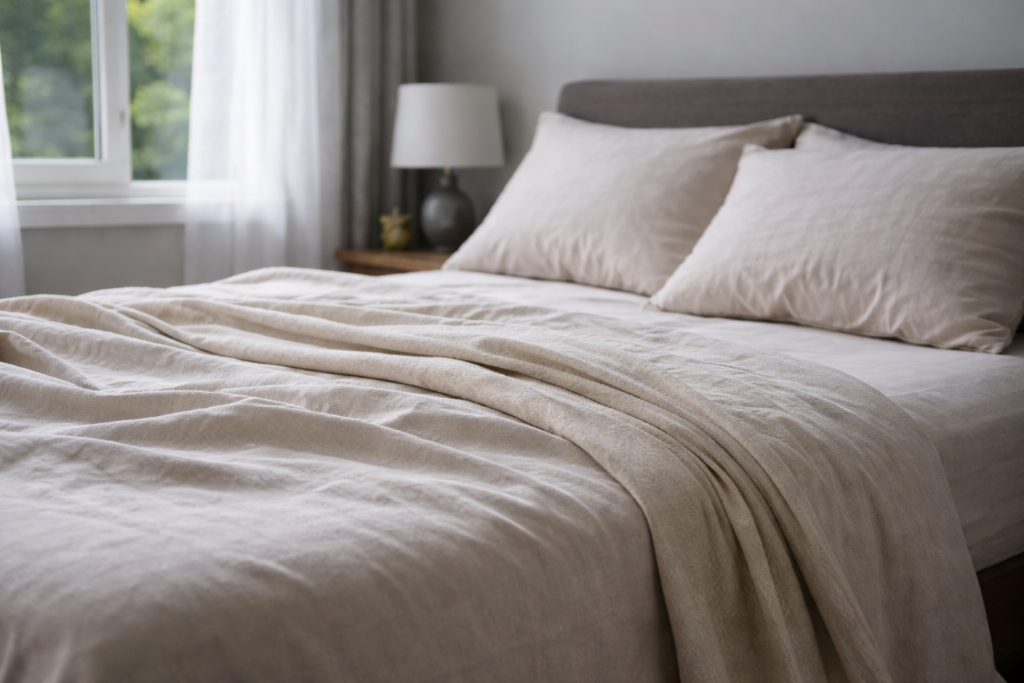
cutting off alcohol at least three hours before sleep removes one of the most common and underappreciated causes of second-half-of-the-night sweating. the mechanism is real and the effect is fairly quick — most people notice a difference within a few nights.
keeping a consistent sleep schedule — same bedtime and wake time every day including weekends — helps stabilize the hormonal rhythms that regulate body temperature during sleep. if your schedule is erratic, your body’s temperature regulation during sleep is more erratic too. resetting a disrupted sleep schedule is one of those foundational changes that tends to improve multiple sleep problems at once, night sweats included.
when to actually see a doctor
most night sweats are environmental or lifestyle-related and respond to the adjustments above. but there are situations where getting a medical opinion is the right move rather than trying to manage it yourself.
if night sweats are accompanied by unexplained weight loss, fever, or persistent fatigue that doesn’t improve with rest, those are symptoms that need evaluation — they can indicate infections or other conditions that have nothing to do with sleep and need actual treatment. if the sweating is severe enough to regularly soak through clothing and sheets, or if it’s been going on for more than a few weeks without an obvious cause, that’s worth mentioning to a doctor.
and if you have the cluster of symptoms that suggest sleep apnea — snoring, morning headaches, unrefreshing sleep, the night sweats — a sleep study is the right next step. it’s more accessible than it used to be, home testing kits are widely available now, and if sleep apnea is confirmed and treated, the night sweats typically go away along with everything else.
the short version
waking up sweaty is common, usually benign, and often fixable with environmental changes. sleep apnea is a real and underrecognized cause — the repeated stress responses from disrupted breathing produce exactly the kind of sympathetic nervous system activation that leads to nighttime sweating. if the sweating is happening alongside snoring, morning exhaustion, and unrefreshing sleep, sleep apnea is worth investigating properly rather than just managing the symptoms.
start with the easy stuff: cool the room down, switch to natural fiber bedding, cut alcohol earlier in the evening. if those changes don’t move the needle and the pattern fits, talk to a doctor about a sleep study. night sweats sleep apnea doesn’t get better from better pajamas. it gets better when the breathing gets fixed.
Related reading: Breathing disruptions can also feel emotionally distressing; see our evidence-based guide to sleep apnea and anxiety symptoms.
This article is for informational purposes only and does not constitute medical advice. Always consult a qualified healthcare professional before making changes to your health routine.