
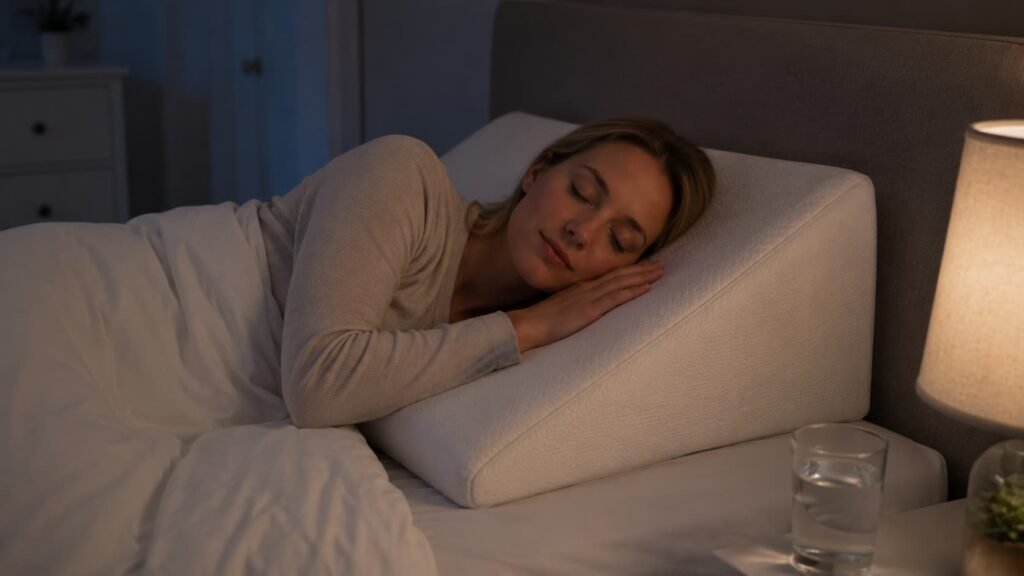
so I didn’t find out I had a deviated septum until my mid-thirties. for years I just assumed I was “a congested person.” always a little stuffed up. woke up with a dry mouth that felt like I’d spent the night breathing through a sock. my wife mentioned the snoring and I — look, I ignored it for a while, in the way you ignore things that would require doing something about them.
then one night I tried it. closed my right nostril, breathed through my left. nothing. or not nothing — more like trying to inhale through a half-folded straw. there was this wall of resistance that definitely shouldn’t be there. I switched sides. completely fine, totally open, no problem. and then I just sat there in the bathroom at midnight going oh.
so that was the beginning of a pretty deep rabbit hole. I’ve tested positions, pillows, gadgets, nasal stuff, a few things that turned out to be completely useless. here’s what I actually know now.
why lying down makes a deviated septum so much worse
the septum is the thin wall of cartilage and bone running down the center of your nose. when it’s straight, air flows roughly evenly on both sides. when it deviates — which according to the Sleep Foundation affects around 80% of people to some degree — one passage ends up narrower than the other.
most people don’t notice it much during the day. upright, moving around, there’s usually enough airflow even through the restricted side to get by. but then you lie down.
nasal tissue naturally swells when you go horizontal. it’s something to do with blood pooling — your body’s not bad at this, it just happens. and that swelling stacks on top of whatever structural narrowing you already have from the deviation. a septum that’s maybe a minor nuisance at 3pm becomes a near-complete blockage at midnight. your nose just quietly closes on one side while you’re trying to sleep.
your body’s response — and this is the part that creates all the other problems — is to start mouth breathing. which dries out your throat. which leads to snoring. if you’ve ever woken up mid-snore and had no idea it was happening, that’s usually where this goes. if the obstruction is bad enough it can contribute to sleep apnea, where airflow becomes so restricted that breathing briefly pauses. even short of that, sleep quality drops significantly — more time in lighter stages, less deep sleep, waking more often. mornings feel like something happened to you overnight.
the best sleep position for deviated septum — and why direction matters
side sleeping. that’s the answer. but the direction matters more than most generic advice lets on — and this is where a lot of people get stuck.
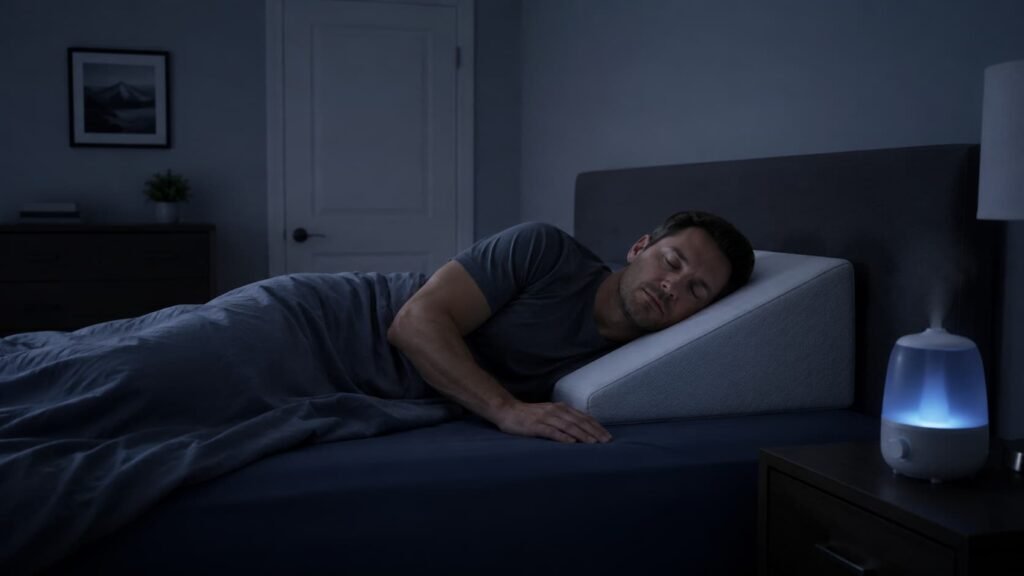
the recommendation you’ll see everywhere is: sleep on the side opposite your blocked nostril. if your right side is more obstructed, sleep on your left. the logic is clean — your clearer nostril is on top, gravity helps keep that passage open, and you’re not relying on the blocked side to do any of the work. this is what I do. it helped immediately and noticeably.
but here’s something I came across that surprised me, reading around sleep research at 1am as one does. some evidence suggests sleeping on your more congested side can occasionally encourage drainage from that passage — like tilting a clogged bottle so the liquid can move. I tried this for a week or so and honestly couldn’t tell if it was helping or if I was just confusing myself. my suggestion: start with the clearer-nostril-up approach, spend a solid few nights on it, then experiment before deciding it doesn’t work.
what I can say with more confidence: back sleeping is the worst option. flat on your back, gravity pushes blood and swelling directly into already-narrow passages with nothing working against it. it’s also the position most associated with snoring and sleep apnea regardless of septum involvement. if you’re currently a back sleeper with a deviated septum, this is probably the single highest-leverage thing to change.
stomach sleeping isn’t good either. pressure on the nose, forced neck rotation, generally miserable airflow. skip it.
head elevation — this one surprised me
I started reading about elevation thinking it was kind of a minor addition. like, raise your head a bit, sure, fine. turns out it’s not minor at all.
the angle changes the drainage pattern. congestion that pools flat when you’re lying down starts to move when there’s a slight incline — Cleveland Clinic recommends head elevation for anyone dealing with nighttime nasal obstruction, not just deviated septum specifically. the swelling doesn’t build up as badly. airflow improves. you don’t wake up at 4am with your entire face feeling sealed shut.
I started with two regular pillows stacked. helped somewhat but gave me a stiff neck by morning, which is its own problem — and if you’ve had neck pain from sleeping position before, you’ll know that trade-off isn’t worth it. what actually worked was a wedge pillow — solid foam, keeps the angle consistent all night instead of collapsing under you. not glamorous. genuinely useful. the target is roughly 30 to 45 degrees — enough to let gravity do something, not so steep you’re basically sitting up in bed.
what else actually helps
position handles the structural side of the problem. but there are a few things that layer on top of it and make the difference between “sort of managing” and “actually sleeping well.”
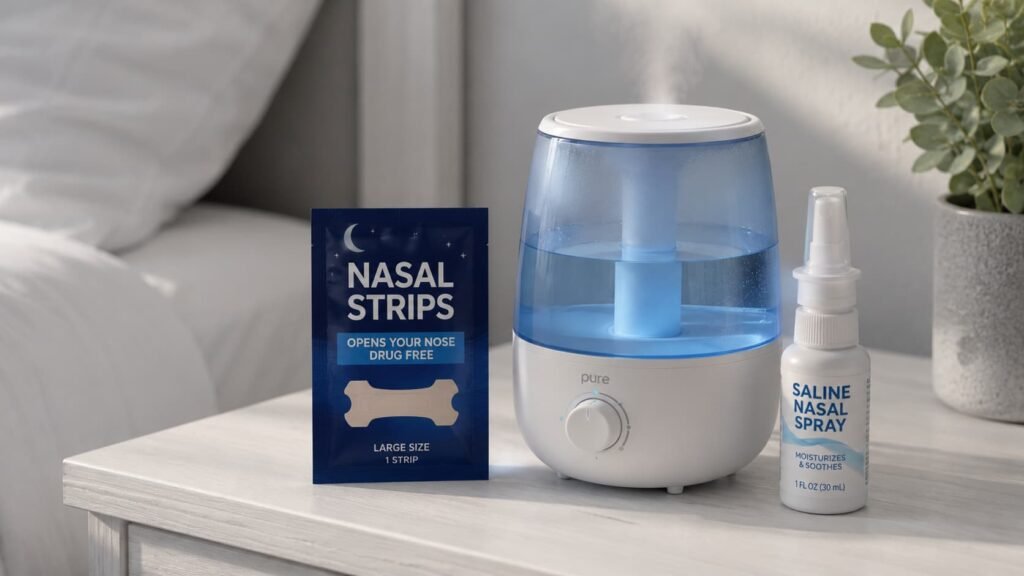
nasal strips — the adhesive ones you stick across the bridge of your nose before bed. they pull the nostrils slightly wider from the outside, which for a narrow passage creates just enough additional airflow to matter. I was pretty skeptical. I was wrong. they’re cheap, take about fifteen seconds, and the effect is noticeable within a few breaths. I use them most nights now.
a humidifier in the bedroom. dry air makes already-inflamed nasal passages worse — the lining dries out, congestion thickens, everything gets tighter and more uncomfortable. I aim for around 40 to 50 percent humidity. it’s one of those changes where the effect is subtle night by night, but if you take it away for a few days you notice fast. winter with the heating on is the worst — I’ve had nights where I forgot to switch it on and could feel the difference by 2am.
saline rinse before bed. I resisted this one for a long time because it seemed fussy and slightly unpleasant. it is slightly unpleasant. it also flushes allergens, clears congestion that’s built up through the day, and hydrates the nasal lining before you ask it to work for eight hours. neti pot or basic saline spray, about half an hour before lying down. three minutes. worth it.
no alcohol close to bedtime — this I worked out myself before I read about it anywhere. alcohol inflames nasal tissue and relaxes throat muscles at the same time, which is a specific kind of bad if you already have a narrow passage. one drink at dinner: fine. two glasses of wine after 9pm: rough night, worse snoring, dry mouth from the start. try cutting it off a few hours before sleep and see what happens.
and if mouth breathing is already a thing you do — not just occasionally but most nights — it might be worth looking into mouth taping. I know that sounds extreme. it’s actually pretty simple and there’s some decent evidence behind it for people who default to breathing through their mouth during sleep.
the nasal cycle — worth knowing about so you don’t panic at 3am
there’s a normal involuntary thing called the nasal cycle. your body alternates which nostril is more open roughly every few hours — blood flow shifts, one side swells slightly, the other opens up to compensate, then they quietly switch. most people never notice this because both sides stay functional enough throughout. with a deviated septum, you feel it.
because when the cycle swings to your already-narrow side being the “active” nostril, it basically closes. I used to wake up at 3am completely unable to breathe through my nose — or maybe 4am, hard to say, I was barely conscious — and spend fifteen anxious minutes thinking something was acutely wrong. it wasn’t. the cycle had just landed on my blocked side at exactly the wrong moment.
understanding this helped a lot. the fix is still the same — roll onto your better side, adjust the elevation, let the cycle shift on its own. but not lying there half-panicking is, by itself, an improvement.
when to actually see a doctor about this
all of this manages symptoms. none of it fixes the deviation. if you’ve been dealing with significant nighttime congestion, regular mouth breathing, heavy snoring, or genuinely disrupted sleep for months — and you’ve actually tried the positional and environmental stuff — it’s worth seeing an ENT.
the surgical option is septoplasty. outpatient procedure, repositions the septum, recovery is a couple of weeks of discomfort. many people report meaningfully improved nasal breathing after. it doesn’t fix everything — it won’t resolve sleep apnea on its own if that’s also present — but for people with significant structural deviations, it can be the thing that actually solves the problem rather than just tolerates it.
also: if you use a CPAP machine and it’s never worked well, nasal obstruction is worth raising with whoever manages your sleep apnea treatment. pressurized air needs a clear path through the nose. a deviated septum can interfere with that more than people realize.
don’t sit on this for years because it doesn’t feel “serious enough.” I did that. the ceiling it puts on your quality of life is lower than it looks from inside it.
frequently asked questions
Q: What is the best sleep position for a deviated septum?
A: Side sleeping with your clearer nostril facing up, head elevated around 30–45 degrees. This keeps your better airway open using gravity and reduces the nasal swelling that gets worse when you lie flat.
Q: Should I sleep on my left or right side with a deviated septum?
A: Whichever puts your clearer nostril on top. If your right side is more blocked, sleep on your left. Try both sides for several nights — it’s not always obvious which side is actually more restricted until you test it lying down in the dark.
Q: Why does my nose get more blocked when I lie down at night?
A: Nasal tissue swells when you go horizontal due to increased blood flow to the area. For everyone this happens a little. With a deviated septum it compounds existing narrowing, which can effectively close off the restricted side entirely.
Q: Can a deviated septum cause sleep apnea?
A: A deviated septum isn’t usually the sole cause of obstructive sleep apnea, but it can contribute to it or make existing apnea worse by adding airway resistance. If you snore heavily, stop breathing during sleep, or wake up exhausted after a full night, a sleep study is worth getting.
Q: Do nasal strips actually help with a deviated septum?
A: For a lot of people, yes. They open the nostrils slightly from the outside, which improves airflow without touching the internal structure. They don’t fix the deviation itself, but they can make night-to-night sleeping noticeably more comfortable. Worth trying before anything more involved.
Q: Does a humidifier help with deviated septum symptoms at night?
A: It reduces the inflammation and dryness that makes everything worse. Dry air irritates already-narrow passages and thickens congestion. Keeping humidity around 40–50% in the bedroom removes a variable that’s actively working against you — it won’t open a structural blockage, but it stops adding to it.
Q: Is surgery the only permanent fix for a deviated septum?
A: For the underlying structural problem, yes — septoplasty is the only way to actually straighten the deviation. Non-surgical approaches manage symptoms. That said, plenty of people with mild-to-moderate deviations find symptom management sufficient without going near surgery.
Q: What kind of pillow works best for sleeping with a deviated septum?
A: A wedge pillow tends to work better than stacked regular pillows — it keeps the elevation consistent all night instead of collapsing. For side sleeping you also want something thick enough to keep your neck aligned with your spine. Too flat and your neck dips; too thick and it cranks upward. Both add their own problems to the pile.
most nights are fine now — or fine enough. I still have the deviation. I still use the nasal strip and run the humidifier and sleep on the wedge pillow, which is not what I’d describe as elegant. but I wake up most mornings having actually slept, which for a couple of years there felt like something I’d lost the ability to do.
the position was the thing that started it. everything else built on top of that. if you’re still struggling after genuinely working through all of this for a month or two — actually struggling, not just adjusting — that’s when to get the ENT referral. some problems are structural. and structural problems have structural solutions.
This article is for informational purposes only and does not constitute medical advice. Always consult a qualified healthcare professional before making changes to your health routine.