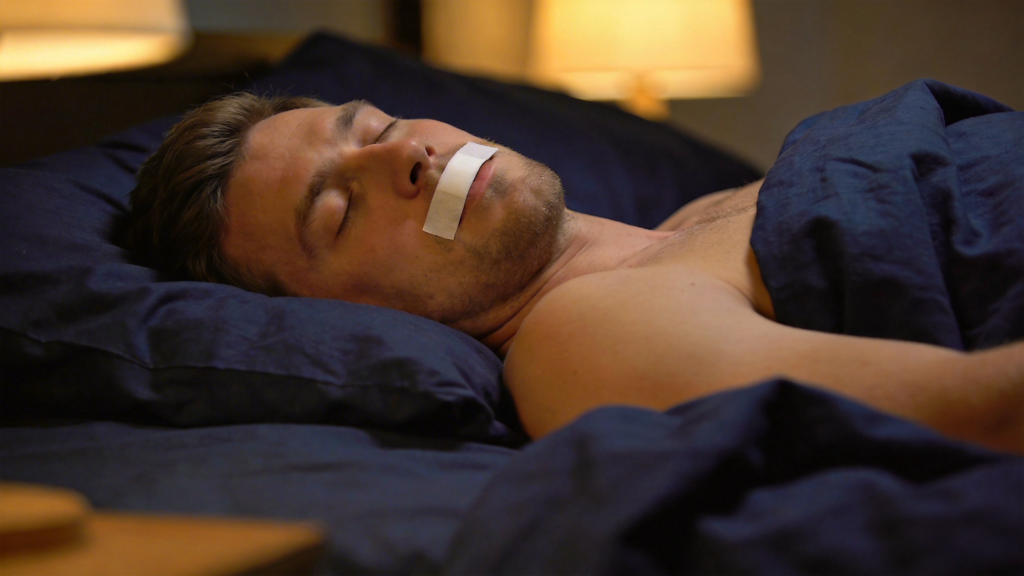
okay so my partner showed up to bed one night with a small strip of tape across his lips, said nothing, pulled the covers up, and went to sleep.
I stared at him for a genuinely uncomfortable amount of time.
that was about two years ago. now I do it too. every night. I feel faintly ridiculous every time, and I also sleep better than I have in years, so those two things just have to coexist.
mouth taping for sleep is one of those things that sounds completely deranged until you actually look into why people do it — and then it starts making a weird, uncomfortable amount of sense. not life-changing miracle sense. more like oh, huh, the body really does prefer one thing over another — sense. that’s mouth taping for sleep in a nutshell.
here’s what I’ve figured out.
what is mouth taping for sleep, exactly
you put a small piece of tape over your lips before you fall asleep. that’s the whole thing. the tape keeps your mouth closed so your body breathes through your nose instead.
mouth taping for sleep isn’t sealing anything shut — a gentle strip across the lips is all it takes, and most tapes made specifically for this are either porous or have a small vent built in, so if your nose gets congested mid-night you’re not in trouble. the goal isn’t to trap you. it’s just a nudge: nose, not mouth. redirect.
sounds almost too simple to do anything. which is kind of the whole reason people are skeptical, and kind of also why, when it works, it’s surprising.
why does it matter whether you breathe through your mouth or nose at night
this was the part I didn’t know for a long time. I figured breathing was breathing — air in, air out, what’s the difference.
turns out there’s quite a bit of difference.
your nose filters incoming air. warms it. humidifies it before it reaches your lungs. and — this is the one that got me — nasal breathing produces nitric oxide, a compound that helps dilate blood vessels and improves how efficiently your body delivers oxygen. your mouth does none of that. it just opens and lets things in, unprocessed. like a door with no security whatsoever.
there’s also a mechanical issue. when you breathe through your mouth during sleep, your jaw tends to drop, your tongue falls back, and the soft tissue at the back of your throat relaxes toward your airway. that’s the setup for snoring. for some people, it’s worse than that. nasal breathing keeps everything in a more stable position — jaw up, tongue forward, airway clearer.
the dry mouth thing. if you wake up every morning feeling like you accidentally ate sand overnight — that’s almost always mouth breathing. your mouth doesn’t humidify air, it just dries out. continuously. all night.
a 2019 review in the Journal of Clinical Medicine looked at mouth breathing during sleep and found consistent associations with worse sleep quality, more nighttime disruptions, and higher daytime fatigue scores. the research is still growing but the direction keeps pointing the same way.
does mouth taping for sleep actually work
the honest answer: for some people, clearly yes. for others, the evidence is thin. and for a specific group, it’s not the right intervention at all — more on that in a second.
the most-cited research on mouth taping for sleep is a small study published in the Journal of Clinical Sleep Medicine in 2022 that tested it in people with mild to moderate obstructive sleep apnea. the people who used lip tape had lower apnea-hypopnea index scores — that’s the count of how many times per hour breathing is interrupted — compared to nights without tape. snoring also went down. the sample was small and nobody’s claiming this is definitive, but the signal was real enough that the researchers said more study was warranted.
anecdotally — and I know that’s not the same as a controlled trial, I’m aware — the people who notice the clearest improvement are the ones who were mouth breathing the whole time and had no idea. they wake up dry. they snore mildly. they feel genuinely unrefreshed even after eight hours. one change and things shift. not for everyone. but for enough people that the pattern keeps showing up.
benefits people actually report
less snoring — this is the most common one, and often the partner notices it before the person doing the taping does. which is its own kind of data point.
waking up with an actual wet mouth instead of the sand situation. seems like a small thing. is not small when you’ve been waking up reaching for a glass of water before your eyes are even open.
some people report falling asleep faster. nasal breathing activates the parasympathetic nervous system more effectively than mouth breathing — that’s the calm-down, rest-and-digest side of things. if you’re lying there trying to wind down, slow nasal breathing sends your nervous system the right kind of signal. we talked about this in more detail in the piece on why it takes so long to fall asleep — the nervous system needs actual transition cues, and breathing pattern is one of them.
better HRV on sleep trackers. I see this reported constantly — people using Oura rings or Garmin watches who switch to mouth taping and notice their heart rate variability scores go up. HRV is a rough proxy for how well your nervous system is recovering overnight. better oxygenation, steadier breathing, better recovery. that’s the mechanism, at least.
is mouth taping safe
for most healthy adults who can breathe adequately through their nose: yes, generally considered safe. the tape is gentle, the seal isn’t airtight, and your nose is fully capable of handling all the breathing by itself.
but there are real situations where this is not the right thing to do.
if your nose is significantly blocked — chronic congestion, deviated septum, allergies that reliably close things off — taping your mouth is going to create a problem, not solve one. you need to be able to breathe through your nose before this makes any sense at all. test it: sit quietly, breathe through only your nose for two full minutes. if that’s difficult or uncomfortable, sort the nose out first.
if you have moderate or severe sleep apnea, this is not a treatment. full stop. the 2022 study was specifically mild-to-moderate and still produced modest effects. if you’ve been diagnosed, or if you have significant symptoms — loud gasping snoring, waking up choking, extreme daytime sleepiness — please talk to a sleep specialist before trying anything DIY.
alcohol or sedatives before bed blunt your protective reflexes. not the night to try something new that involves your airway.
the Cleveland Clinic is pretty clear that chronic mouth breathing has real downstream effects — on sleep, on dental health, on oxygenation — but also that the underlying cause matters. tape doesn’t fix a structural nose problem. it just redirects around it temporarily, badly.
what tape should you actually use
not regular tape. I want to be very direct about this. not scotch tape, not packaging tape, please not duct tape.
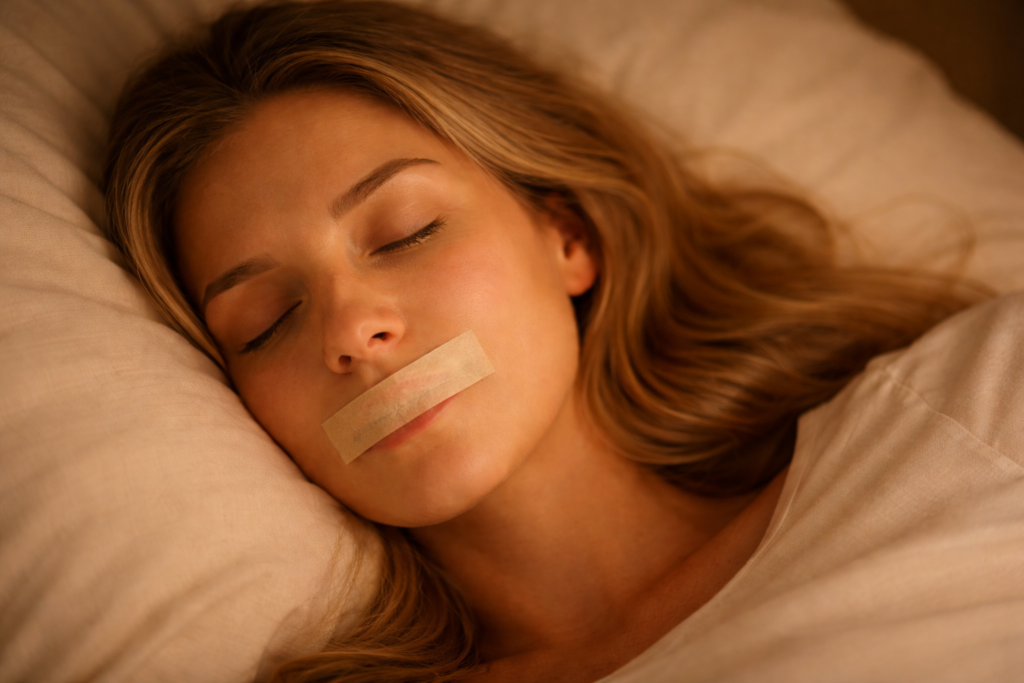
there are products made specifically for this: SomniFix (has a built-in breathing vent which is nice if you’re anxious about congestion), Hostage Tape, Myotape. skin-safe, hypoallergenic, designed to come off easily without taking your skin with them.
if you don’t want to buy a dedicated product, 3M Micropore surgical tape is what most people recommend as the low-cost alternative. it’s gentle, it’s widely available at any pharmacy, and it releases cleanly. medical-grade paper tape works similarly. a small horizontal strip across the centre of the lips — or an X if you want slightly more coverage — is all you need. you’re not sealing anything. just keeping the lips gently together.
first-night tip that I wish someone had told me: wear the tape for an hour while you’re still awake. just sitting, reading something, watching TV. so you know what it feels like, so you confirm you can breathe fine, so you don’t wake up at 2am in a small panic because there’s tape on your face and you forgot. that adjustment period is real and taking ten minutes before sleep is just smarter than not.
who is mouth taping actually for
the clearest candidates are people who: wake up regularly with a dry mouth or sore throat, snore mildly or have been told their breathing is loud, feel unrefreshed after what should be enough sleep, and — this part matters — can breathe comfortably through their nose when awake.
it’s not for people with untreated significant sleep apnea. it’s not useful if your nose is structurally blocked. and it’s not the first thing to address if your sleep problems are more fundamental — a chaotic schedule, no wind-down time, a room full of light and noise. if you haven’t sorted those yet, start there. we have a piece on resetting your sleep schedule that covers the basics, and it’s a better starting point than tape if you’re building from zero.
but if the foundations are mostly in place and you’re still waking up dry-mouthed, still getting snoring complaints, still not feeling like the sleep is actually doing anything — a roll of 3M Micropore tape costs about three dollars. the worst case is you peel it off in your sleep and wake up the same as before. the upside is meaningful enough to be worth finding out.
frequently asked questions about mouth taping for sleep
can mouth taping help with snoring?
for snoring caused by mouth breathing — yes, it can reduce it. mouth breathing causes the jaw to drop and the tongue to fall back, partially blocking the airway. keeping the mouth closed redirects breathing through the nose and keeps the airway in a more stable position. it won’t fix snoring caused by structural issues or significant sleep apnea. but for garden-variety mouth breathers, mouth taping for sleep is worth trying.
is it dangerous to tape your mouth shut while sleeping?
not for most people who can breathe adequately through their nose. the tape used isn’t airtight, and dedicated sleep tapes are designed to release easily. it becomes risky if you have significant nasal obstruction, untreated sleep apnea, or take sedatives — in those cases, avoid it until you’ve spoken to a doctor.
what kind of tape is best for mouth taping?
purpose-made options like SomniFix or Hostage Tape are the most comfortable. 3M Micropore surgical tape is the most accessible low-cost alternative. avoid anything not designed for skin contact.
how long does it take to see results from mouth taping?
some people notice a difference the first night — usually less dry mouth, sometimes less snoring reported by partners. sleep quality improvements like better HRV or deeper sleep stages tend to show up after a few consistent nights, if they’re going to show up at all.
should I try mouth taping if I have sleep apnea?
only with medical guidance. mild cases showed some benefit in a 2022 study, but moderate-to-severe sleep apnea requires proper treatment — CPAP or other medical interventions. don’t substitute tape for a diagnosis or prescribed treatment.
one honest caveat
the mechanistic case for nasal breathing over mouth breathing is solid — the nitric oxide, the parasympathetic activation, the airway geometry, all of that is well-supported. the specific evidence that mouth taping as an intervention measurably improves sleep outcomes at scale is still early. the studies are small. more research is coming but it’s not here yet in volume.
what exists is a plausible mechanism, a handful of promising small studies, and consistent reports from people who fit the profile and noticed real changes. that’s enough to think it’s worth trying carefully. it’s not enough to call it settled science.
try it with the right tape. confirm your nose works first. give it a week.
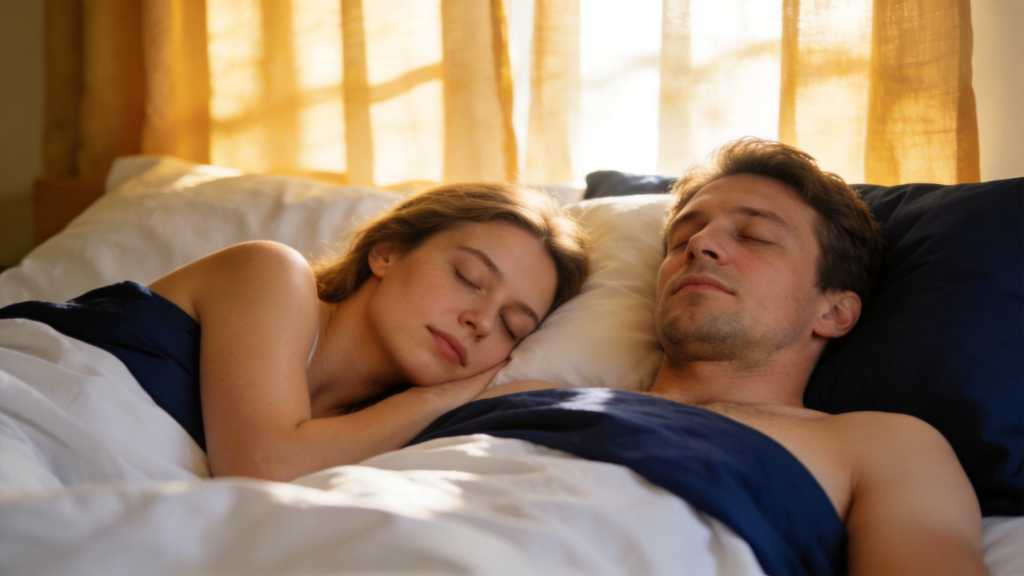
my partner still does it every night. I still do too. neither of us reaches for water the second we wake up anymore. that’s not a clinical trial. but it’s 7am and I’m not thirsty, and that counts for something.
This article is for informational purposes only and does not constitute medical advice. Always consult a qualified healthcare professional before making changes to your health routine.