

I remember one cough that got worse only when I tried to sleep. During the day, it was annoying but manageable. At night, the second my head hit the pillow, my throat started acting like it had been waiting all day for its big performance.
Flat on my back was the worst. I would lie there, cough once, cough again, sit up, drink water, lie down, and then repeat the whole stupid little routine ten minutes later.
If you are looking for the best sleeping position for cough, the answer is usually not complicated: sleep slightly elevated, preferably on your side, with your head and chest raised enough that mucus, throat irritation, or reflux has less chance to bother you. Not glamorous. But often useful.
The part people forget is that coughs are not all the same. A dry tickle cough is different from a mucus-heavy cough. A reflux cough is different from a cold cough. A cough from postnasal drip has its own irritating personality. So the best position depends a little on what is triggering yours.
Best sleeping position for cough: start elevated
The safest place to start is with elevation. Not just one extra pillow shoved under your neck. I mean raising your head, shoulders, and upper chest so your airway is not lying completely flat.
When you lie flat, mucus can pool toward the back of your throat. Acid reflux can creep upward. Your throat can feel drier. Any one of those can trigger that miserable cough loop where coughing irritates the throat, then the irritated throat makes you cough more.
According to the Sleep Foundation, coughing is one of those symptoms that can seriously disturb sleep, especially when it comes with cold symptoms, throat irritation, or congestion. That sounds obvious when you are living it, but it helps explain why position matters so much at night.
A wedge pillow can help because it lifts the upper body more evenly. Stacking regular pillows sometimes works, but it can also bend your neck forward and make you wake up sore. Been there. Not worth it.
Side sleeping usually beats back sleeping
For a cough, side sleeping is often more comfortable than sleeping flat on your back. It can help keep drainage from sitting right at the back of your throat, and for some people it makes breathing feel a little easier.
I would start with whichever side feels more open and less irritating. Some people prefer the left side, especially if reflux is part of the problem. Others just need to avoid lying flat. There is no prize for choosing the “perfect” side if the position keeps waking you up anyway.

Here is my pushback on the usual advice: “sleep on your side” is not enough if your shoulder is screaming after twenty minutes. Use a pillow between your knees. Hug a pillow if your top shoulder collapses forward. Make the position livable, or you will abandon it by midnight.
If congestion or sinus drainage is part of your cough, you may also want to read the guide on the best sleeping position for sinus drainage. Postnasal drip is one of those things that can feel like a throat problem when the real mess started in your nose.
Why coughing gets worse when you lie down
Night coughs feel personal. Like your body waited until the house was quiet to become difficult.
But there are boring reasons it happens. Lying down changes how mucus drains. Dry bedroom air can irritate the throat. Reflux can be more noticeable when gravity is no longer helping. Asthma symptoms can also flare at night for some people.
The Mayo Clinic lists postnasal drip, asthma, and acid reflux among common causes of chronic cough. That does not mean every nighttime cough is serious. Most are not. But it does mean the cause matters.
This is where people sometimes get stuck. They keep treating the cough as one single thing, when really it may be drainage, reflux, airway irritation, a lingering virus, allergies, medication side effects, or some weird combination that only shows up after bedtime.
If the cough feels wet or mucus-heavy
If your cough feels wet, rattly, or mucus-heavy, lying flat often makes it worse. Elevation is your friend here. Side sleeping can also help because it may keep mucus from collecting in one irritating spot.
A warm shower before bed sometimes helps loosen things up. A small drink of water can calm the throat. I would not chug a giant glass unless you enjoy waking up to pee, which is its own separate betrayal.
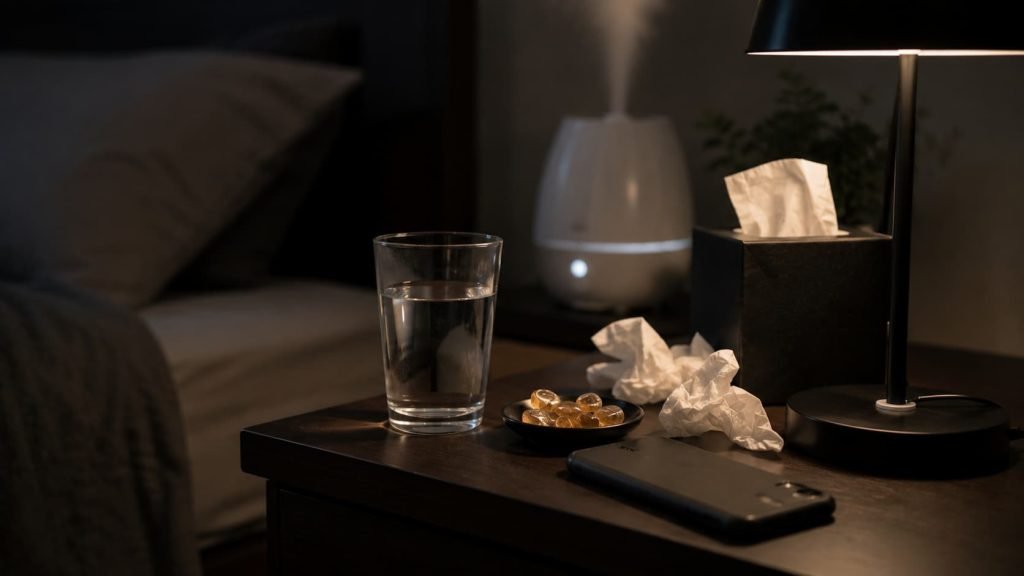
Dry air can also make mucus feel thicker. If your room gets desert-dry at night, a humidifier may help, especially during winter or when the heat is running. Just clean it properly. A dirty humidifier is not a sleep tool. It is a problem with a plug.
Room temperature matters too. If you are overheating, sweating, or breathing hot dry air, your throat may feel worse. I wrote more about that in perfect temperature for sleep, and cough nights are one of those times when a cooler, calmer room can make a real difference.
If the cough feels dry and tickly
A dry cough is somehow more annoying than a wet one. At least mucus gives you a villain. A dry cough is just this tiny electric itch in your throat that keeps setting off the alarm.
For a dry cough, try sleeping elevated and avoiding direct airflow from a fan or vent. Air blowing across your face all night can dry the throat and make the tickle worse. I learned this after blaming basically everything except the fan pointed directly at me.
A sip of water before sleep may help. A lozenge before bed may help some people too, as long as you use it safely and do not fall asleep with anything in your mouth. Common sense, but still worth saying.
If your dry cough keeps going for weeks, or it comes with wheezing, shortness of breath, fever, chest pain, or blood, that is not a “just adjust your pillow” situation. That needs proper attention.
If reflux is causing the cough
Reflux coughs are sneaky. You may not always feel classic heartburn. Sometimes it is throat clearing, hoarseness, sour taste, or coughing that gets worse after lying down.
If reflux seems likely, the best sleeping position for cough is usually upper-body elevation plus left-side sleeping. That setup gives gravity a little help and may reduce the chance of stomach acid irritating your throat overnight.
The Mayo Clinic notes that nighttime acid reflux can include an ongoing cough. That connection gets missed a lot because people expect reflux to feel like obvious heartburn. It does not always play that clean.
Late meals make this worse for many people. So does alcohol. So does lying flat right after a heavy dinner and pretending your stomach is not going to complain. I have tried that strategy. My review is poor.
If snoring or sleep apnea is also in the picture
Sometimes coughing at night is not only about a cough. If you wake up choking, gasping, snoring hard, or feeling like your breathing keeps getting interrupted, sleep apnea may be worth considering.
Back sleeping can make snoring and apnea worse for some people. Side sleeping may help keep the airway more open, though it is not a cure if sleep apnea is actually present.
If that pattern sounds familiar, the article on the best sleep position for sleep apnea may fit better than a general cough article. A cough that appears with choking or gasping deserves a closer look.
How to set up your pillows without making your neck angry
This sounds small, but it matters. A bad pillow setup can turn a cough night into a neck pain morning.
Use one pillow that supports your head in line with your spine. Then raise the upper body with a wedge pillow or by lifting the mattress/head of bed. If you only stack pillows under your head, your chin may tilt toward your chest, and that can feel awful after a few hours.
If you are side sleeping, keep your neck level. Put a pillow between your knees if your hips twist. If you keep rolling onto your back, a body pillow behind you can make that harder.
Not elegant. Effective enough.
What I would try tonight
If I had a cough tonight and wanted the simplest setup, I would do this: left or comfortable side, upper body slightly elevated, water nearby, room not too hot, no fan blasting my face, and no heavy food close to bed.
That is not a miracle plan. It is just removing the obvious irritants. Sometimes that is enough to get from “awake every twenty minutes” to “still coughing, but at least sleeping in chunks.”
And honestly, sleeping in chunks is underrated when you are sick. Perfect sleep is not happening. The goal is less misery.
FAQ
What is the best sleeping position for cough?
The best sleeping position for cough is usually side sleeping with your head and upper chest slightly elevated. This position may help reduce throat irritation from mucus, drainage, or reflux while you sleep.
Is it better to sleep sitting up with a cough?
Sleeping fully upright can help during a rough night, but it is not always comfortable for long. A wedge pillow or gentle upper-body elevation is often easier to maintain than sitting straight up in bed.
Should I sleep on my back or side when coughing?
Side sleeping is usually better for coughing at night. Back sleeping, especially flat on your back, can let mucus collect near the throat and may worsen reflux or airway irritation.
Does elevating your head help a nighttime cough?
Yes, elevation can help many nighttime coughs. It may reduce postnasal drip pooling, reflux irritation, and the feeling of congestion when lying flat.
Why do I cough more at night?
Coughing can get worse at night because lying down changes mucus drainage, dry air irritates the throat, reflux becomes easier, and some airway conditions feel worse during sleep.
When should I worry about a cough at night?
Get checked if the cough lasts for weeks, keeps getting worse, brings up blood, comes with chest pain, fever, wheezing, shortness of breath, or repeatedly wakes you from sleep. A cough that will not quit is information, not just an inconvenience.
The short version
The best sleeping position for cough is usually elevated side sleeping. Raise your upper body, avoid lying flat, and choose the side that keeps your breathing and throat most comfortable.
If mucus is the issue, elevation and side sleeping may help drainage feel less irritating. If reflux is involved, left-side sleeping with your torso raised is usually the better bet. And if coughing comes with gasping, choking, wheezing, or weeks of poor sleep, the pillow setup is only part of the story.
This article is for informational purposes only and does not constitute medical advice. Always consult a qualified healthcare professional before making changes to your health routine.