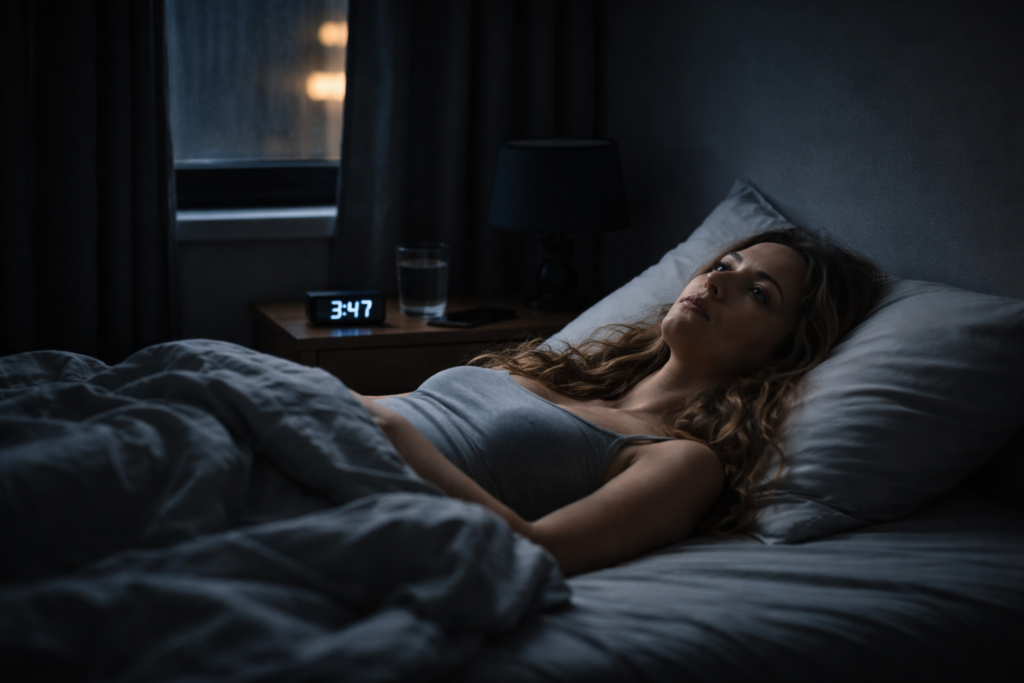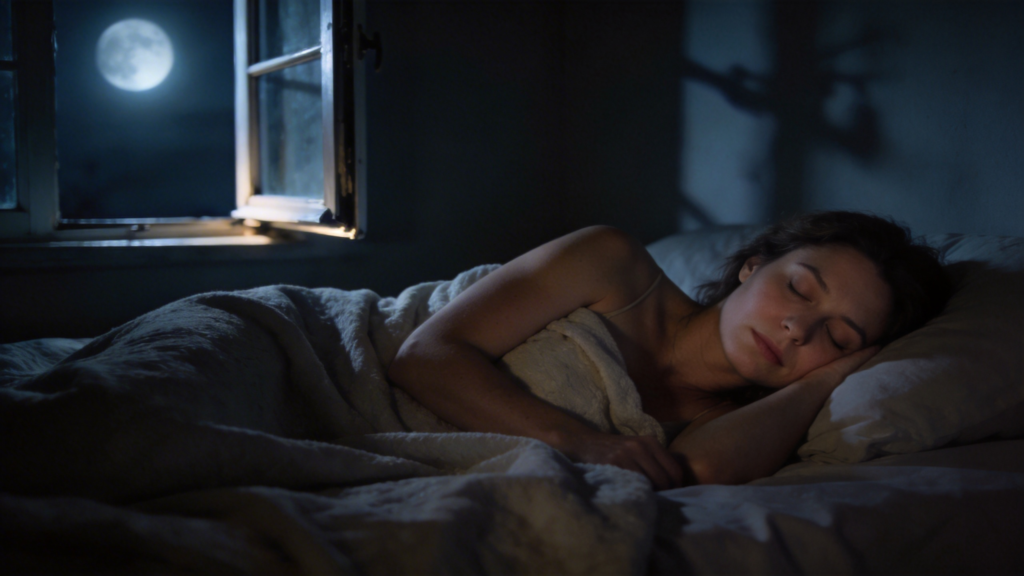
The best sleeping position for period cramps is the fetal position — curling onto your side with knees drawn toward your chest — because it relaxes the abdominal muscles and reduces pressure on the uterus. Sleeping on your back with a pillow under your knees is another solid option for those who can’t tolerate side sleeping. Most people find significant relief just from switching positions, without needing to change anything else.
If you’re reading this at midnight with cramps that feel like someone’s wringing out your insides — I get it. Let’s get into what actually works for finding the best sleeping position for period cramps.
Why Your Sleeping Position for Period Cramps Actually Matters
Here’s the thing most people don’t think about: when you’re lying down, the position of your body changes how much tension your abdominal and pelvic muscles are holding. And during your period, those muscles are already under stress.
The uterus contracts to shed its lining. That’s what cramps are — uterine contractions, driven by hormone-like compounds called prostaglandins. According to the Sleep Foundation, menstruation is one of the leading causes of sleep disruption in women of reproductive age, with more than half experiencing cramping severe enough to affect rest. For roughly 10%, the pain is severe enough to interfere with daily activities — and sleep obviously counts.
When you sleep in a position that puts additional pressure on your abdomen, you’re essentially adding to the tension that’s already there. Flip that — find a position that lets those muscles decompress a little — and the pain often becomes more manageable. Not gone, but manageable. There’s a difference.
Blood flow matters too. Some positions restrict circulation to the pelvic region, which can make cramping worse. Others actually support it. The Sleep Foundation notes that body positioning during sleep can affect blood flow patterns, including in the lower abdomen and pelvis.
The 5 Best Sleeping Positions for Period Cramps
1. Fetal Position — The Best Sleeping Position for Period Cramps
Curl onto your side — either side works, though left tends to feel better for most people — and draw your knees up toward your chest. Not all the way, you’re not trying to be a pretzel. Just a natural, comfortable curl.
Why it works: it takes the stretch off your abdominal muscles. When you’re lying flat, those muscles are slightly extended. Curling inward lets them relax. Less tension in the muscles that are already dealing with uterine contractions means less compounded pain.
Add a pillow between your knees if you can — it keeps your hips stacked and your lower spine from rotating, which matters more than you’d think when you’re trying to sleep through cramps without adding back pain to the situation. If you want to dig deeper into how pillow placement affects spinal alignment during sleep, we’ve covered that separately.
2. Back Sleeping with Knees Elevated
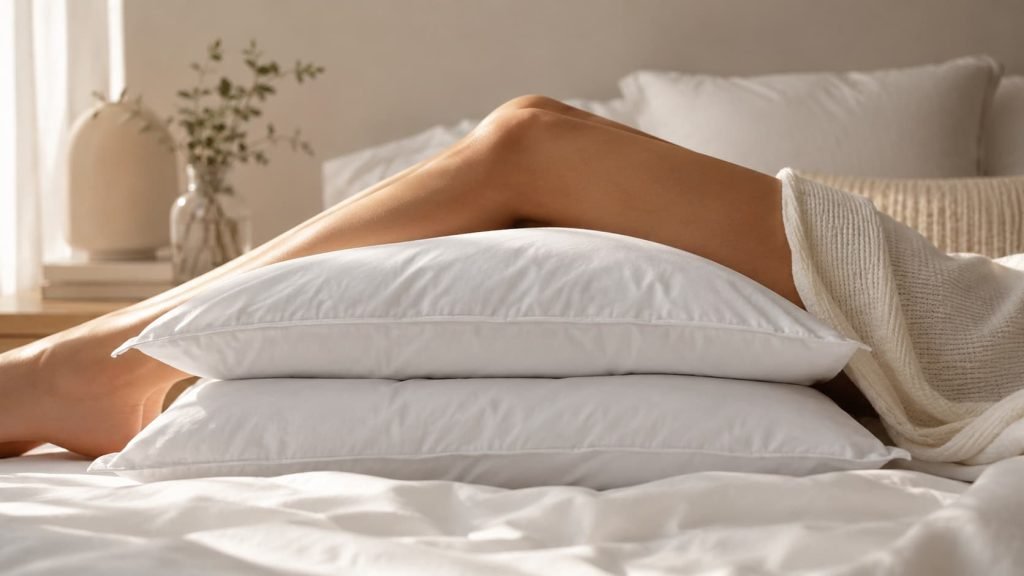
Lie on your back and put a pillow — or stack two — under your knees so they’re bent at roughly a 30-degree angle. This one doesn’t work for everyone, but for people who can’t sleep on their side, it’s genuinely worth trying.
The elevated knees reduce the curve in your lower back and take some of the strain off your lumbar muscles. For cramps that radiate into the lower back — which, for a lot of people, is where they feel it most — this can make a real difference.
What you want to avoid here is lying completely flat on your back with legs extended. That position actually increases the arch in your lower back and can worsen radiating pelvic pain. The pillow under the knees is doing real work, not just padding.
3. Side Sleeping with a Body Pillow
This is a variation on fetal, but instead of just tucking your knees up, you hug a long body pillow in front of you and tuck it between your knees. The advantage over regular fetal is that your whole torso has something to rest against, which reduces the unconscious muscle tension that comes from trying to hold a curled position all night.
A lot of people find they naturally uncurl during sleep and end up flat on their stomach — which, as I’ll get to, is one of the worst positions for cramps. The body pillow gives you something to anchor against so you stay in a better position through the night without having to consciously maintain it.
4. Child’s Pose Before Bed
This one isn’t really a sleeping position you’d stay in all night — it’s more of a pre-sleep position. Kneel on your bed, then fold forward so your forehead rests on the mattress and your arms extend out in front of you. Stay there for five to ten minutes before trying to sleep.
It opens up the lower back, stretches the hip flexors, and takes pressure off the uterus entirely. A lot of people find their cramps drop noticeably after a few minutes in this position. The yoga community has known about this for a long time. Sleep researchers are catching up.
5. Semi-Prone with Hip Elevation
This is a niche one, but for people who feel better lying on their stomach and can’t tolerate any side position, it can help. Instead of lying completely flat on your stomach — which compresses the abdomen directly — try placing a flat pillow or folded blanket under your hips. It lifts the pelvis slightly and reduces the direct pressure on the lower abdomen.
It’s not ideal. Stomach sleeping in general is hard on the neck and lower back. But if it’s the only position you can sleep in, the hip elevation adjustment is better than nothing.
Sleeping Positions to Avoid During Period Cramps
Flat stomach sleeping is the main one. When you lie face-down with nothing under your hips, your uterus is essentially pressed into the mattress. That added pressure on an already-contracting uterus is — not helpful.
Flat back sleeping with legs fully extended is also rougher than it needs to be. The extended position increases lumbar arch and can worsen referred pain in the lower back. If you’re a back sleeper, the knee pillow modification makes a meaningful difference.
What Else Helps When Period Cramps Are Ruining Your Sleep
Your sleeping position for period cramps is one lever. But if you’re lying in the right position and still can’t sleep, there are a few other things worth combining.
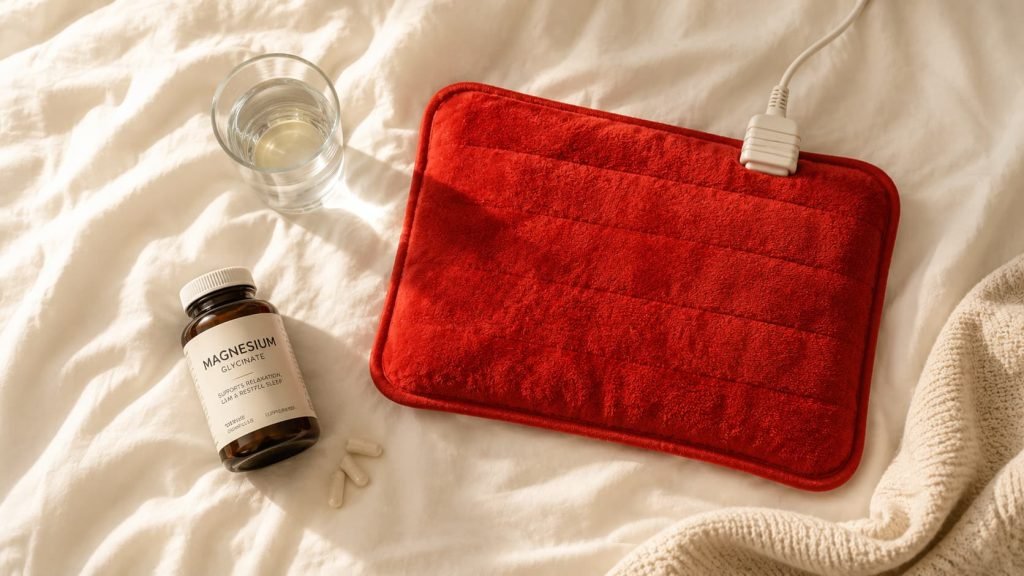
Heat is probably the most consistently effective non-medication option. A heating pad on your lower abdomen for 15–20 minutes before bed can reduce the intensity of cramping significantly. Research published in Obstetrics & Gynecology found that continuous low-level heat therapy was comparable to ibuprofen for primary dysmenorrhea pain relief. That’s not a small thing.
Magnesium is worth mentioning — magnesium glycinate specifically. It helps relax smooth muscle, which the uterus is. Some research suggests it can reduce prostaglandin production, which is the underlying driver of cramping. I’ve written more about magnesium for sleep on this site; the mechanism for period cramps is a little different but the muscle-relaxation piece overlaps.
Keep the room cool. This one isn’t period-specific — it’s just good sleep science. Your core body temperature needs to drop to initiate sleep, and a warm room fights that. The Sleep Foundation recommends somewhere between 60–67°F as the optimal sleep temperature. During your period, when you may already be running slightly warmer, this matters more than usual.
And — this is going to sound obvious but it’s often overlooked — a warm shower 60 to 90 minutes before bed can help on two levels. It relaxes the muscles in your lower back and abdomen, and the rapid cooling afterward triggers your body’s sleep onset mechanisms. Timing matters here; right before bed doesn’t give the cooling effect time to kick in. More on the ideal shower timing for sleep if you want the full breakdown.
When Period Cramp Sleep Disruption Is Worth Talking to a Doctor About
Most menstrual cramping is primary dysmenorrhea — meaning it’s not caused by an underlying condition, just prostaglandins doing their thing. But if your cramps are severe enough to regularly disrupt your sleep, if they’ve gotten worse over time, or if they’re happening outside of your period, that’s worth mentioning to a doctor.
Conditions like endometriosis, uterine fibroids, and adenomyosis can all cause cramping that’s significantly more painful than typical menstrual cramps. Endometriosis alone affects an estimated 10% of people assigned female at birth, according to the World Health Organization, and it often goes undiagnosed for years because the pain gets dismissed as “bad periods.”
Don’t white-knuckle it through months of severe pain just because it happens every month. Severe, consistent sleep disruption from cramps is a medical conversation, not a coping problem.
Frequently Asked Questions
Q: What is the best sleeping position for period cramps?
A: The fetal position — lying on your side with knees drawn toward your chest — is widely considered the most effective sleeping position for period cramps. It relaxes the abdominal muscles and reduces pressure on the uterus, which helps ease cramping. Adding a pillow between the knees improves spinal alignment and makes the position more comfortable to hold through the night.
Q: Should I sleep on my left or right side during my period?
A: Either side can work, but many people find the left side slightly more comfortable. Left-side sleeping also supports better circulation and digestion, which can be helpful during menstruation when bloating is a factor. That said, whichever side feels more comfortable for your specific cramp location is fine — there’s no rigid rule here.
Q: Why do period cramps feel worse at night?
A: A few things contribute. When you lie down, there’s less distraction from pain, so you feel it more acutely. Cortisol — a natural anti-inflammatory — drops at night, which can make inflammation-related pain like cramping feel more intense. Body temperature and hormonal fluctuations during sleep also play a role. The sleeping position you’re in matters a lot for how much pressure is on your pelvic area.
Q: Does sleeping on your stomach make period cramps worse?
A: Yes, for most people it does. Lying face-down places direct pressure on the uterus and lower abdomen, which compounds the pain from uterine contractions. If stomach sleeping is the only position you can tolerate, placing a pillow under your hips to elevate the pelvis slightly can reduce that direct compression.
Q: Can a heating pad help with period cramps while sleeping?
A: Yes. Research has found that continuous low-level heat therapy is comparable to ibuprofen for reducing primary dysmenorrhea pain. Using a heating pad for 15–20 minutes before bed is generally safer than sleeping with one on all night — most people find the pre-sleep application reduces pain enough to fall asleep without needing to keep it running.
Q: How long do period cramps typically last at night?
A: For most people, cramping is most intense during the first one to two days of their period. Night symptoms tend to mirror daytime intensity — so if your cramps are mild during the day, they’re usually manageable at night with position adjustments. If nighttime cramps are consistently more severe than daytime, it’s worth discussing with a doctor, as this can sometimes indicate an underlying condition.
Q: When should I see a doctor about period cramps disrupting my sleep?
A: If cramps are regularly severe enough to prevent sleep, if they’ve gotten noticeably worse over time, or if you’re experiencing pelvic pain outside of your period, see a doctor. Conditions like endometriosis and uterine fibroids can cause pain that mimics severe menstrual cramping and often goes undiagnosed for years. Consistent sleep disruption from period pain is worth taking seriously, not just managing around.
Sleep during your period shouldn’t have to be a write-off. The right sleeping position for period cramps costs nothing and takes about ten seconds to set up. Start with fetal, add the knee pillow, throw a heating pad on for fifteen minutes before you try to sleep, and see where that gets you. Most people notice a difference the first night they actually try it deliberately instead of just defaulting to whatever position they usually land in.
It’s a small thing. But small things matter a lot at 2AM when your uterus is doing its worst.
This article is for informational purposes only and does not constitute medical advice. Always consult a qualified healthcare professional before making changes to your health routine.