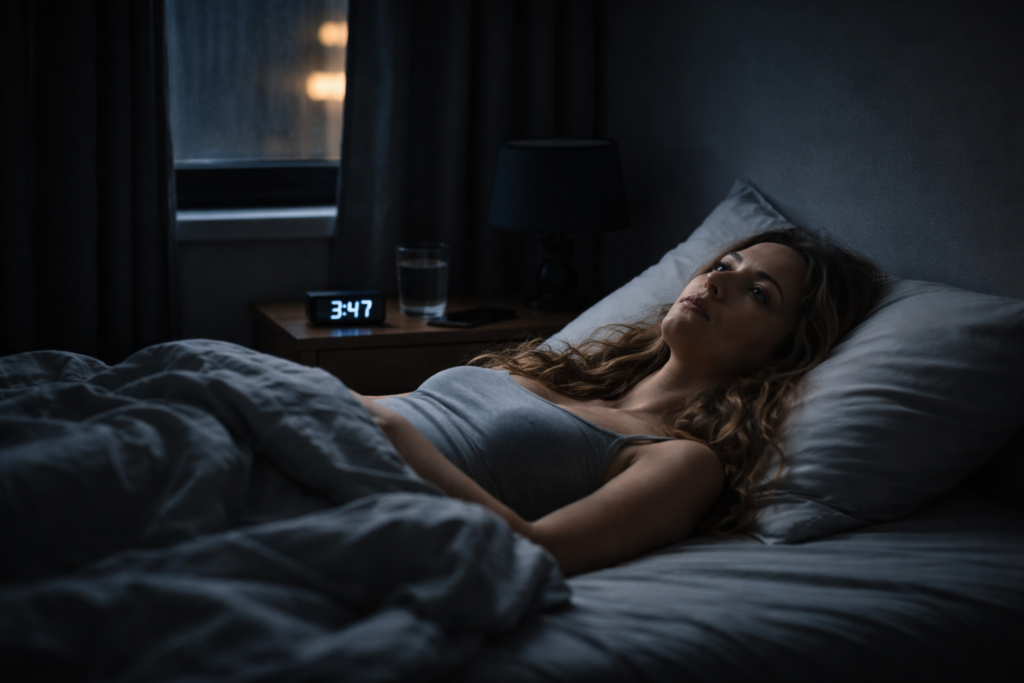
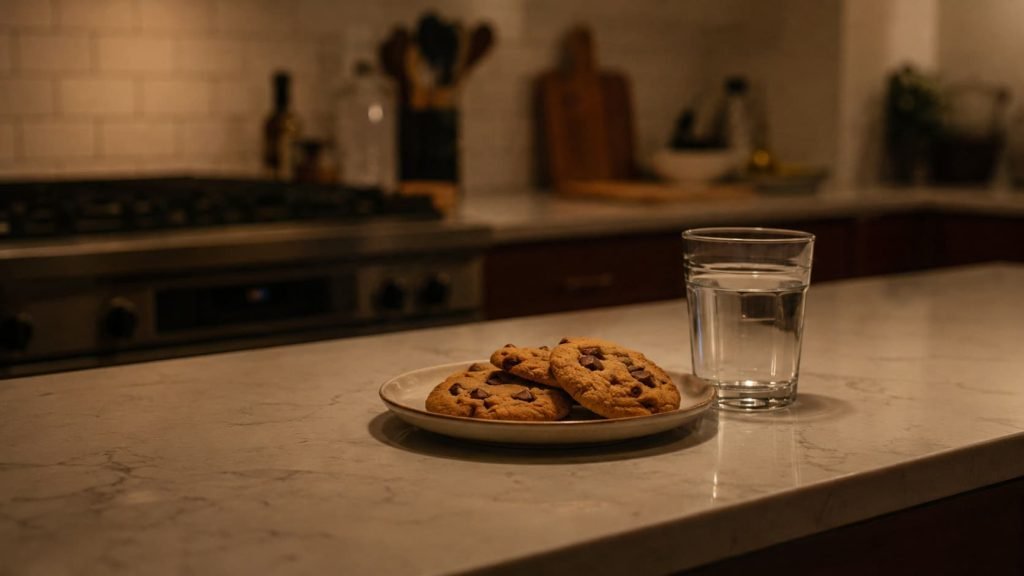
Sugar before bed is not automatically terrible, but a lot of added sugar close to sleep can make the night rougher. It may leave you wired, thirsty, refluxy, or waking up later after your body has already processed the sweet stuff. A small sweet bite after dinner is one thing. Candy, soda, cookies, or ice cream right before lying down is a different night entirely.
I have learned this in a very ordinary way: eating something sweet too late, feeling fine for a while, then waking up at some nonsense hour with my mouth dry and my brain weirdly alert.
Not dramatic. Just inconvenient enough to remember.
The tricky part is that sugar can feel relaxing in the moment. A cookie after a long day feels like a soft landing. A bowl of cereal at midnight feels innocent. A few pieces of chocolate while scrolling in bed barely feel like “eating.”
Then sleep gets patchy, and you wonder what happened.
A little sugar is not the same as a sugar bomb
The amount matters more than people admit.
A small dessert after dinner is not the same as eating half a sleeve of cookies right before bed. Your body knows the difference, even if your tired brain tries to make them sound similar.
When people ask whether sugar before bed is bad, they are usually not talking about one strawberry or a spoonful of yogurt with honey. They mean candy, cake, soda, sweet cereal, ice cream, pastries, or chocolate eaten late enough that digestion and sleep are happening at the same time.
That is where the problem tends to show up.
The Sleep Foundation lists high-sugar foods among foods that may interfere with better sleep. That does not mean sugar works like caffeine. It is usually less direct than that. But too much added sugar at night can make sleep feel lighter and less settled.
If you already sleep badly, even small disruptions feel bigger. That is the annoying part.
Sweet food can make you feel awake at the wrong time
Sugar gives your body quick energy. That is kind of the point.
At 3 p.m., quick energy may be useful. At 11 p.m., not so much. If you eat a lot of fast sugar close to bed, your body has to deal with that while you are trying to wind down. Some people feel a little wired. Others fall asleep fine, then wake later.
I do not think every nighttime wake-up is a blood sugar crash. That explanation gets thrown around too casually online.
But I do think the spike-and-drop pattern is real enough to pay attention to. Especially if the wake-up happens after late sweets, alcohol, or a skipped dinner followed by dessert.
If you keep waking up around the same early-morning window, that pattern may be worth comparing with waking up at 3am and cortisol. Sugar may not be the whole explanation, but it can be part of the noise.
The “I just need something sweet” feeling is real
I do not love advice that acts like late-night sugar cravings are just a discipline problem.
Sometimes you want something sweet because you are tired. Sometimes dinner was too light. Sometimes you are stressed and your brain is looking for a little reward before the day ends. Sometimes you stayed on your phone too long and now you are in that weird second-wind zone where cereal sounds like a personality trait.
That does not mean eating sugar before bed is a great habit. It just means the craving usually has a context.
If you are hungry, food may help. If you are stressed, sugar may distract you for ten minutes and then leave you with the same stress plus crumbs.
I have done both.
Dessert after dinner is different from sugar in bed
Timing changes the whole thing.
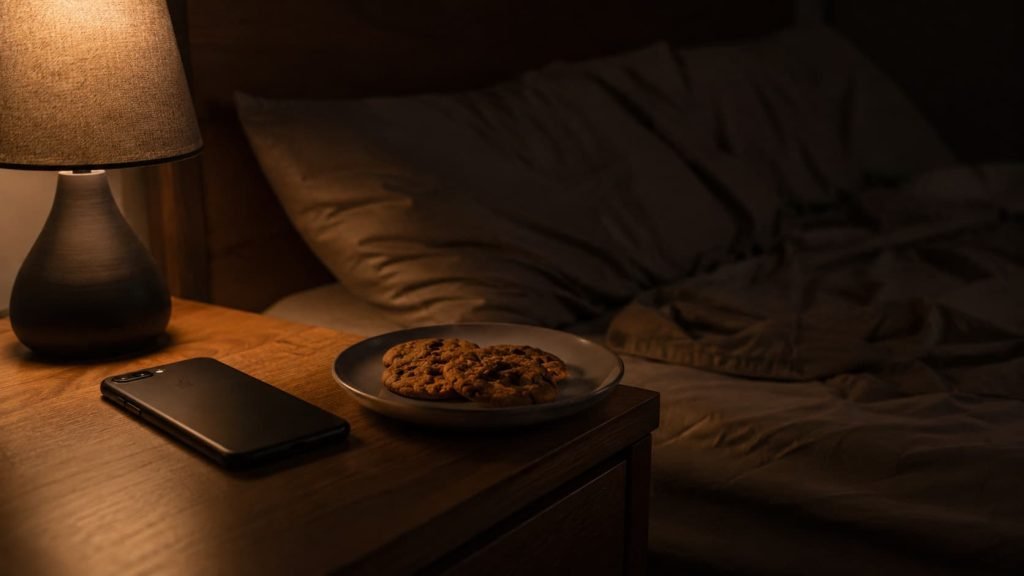
A dessert after dinner gives your body time to process it before sleep. Eating sweets while sitting in bed is much more likely to blur the line between wind-down and stimulation.
Also, bed sugar tends to come with other sleep problems: scrolling, late light exposure, staying up past your sleepy window, and eating without really noticing how much you ate.
That is how “one piece” becomes several. Not because you are weak. Because you are tired, distracted, and the bag is open.
If chocolate is the thing you reach for most often, it has its own issue because chocolate can bring both sugar and caffeine. I covered that more directly in eating chocolate before bed.
Sugar can also make reflux worse for some people
The sugar itself is not always the whole problem.
Sweet foods often come with fat, chocolate, mint, dairy, or large portions. Think ice cream, brownies, cookies, milkshakes, sweet pastries. Those can sit heavier than they look.
If you lie down soon after eating them, reflux can become more likely. Burning chest, sour taste, coughing, throat irritation, or waking up uncomfortable can all turn a small dessert into a bad night.
The Mayo Clinic notes that heartburn can happen after eating and may occur at night. If your sweet snack keeps coming with nighttime burning or throat irritation, I would not ignore that pattern.
Try moving sweets earlier. Try a smaller portion. Try not lying flat immediately after eating.
Not glamorous advice. Usually useful.
What about fruit before bed?
Fruit is not the same thing as candy.
Fruit has natural sugar, yes, but it also comes with water, fiber, and other nutrients. That changes how it feels in the body. A banana or apple before bed is very different from soda or gummy candy.
That does not mean fruit is perfect for everyone at night. Some people get reflux from certain fruits. Some people do not want any food close to bed. But if you want something sweet, fruit is usually a calmer place to start.
I wrote about this more in eating a banana before bed. The short version: fruit can be a reasonable nighttime snack when the portion is normal and your stomach handles it well.
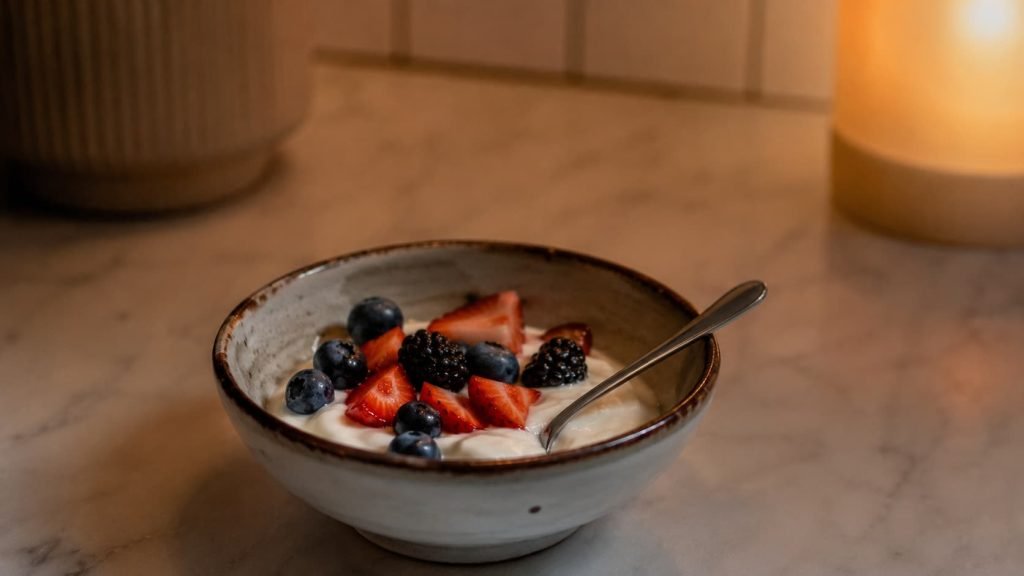
A banana with a little peanut butter. Apple slices. Yogurt with berries. These feel different from candy because they do not hit your system in quite the same sharp way.
Added sugar is the bigger problem
When people talk about sugar before bed, added sugar is usually the thing to watch.
Added sugar is the sugar put into foods and drinks during processing or preparation: soda, candy, cookies, sweet cereal, flavored yogurt, desserts, coffee drinks, energy drinks. It is easy to eat more than you realize because it hides in foods that do not always feel like dessert.
The American Heart Association recommends limiting added sugar as part of a heart-healthy eating pattern. That is a daily health issue, not just a bedtime issue.
For sleep, the bedtime angle is simpler: a big hit of added sugar late at night gives your body more work when it should be winding down.
If you are doing it once in a while, fine. Life includes cake. But if sweet snacks have become the nightly bridge between stress and sleep, that is worth noticing.
What to eat instead when you want something sweet
You do not have to replace sugar with sadness.
If you want something sweet at night, try making it slower and smaller. That usually works better than pretending you do not want anything and then eating cookies straight from the package twenty minutes later.
A few options that tend to sit better:
Greek yogurt with berries. A banana with peanut butter. Apple slices with almond butter. A small bowl of oatmeal. A piece of toast with peanut butter. Warm milk with cinnamon, if that is your thing.
None of these are magic. They just give you sweetness with more staying power.
If you want a broader list, good snacks to eat before bed has more ideas that are less likely to make the night feel jagged.
When sugar before bed is worth changing
I would change the habit if you notice a pattern.
You wake up thirsty. You wake up around 3 a.m. You feel hot. You have reflux. You need more sweets to feel settled. Your sleep feels light. You wake up tired even after enough hours.
One late dessert does not mean much. A repeated pattern means something.
If you have diabetes, prediabetes, reactive blood sugar issues, frequent reflux, or sleep that is getting worse, bedtime sugar is worth discussing with a doctor or dietitian. Especially if symptoms are persistent or affecting daily life.
Do not turn one cookie into a health crisis. But do not ignore a nightly habit that keeps making mornings harder.
FAQ
Is sugar before bed bad for sleep?
It can be, especially if it is a large amount of added sugar close to bedtime. Some people fall asleep fine but wake later, feel thirsty, or notice lighter sleep after late sweets.
Does sugar before bed cause nightmares?
Sugar does not directly cause nightmares for everyone. But if it disrupts sleep, makes you wake more often, or causes reflux or overheating, you may remember dreams more clearly or feel like sleep was more intense.
Why do I wake up after eating sugar at night?
Late sugar may affect blood sugar, thirst, digestion, or reflux. It may also come with other sleep-disrupting habits like scrolling in bed or eating too close to sleep.
Is fruit before bed bad because it has sugar?
Fruit is different from candy or soda because it contains fiber, water, and nutrients. A normal serving of fruit before bed is fine for many people, though reflux or blood sugar issues can change that.
What is better than candy before bed?
Try something sweet but slower: yogurt with berries, banana with peanut butter, apple slices with almond butter, oatmeal, or toast with peanut butter. The goal is to calm hunger, not spike energy.
How long before bed should I stop eating sugar?
If sugar affects your sleep, try keeping sweet foods at least two to three hours before bed. If you only want a small snack, choose something with fiber or protein instead of straight added sugar.
My honest take
I would not make sugar before bed into a moral issue. That usually makes people weird around food, and it does not help sleep much either.
But I would be honest about the pattern.
If a small dessert after dinner is fine, let it be fine. If late sugar keeps turning into dry mouth, reflux, hot sleep, 3 a.m. wake-ups, or groggy mornings, your body is giving you useful feedback.
Move it earlier. Make it smaller. Pair sweetness with something steadier. And maybe keep the candy out of bed, because bed snacks have a way of becoming less “one piece” and more “what happened to the bag.”
This article is for informational purposes only and does not constitute medical advice. Always consult a qualified healthcare professional before making changes to your health routine.