
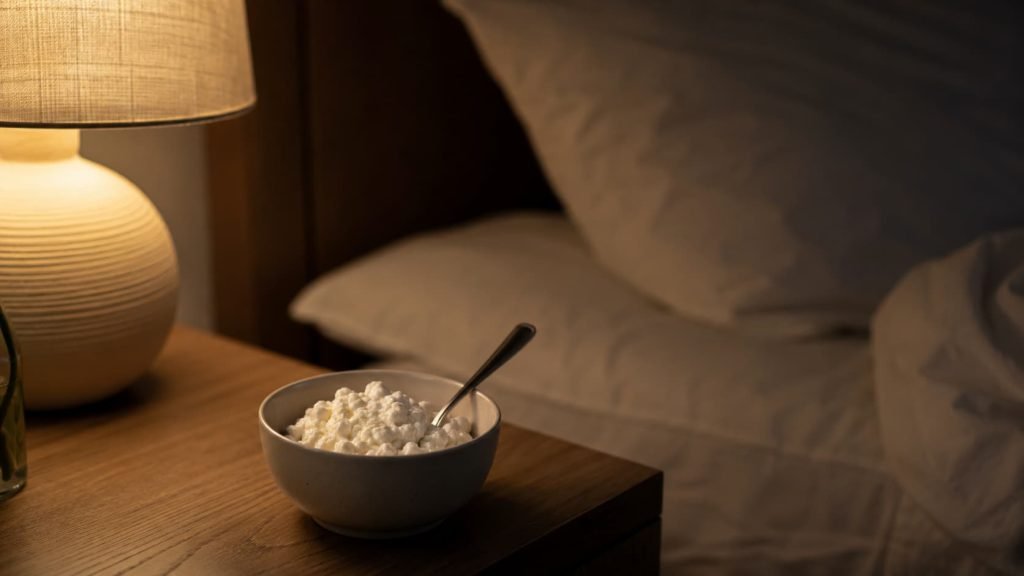
I first tried cottage cheese before bed during a phase where I was pretending to be very serious about protein.
You know the kind of phase. You buy the big tub. You tell yourself this is who you are now. A person who eats sensible protein snacks at night instead of standing in front of the pantry negotiating with crackers.
I did not even like cottage cheese that much at first.
That texture takes a minute.
But I understood the appeal pretty quickly. It is cold, easy, filling, and oddly practical. No cooking. No blender. No protein powder dust on the counter. Just a spoon and a bowl and a snack that feels like it was designed by someone who owns meal prep containers.
Did it help me sleep?
Kind of.
Not because cottage cheese is a magical sleep food. It is more boring than that. It helped when hunger was the thing keeping me awake.
Why cottage cheese before bed became a thing
Cottage cheese is popular at night mostly because of casein protein.
Casein is a slow-digesting dairy protein. That is the whole pitch. You eat it before bed, it digests slowly, and your body gets a steady supply of amino acids while you sleep.
This is why fitness people talk about it so much.
The idea is not ridiculous. Research on pre-sleep protein has looked at whether protein before bed can support overnight muscle protein synthesis, especially after exercise. A review published in Frontiers in Nutrition notes that pre-sleep protein can be a useful strategy for muscle recovery in certain exercise contexts.
That does not mean everyone needs cottage cheese at 10 p.m.
It means it can make sense for some people. Especially people who train, eat early dinners, or wake up hungry.
I always get suspicious when a normal food gets turned into a secret hack. Cottage cheese is useful. That is enough. It does not need to be a miracle.
It helps most when hunger is the problem
If you are hungry at bedtime, cottage cheese can work surprisingly well.
It is filling without being a full meal. That is the sweet spot. Or the savory spot, I guess, depending on what you put on it.
The protein helps. The texture helps too, weirdly. You eat it slowly. It is not like chips, where your hand keeps moving until the bag is emotionally empty.
I remember eating a small bowl for maybe a week or two during a stretch when dinner was happening too early. It was not life-changing. But I stopped lying in bed thinking about food, which is already a win.
That is where cottage cheese before bed makes the most sense to me.
Not as a sedative.
As a quiet little hunger solution.
How much cottage cheese before bed?
Less than the internet tells you.
A lot of fitness advice talks about big protein targets, but if your goal is sleep, you do not need to turn bedtime into a second dinner. A small bowl is enough for most people.
Start with half a cup.
That is usually enough to test whether it helps without making your stomach feel busy. If you train hard and need more protein, that is a different conversation. But if you are just trying not to wake up hungry, keep it modest.
Too much cottage cheese before bed can feel heavy. It is dairy. It has protein. Some versions have a lot of sodium. All of that can matter once you lie down.
Small is boring.
Small is also usually right.
The sodium thing is easy to miss
This is the part I did not pay attention to at first.
Cottage cheese can be salty. Some brands are very salty. You do not always notice until you are thirsty later, drinking water, and then waking up to use the bathroom.
Nice little chain reaction.
If you are eating cottage cheese before bed, check the sodium. Low-sodium versions exist. They are not always as tasty, because of course they are not, but they may be better at night.
If you already wake up thirsty or pee during the night, salty cottage cheese may not be the best choice. CalmNightly’s article on drinking water before bed gets into that whole annoying balance between thirst and bathroom trips.
Salt makes the balance harder.
What should you put on cottage cheese at night?
This is where people divide into camps.
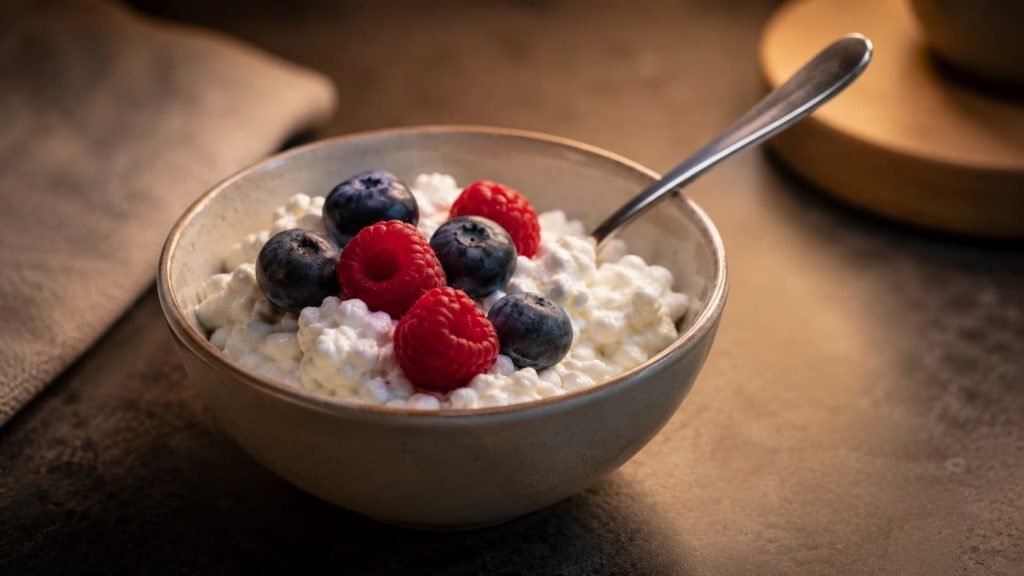
Some people like cottage cheese sweet. Berries, cinnamon, a little honey. Maybe banana slices. Others go savory with pepper, cucumber, or tomatoes. I respect both sides, though I do not understand the tomato-at-night people personally.
If sleep is the goal, keep it simple.
Berries are good. Cinnamon is fine. A few banana slices can work. A tiny drizzle of honey is okay if sugar does not bother your sleep.
Just do not turn it into dessert and then blame the dairy.
I have made that mistake with other foods. The base food was fine. The toppings were the problem. Same thing can happen here.
If you want something lighter and smoother, yogurt may be easier. I already covered that in is it good to eat yogurt before bed. Cottage cheese is chunkier, saltier, and more filling. Yogurt is softer and usually easier for people who are texture-sensitive.
Different tools.
When cottage cheese before bed can backfire
Cottage cheese is not for everyone.
If you are lactose intolerant, it may cause bloating, gas, cramps, or bathroom problems. That is not exactly the peaceful bedtime routine anyone is aiming for.
If dairy gives you reflux or throat irritation, same thing. Skip it. Or at least do not eat it right before lying down.
Some people also just hate the texture. That is allowed. You do not have to suffer through curds because someone online said casein is good.
There are other protein snacks.
Greek yogurt. Milk. Peanut butter on toast. A small serving of nuts. CalmNightly has a broader guide to good snacks to eat before bed, and honestly, that is the better way to think about this. Pick the snack that solves your problem without creating a new one.
Cottage cheese vs protein powder before bed
I would rather eat cottage cheese than drink a huge shake before bed.
That is personal preference.
Protein shakes can work, especially for people who train seriously. But before sleep, a big liquid shake can feel like a lot. It can sit heavy. It can make you need to pee. It can turn bedtime into a nutrition project.
Cottage cheese feels more like food.
That said, it is not automatically better. If you hate it, do not eat it. If a small casein shake works better for you, fine. If you do not need more protein at night at all, also fine.
This is where I push back on the fitness-internet version of the advice. Not every adult needs a pre-sleep protein protocol.
Some people just need to stop going to bed hungry.
When the snack is not the real problem
This comes up with every bedtime food.
You can spend a lot of energy finding the perfect night snack while ignoring the obvious sleep mess. Late caffeine. Work stress. Bright screens. No morning light. Random wake times. A body clock that has basically wandered off.
Then you expect cottage cheese to fix it.
Come on.
If your sleep rhythm is the real issue, start there. CalmNightly’s guide on how to fix circadian rhythm is a better place to begin than endlessly adjusting your bedtime snack.
Food can help.
It cannot run the whole night.
So should you eat cottage cheese before bed?
Maybe.
If you are hungry at night, tolerate dairy well, and want something high in protein, cottage cheese can be a solid option. A small bowl 30 to 60 minutes before bed is where I would start.
If it makes you bloated, thirsty, refluxy, or too full, skip it.
That is the boring answer. Also the honest one.
Try it for a few nights. Keep the portion small. Do not change ten other things at the same time. If your sleep improves, great. If nothing changes, cottage cheese was not the missing piece.
No drama.
FAQ
Is cottage cheese before bed good for sleep?
It can help if hunger is keeping you awake or if you need more protein. Cottage cheese contains slow-digesting casein protein, but it is not a direct sleep aid.
How much cottage cheese should I eat before bed?
Start with about half a cup. That is enough for many people without feeling too heavy before sleep.
Is cottage cheese good before bed for muscle recovery?
It may help some active people because it contains casein protein, which digests slowly. But total daily protein and training matter more than one bedtime snack.
Can cottage cheese before bed cause weight gain?
Not by itself. Weight gain depends on overall calorie intake over time. Large portions every night can add extra calories, though.
Is cottage cheese bad before bed if I am lactose intolerant?
It can be. If cottage cheese causes bloating, cramps, gas, or digestive discomfort, it is probably not a good bedtime snack for you.
What should I eat with cottage cheese before bed?
Try berries, cinnamon, banana slices, or a few nuts. Keep it simple and avoid turning it into a sugary dessert.
The short version
Cottage cheese before bed can be useful if hunger or protein intake is the problem.
Keep the portion small. Watch the sodium. Skip it if dairy bothers you.
It is a practical snack.
Not a sleep miracle.
That is fine. Practical is enough.
This article is for informational purposes only and does not constitute medical advice. Always consult a qualified healthcare professional before making changes to your health routine.