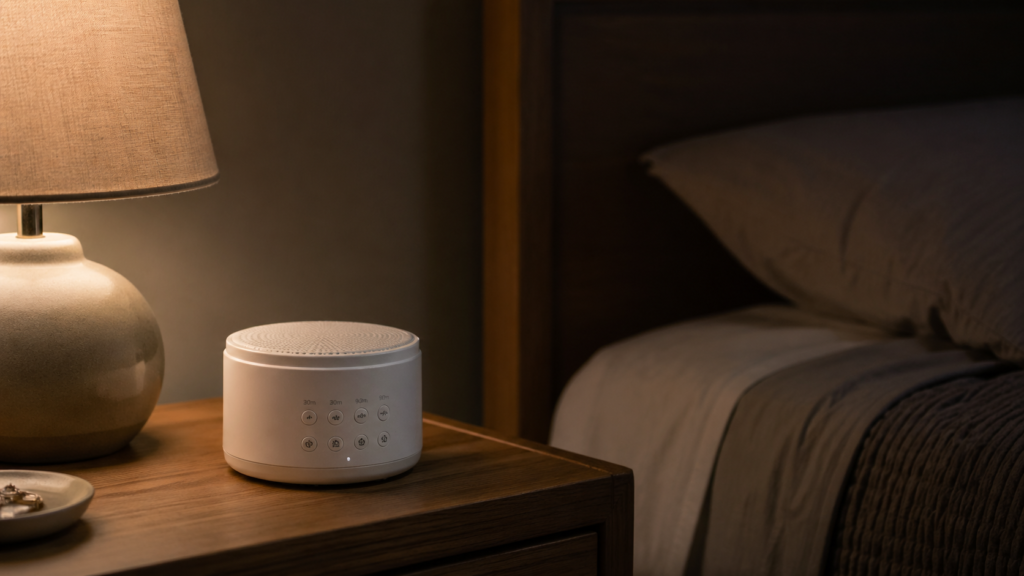
i bought my first white noise machine because my upstairs neighbor apparently trained for triathlons at midnight. footsteps. jumping. dragging furniture. i don’t know what was happening up there but it was happening consistently at the exact moment i was trying to fall asleep.
the machine fixed that problem almost immediately. what surprised me was that it kept working even after i moved somewhere quiet. i’d gotten used to falling asleep with it, and sleeping without it felt wrong in a way that was hard to describe — like something was missing rather than like something was present. i’ve used one every night for four years now and i’ve gotten mildly evangelical about it as a result.
here’s what i actually know about white noise machines for sleep — what they do, why they work, and what to look for if you’re thinking about getting one.
what white noise actually does
white noise is all audible frequencies playing simultaneously at equal intensity — the result is that specific static hiss, like an untuned radio or a fan running in another room. the reason it helps with sleep is less about relaxation directly and more about masking.
your brain doesn’t respond to sound volume as much as it responds to sound change. a sudden noise — a car door, a dog barking, someone dropping something in the hallway — is what actually pulls you out of sleep or prevents you from falling asleep in the first place. the spike from quiet to loud is the problem, not the loud itself. white noise raises the ambient sound floor so that sudden sounds don’t register as dramatically. the spike still happens, but relative to the background, it’s smaller. your brain doesn’t flag it as something requiring attention.
the secondary effect is what i noticed when i kept using it in a quiet apartment: it gives your brain something neutral to settle on. silence, for a lot of people, is actually harder to sleep in than steady background noise — silence is where your thoughts get very loud, where the 2am mental audit starts. white noise occupies just enough of your auditory processing that the rumination has slightly less room to run.
white noise vs pink noise vs brown noise
this is where it gets slightly nerdy but it’s worth knowing because a lot of people find they strongly prefer one over another and it matters when you’re choosing a machine.
white noise has equal energy across all frequencies, which is why it sounds high and hissy — the high frequencies carry a lot of energy and they’re prominent. some people find pure white noise grating after a while. i’m one of them, honestly. it works but it’s not pleasant in the way some other options are.
pink noise has more energy in the lower frequencies and less in the higher ones. the result sounds fuller and softer — more like rain or wind, less like static. there’s actually some research suggesting pink noise may do slightly more for sleep quality than white noise specifically, with a couple of small studies showing improvements in deep sleep and memory consolidation. the evidence is preliminary but interesting.
brown noise takes this further — even more energy at the low end, which produces a deep rumbling sound like a strong fan or distant thunder or the inside of a plane. a lot of people with anxiety find brown noise particularly settling, something about the low frequency feels grounding rather than stimulating. i switched to brown noise about a year ago and haven’t gone back.
most decent white noise machines offer all three plus nature sounds. the label on the box usually just says “white noise machine” regardless of what sounds it actually produces, so don’t let the naming throw you off.
dedicated machine vs phone app vs fan
the honest answer is that a fan works fine if what you need is basic masking. the continuous mechanical sound does the same noise-floor raising that a dedicated machine does, and if you need airflow anyway it’s genuinely a two-for-one. the limitations: you can’t control the sound profile, the volume options are limited, and fans aren’t great travel companions.
phone apps work but have a few practical problems. your phone screen is in the room with you, which creates temptation. notifications can interrupt playback. battery drain overnight is annoying. and there’s a certain amount of mental category confusion in using your phone as a sleep tool — the same device that contains everything designed to keep you awake is now supposed to help you sleep. some people manage this fine. others find it erodes the boundary between screen time and sleep time in ways that matter.
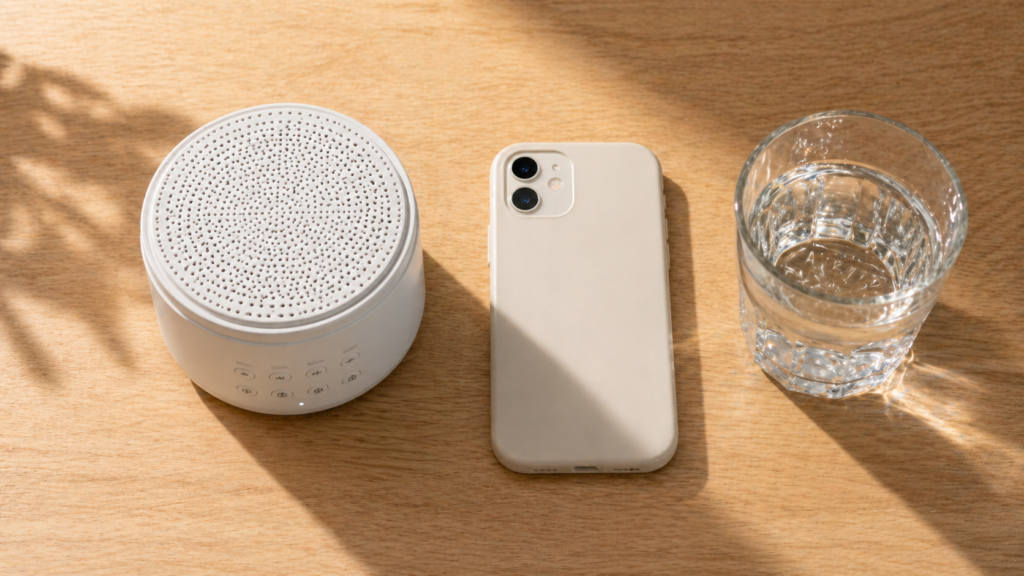
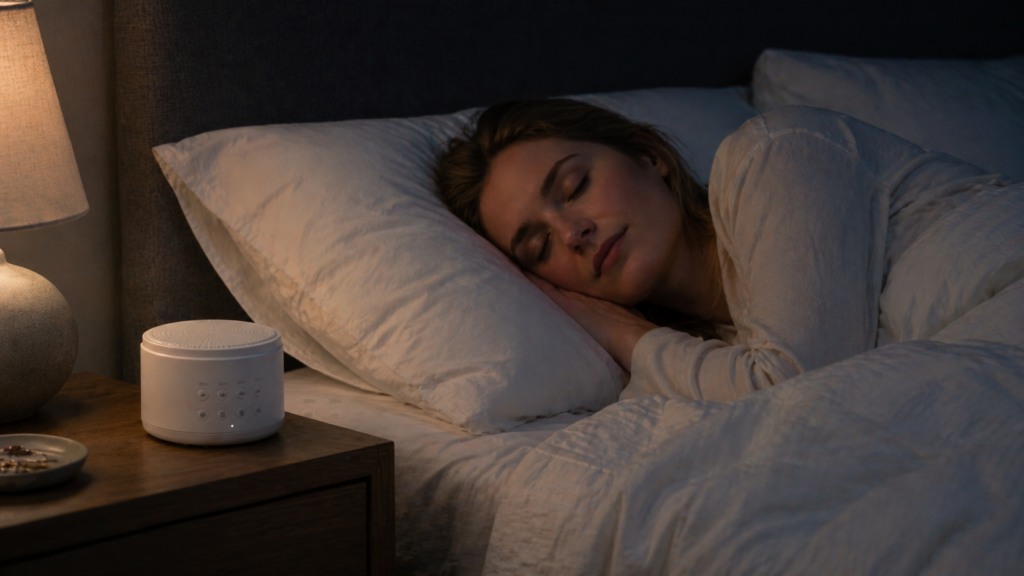
a dedicated machine is just cleaner. it sits there, it does one thing, it doesn’t have notifications. the physical separation — phone on the other side of the room, machine on the nightstand — is part of what makes it effective as a sleep cue. you turn it on, you’ve officially started the sleep process. and good ones are not expensive. you don’t need to spend more than forty or fifty dollars for something that will work well.
what to actually look for
a few things matter more than the marketing copy usually suggests.
looping vs non-looping. cheaper machines play a recorded sound file that loops — and if the loop is short, your brain eventually detects the repeat and it becomes irritating rather than neutral. better machines generate sound continuously rather than looping a recording. this is actually the most important technical thing to check. look for “continuous tone generation” or similar language, or read reviews specifically mentioning loop length.
volume range. you want something that goes quiet enough for a genuinely peaceful room and loud enough to mask a noisy environment. the range matters more than the maximum volume. some cheaper machines get loud but can’t go genuinely quiet.
sound variety. even if you think you just want white noise now, having pink and brown options plus a few nature sounds means you can adjust as your preferences shift. most mid-range machines have ten or more options and it costs almost nothing extra.
no light. any LED indicator, display, or power light on the machine is going to become extremely annoying once you’re sensitized to it. your sleep environment should be as dark as possible — even small lights can interrupt the melatonin production that screen time before bed already disrupts. cover it with tape or look for machines specifically designed with no light output.
timer function. useful for people who want to fall asleep to white noise but prefer silence through the night. also useful if you’re concerned about continuous loud noise exposure, though at typical sleep volumes this isn’t a meaningful health risk for adults.
who it helps most
white noise machines for sleep work particularly well for a few specific situations — and if you fall into any of these categories, the effect is usually noticeable within the first night or two.
light sleepers who wake at every sound — this is the primary use case, the thing the technology was basically designed for. if your sleep is fragmented by environmental noise you can’t control, a white noise machine is one of the highest-return investments you can make in your sleep quality.
people who share a space with different sleep schedules. if someone comes to bed later than you, or gets up earlier, a white noise machine dramatically reduces how much their movement and noise disrupts you. it doesn’t make you deaf to the world, it just raises the threshold for what registers as disruptive.
people whose sleep problems are partly anxiety-driven. not because white noise treats anxiety — it doesn’t — but because it removes one common anxiety trigger (random sounds in a quiet house at night) and gives the brain something neutral to settle on instead of its own thoughts. if you’re already working on the cortisol and nervous system piece with things like ashwagandha or magnesium, white noise addresses a different but related layer of the same problem.
travelers. hotel rooms are notoriously unpredictable noise environments — hallways, other guests, HVAC systems that cycle loudly. a small travel white noise machine or a decent app used specifically while traveling can make the difference between sleeping and not sleeping in an unfamiliar place.
the dependency question
people sometimes ask whether using a white noise machine creates a dependency — whether you’ll eventually be unable to sleep without it. the short answer is: sort of, but it’s not a problem.
your brain does form an association between the sound and sleep over time. that association is actually what makes it more effective, not less — it becomes a reliable sleep cue rather than just noise. the “dependency” is the same kind of dependency you have on a consistent bedtime, or a dark room, or your own pillow. these aren’t unhealthy dependencies. they’re conditioned cues that support sleep, and they’re part of how good sleep hygiene works.
the practical issue is if you travel frequently and don’t have access to your machine. which is why a travel-sized option or a good offline app is worth having as a backup. but this is a logistics problem, not a health problem.
i’ve slept with one every night for four years. i sleep fine when i forget it on a trip, after an adjustment night or two. the association is real but it’s not a trap.
for a more detailed look at the research, the Sleep Foundation’s overview of white noise and sleep covers the evidence base thoroughly.
Related reading: Noise is only one possible trigger; see the broader list of causes and next steps for restless, unrefreshing sleep.
This article is for informational purposes only and does not constitute medical advice. Always consult a qualified healthcare professional before making changes to your health routine.