I do not think there is a normal way to handle waking up with heart racing.
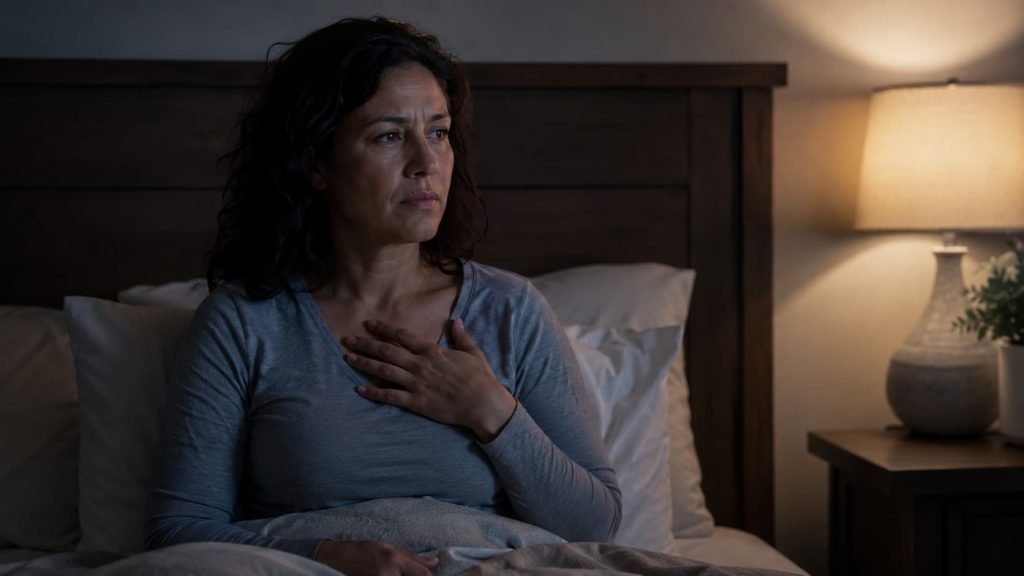
You can be the calmest person in the world at 2 p.m. and still turn into a full-time pulse inspector at 2:38 a.m. One second you are asleep. The next second you are awake, staring into the dark, wondering why your chest is acting like you just ran up stairs.
That happened to me during a rough sleep stretch maybe last winter. Or the winter before. I remember the feeling more clearly than the date: dry mouth, hot face, heart going too fast, and this immediate thought of, okay, what is this now?
Not a helpful thought.
The annoying thing is that a racing heart at night can come from a lot of places. Anxiety, yes. But also sleep apnea, reflux, alcohol, caffeine, medication, dehydration, weird blood sugar swings, a nightmare you barely remember, or an actual heart rhythm issue.
So I would not treat one strange night like a catastrophe.
I also would not keep brushing it off if it keeps happening.
Waking up with heart racing is not always “just anxiety”
I have a problem with the phrase “just anxiety.” Not because anxiety is fake. It is very real. It can make your body feel like it has been hijacked by someone who makes terrible decisions.
But “just anxiety” can become a lazy answer when nobody wants to look deeper.
A nighttime panic attack can absolutely wake you with your heart racing. The Sleep Foundation says nocturnal panic attacks can bring a racing heart, sweating, shortness of breath, and sudden fear after waking from sleep.
That sounds exactly like what a lot of people describe. You wake up scared before you even know what you are scared of.
Still, if this is happening over and over, I would want to know more. Do you snore? Do you wake up gasping? Did you drink alcohol? Was dinner late? Are you taking a decongestant? Did this start after a new medication?
The heart racing is the loud part. It may not be the starting point.
Heart palpitations feel worse in a quiet room
At night, your heart has no competition.
No traffic. No work notifications. No person talking to you from another room. Just you, the dark, and that thump-thump-thump that suddenly feels way too noticeable.
The Cleveland Clinic describes heart palpitations at night as pounding, fluttering, racing, or skipped-beat sensations. They can be connected to caffeine, alcohol, nicotine, stress, dehydration, and sometimes heart rhythm problems.
That list is almost irritating because it includes half of modern life.
But it does help explain why this symptom is hard to pin down. A racing heart after a stressful day and two late coffees is one thing. A racing heart with chest pain, faintness, or severe shortness of breath is a different conversation.
The body does not always label the emergency level clearly. That would be too convenient.
Sleep apnea can feel like panic from the inside
This is the one I think people miss the most.
If your breathing gets interrupted during sleep, your body may jolt itself awake. You may not remember choking. You may not even fully understand what happened. You just wake up with your heart pounding and a strange sense that something went wrong.
That can feel exactly like panic.
Sleep apnea becomes more suspicious if the racing-heart wakeups come with loud snoring, dry mouth, morning headaches, waking up gasping, or feeling tired after what should have been enough sleep.
I do not mean you should diagnose yourself at 3 a.m. That usually goes badly. I mean the pattern deserves attention.
I wrote more about this overlap in can sleep apnea cause anxiety, because untreated sleep breathing problems can leave people feeling anxious before they ever realize breathing is part of the issue.
Sometimes it really is nighttime panic
A nocturnal panic attack can be brutal because there is no warm-up.
During the day, you might feel anxiety building. At night, you may wake up already in the middle of it. Sweaty. Shaky. Heart racing. Chest tight. Brain trying to explain everything while still half asleep.
That combination is awful.
I have had nights where the fear seemed to arrive first, and then the heart followed. Other nights, the heart seemed to race first, and then I panicked because of it. I am not even sure the order always matters.
If bedtime itself has started to feel unsafe, or you are delaying sleep because you are afraid of waking up like this again, the guide on how to fall asleep with anxiety may be worth reading.
But again, I would not stop at anxiety if physical clues keep showing up too.
Caffeine can be annoying hours later
I wish caffeine were more honest.
You drink it in the afternoon, feel fine at dinner, and then somehow it is still involved when you wake up in the middle of the night with your heart doing too much.
Some people can drink coffee after dinner and sleep like a furniture showroom model. I cannot. A late coffee, strong tea, energy drink, pre-workout powder, or even a lot of dark chocolate can make sleep lighter and the nervous system easier to set off.
If waking up with heart racing started around the same time your caffeine timing changed, test it. Move caffeine earlier for a week. Not as a moral improvement project. Just as an experiment.
Experiments are less annoying than rules.
Alcohol can make sleep look better than it is
Alcohol is sneaky because it may help you fall asleep faster.
Then the second half of the night gets weird. You wake hot, thirsty, anxious, or with your heart racing. Sleep gets lighter. Reflux can flare. Snoring can get worse.
I used to ignore this because the connection was not always immediate. If something happens four hours later, it does not feel related. But with sleep, four hours later is absolutely still part of the same mess.
If the racing-heart nights happen more often after alcohol, especially with a late meal, that is not a small detail.
Reflux can wake you before you understand it
Acid reflux does not always show up as obvious heartburn.
Sometimes it is coughing. A sour taste. Throat tightness. Chest pressure. A sudden wake-up where your body feels uncomfortable before your brain has the language for it.
Then your heart races because being yanked awake by discomfort is not exactly peaceful.
If this happens after late meals, spicy food, alcohol, chocolate, or lying flat, reflux may be involved. Not guaranteed. Just possible.
If that pattern sounds familiar, the article on the best sleeping position for acid reflux may help. Sometimes the issue is not only what you ate, but how quickly you got horizontal afterward.
Medication and supplements deserve a quick look
This part is not exciting, but it is practical.
Some decongestants, stimulants, thyroid medications, inhalers, antidepressants, cold medicines, and pre-workout supplements can make palpitations more likely for some people.
The Mayo Clinic lists stress, medication, exercise, and medical conditions among possible causes of heart palpitations.
If the timing lines up with a new pill, dosage change, supplement, or “energy” product, write that down. Do not stop a prescription on your own. But do not pretend the timing is meaningless either.
When I would stop guessing
Most racing-heart wakeups are not some dramatic worst-case thing. That is true.
But there are lines I would not play around with.
If heart racing comes with chest pain, fainting, severe shortness of breath, confusion, weakness, dizziness, or the feeling that you might pass out, that is not a breathing-exercise moment. That needs urgent help.
The American Heart Association says palpitations with chest discomfort, shortness of breath, dizziness, or fainting-type symptoms should be taken seriously.
If the heartbeat feels irregular, lasts a long time, keeps returning, or is new for you, I would also bring it up with a clinician. They may suggest an ECG, blood work, thyroid testing, a wearable heart monitor, or a sleep study.
Not because you should assume disaster.
Because repeated mystery symptoms are a bad place to live.
What to write down after it happens
I would not build a beautiful sleep tracker spreadsheet. That sounds like something I would abandon by Tuesday.
Just write the rough stuff.
What time did you wake? How long did the racing last? Was it steady-fast or weirdly irregular? Were you short of breath? Any chest pain, dizziness, sweating, nausea, shaking, or gasping? Did you drink alcohol? Late caffeine? Heavy dinner? New medication? Did you wake on your back?
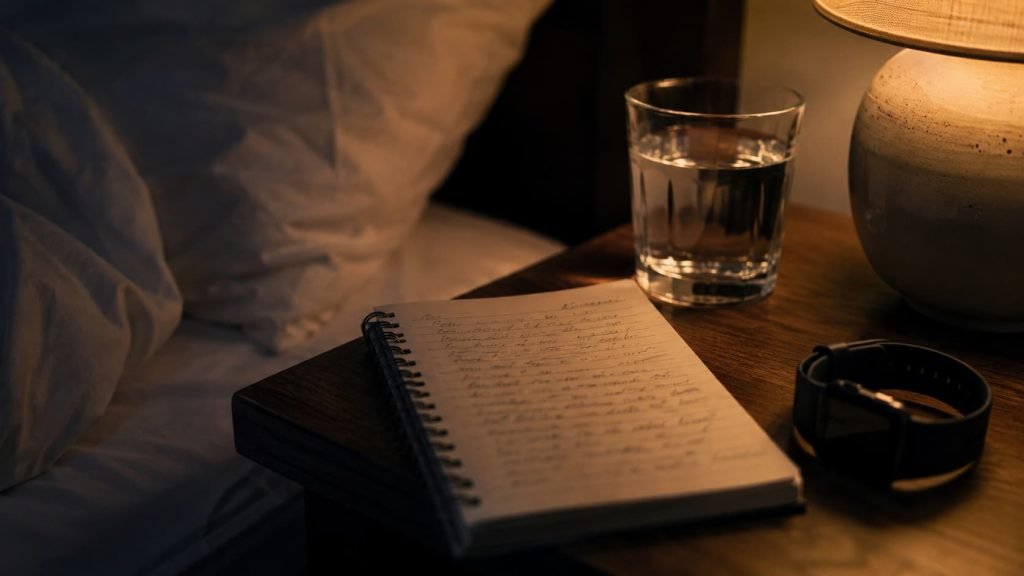
Three messy notes can be enough.
That was the moment I started seeing my own nights differently. Not as random attacks from nowhere, but as clusters. Stress plus late caffeine. Alcohol plus reflux. Back sleeping plus snoring. Once you notice the cluster, the fear does not disappear, but it gets less shapeless.
What may help in the moment
If you wake up with your heart racing and there are no emergency symptoms, sit up. Let your eyes adjust. Let the room become boring again.
Take a sip of water. Loosen the blanket. Put your feet on the floor if that helps. Try slower breathing, but do not turn it into a test you can fail. Forced calm is still force.
If reflux seems possible, stay upright for a while. If snoring or sleep apnea seems possible, try shifting onto your side. If the room is hot, cool it down. If checking your heart rate makes you spiral, stop checking for a bit.
I know. Easier written than done.
If it keeps happening around 3 a.m.
Some people keep waking at roughly the same time. Not exactly, but close. Two-thirty. Three. Four. That general annoying window.
This can connect with lighter sleep later in the night, stress hormones, alcohol wearing off, reflux, breathing disruptions, or blood sugar changes. Usually it is not one perfect answer.
If the 3 a.m. pattern is familiar, you may want to read waking up at 3am and cortisol. I do not think cortisol explains every weird night. People online overuse it. But sometimes it is part of the story.
FAQ
Why am I waking up with heart racing?
You may be waking up with heart racing because of anxiety, nocturnal panic, sleep apnea, reflux, alcohol, caffeine, medication effects, dehydration, or heart rhythm changes. The surrounding symptoms matter a lot.
Can anxiety wake me up with a racing heart?
Yes. Nighttime panic can wake you suddenly with a racing heart, sweating, shaking, shortness of breath, or fear. But repeated episodes should not automatically be blamed on anxiety without checking other clues.
Can sleep apnea cause waking up with heart racing?
Yes. Sleep apnea can trigger stress responses during breathing interruptions, which may wake you with a pounding or racing heart. Snoring, gasping, dry mouth, morning headaches, and daytime sleepiness make this more likely.
Why does my heart race when I wake up at 3 a.m.?
It may be related to stress hormones, lighter sleep, alcohol wearing off, reflux, anxiety, blood sugar changes, or disrupted breathing. Track what happened before bed for a week or two.
Is waking up with heart racing dangerous?
Not always. But it needs urgent attention if it comes with chest pain, fainting, severe shortness of breath, dizziness, weakness, confusion, or an irregular heartbeat that does not settle.
Should I get a sleep study?
Ask about a sleep study if the racing heart comes with loud snoring, gasping, choking, dry mouth, morning headaches, or feeling exhausted after enough sleep.
My honest read
Waking up with heart racing is scary because it feels like an emergency before you have context. Sometimes it is panic. Sometimes it is sleep apnea, reflux, alcohol, caffeine, medication, or just a nervous system that has had too much lately.
One weird night may be nothing. A repeated pattern is worth listening to. The heartbeat is the loudest part, but the answer is usually hiding in the rest of the night.
This article is for informational purposes only and does not constitute medical advice. Always consult a qualified healthcare professional before making changes to your health routine.