

I remember the first time acid reflux really messed with my sleep. Not the polite little heartburn after dinner. I mean the sharp, sour, throat-burning kind that shows up when you are finally lying down and suddenly your body decides, no, actually, we are going to sit upright now.
It was sometime after a late meal, probably too close to bed, and I had made the classic mistake of lying flat on my right side like nothing bad could happen. Very confident. Very wrong.
If you are looking for the best sleeping position for acid reflux, the short answer is usually this: sleep on your left side, keep your upper body elevated, and try not to lie flat right after eating. Simple in theory. Annoying in real life.
Because the problem is not just “sleep on your left side and everything is fixed.” Bodies are messier than that. Shoulders hurt. Wedge pillows slide around. Some nights you start on the left and wake up face-down like you lost an argument with your mattress.
So, what is the best sleeping position for acid reflux?
For most people, the best sleeping position for acid reflux is left-side sleeping with the upper body slightly elevated. That combination gives gravity a little help and may reduce the chance of stomach acid moving back up into the esophagus while you sleep.
There is a reason left-side sleeping gets talked about so much. Your stomach sits slightly to the left, and lying on that side can make it harder for stomach contents to wash back toward the esophagus. That does not mean it works perfectly for everyone, but it is usually the first position worth trying.
The other part is elevation. Not just stacking three floppy pillows under your head. I tried that once. My neck hated me by morning.
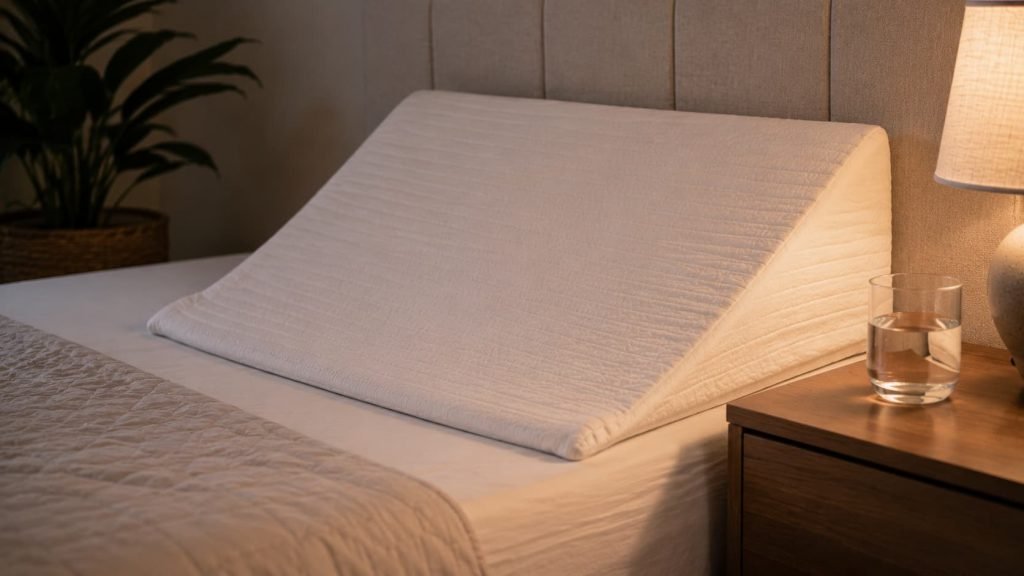
Elevation works better when your whole upper body is raised from the torso, not when only your head is bent forward. A wedge pillow, an adjustable bed, or raising the head of the bed can make more sense than piling pillows until your spine is shaped like a question mark.
The Sleep Foundation explains that GERD symptoms often get worse when lying down, which is exactly why position matters so much at night.
Why lying flat makes reflux feel worse
During the day, gravity is quietly doing you a favor. You are upright. Food and stomach acid have a harder time traveling upward. Then bedtime arrives, you lie flat, and that advantage disappears.
That is when acid reflux can turn from a mild annoyance into coughing, throat burning, chest discomfort, or that ugly sour taste in your mouth at 2 a.m.
I do not love how obvious the fix sounds. “Use gravity.” Great. Thank you, science. But honestly, with reflux, the boring advice is often the advice that actually matters.
The Mayo Clinic lists raising the head of the bed as one of the lifestyle steps that may help nighttime GERD symptoms. Not glamorous. Useful, though.
Left side vs right side for acid reflux
If you only change one thing tonight, try your left side.
Right-side sleeping is often the one that makes reflux worse for people. Not always, but often enough that it is worth paying attention to. Some people can feel the difference almost immediately. They roll onto the right side and the burn starts creeping up. They roll back left and things settle a little.
That was the moment I realized position was not just sleep blog filler. I had assumed reflux was only about what I ate. Spicy food, coffee, late dinner, all that. But the side I slept on mattered more than I wanted to admit.

Still, I would not treat left-side sleeping like a magic switch. If you eat a heavy meal at 10:30 p.m., drink wine, then collapse flat in bed, your left side has a lot of work to do. Too much, probably.
How high should you elevate your upper body?
Most advice lands somewhere around raising the head of the bed by several inches. In real life, that usually means a wedge pillow, bed risers, or an adjustable base. A gentle incline tends to be easier to tolerate than sleeping nearly upright like you are in an airport chair.
With wedge pillows, the shape matters. A wedge that supports your back and torso is better than a tiny triangle that only lifts your neck. If your stomach is still flat and only your head is propped up, reflux may not improve much.
And yes, wedge pillows can be irritating at first. You may slide down. Your lower back may complain. Your pillow may feel wrong for a week or two. I wish this part were less fiddly, but it is very much a trial-and-adjust situation.
If you already use elevation for congestion, the setup may feel familiar. I wrote about that in the guide to the best sleeping position for sinus drainage, and the same basic idea applies here: raise the upper body enough to help, but not so awkwardly that you create a new problem.
What if left-side sleeping hurts your shoulder?
This is where the clean internet answer gets less clean.
Some people have shoulder pain, hip pain, pregnancy discomfort, back issues, or just a strong dislike of side sleeping. If sleeping on your left side makes you miserable, you are not going to stick with it. And sleep advice you cannot actually live with is basically decorative.
Try putting a pillow between your knees to keep your hips stacked. Hugging a pillow can also stop your top shoulder from collapsing forward. If your lower shoulder gets crushed, a softer top layer on the mattress may help, though I would not buy a new mattress over one bad reflux week.
If left-side sleeping is impossible, upper-body elevation becomes even more important. Back sleeping with the torso elevated may be better than lying flat, especially if your reflux is mild.
One caveat: if you snore badly or suspect sleep apnea, back sleeping can make breathing worse for some people. In that case, it is worth reading about the best sleep position for sleep apnea or talking with a clinician. Reflux and disrupted breathing can overlap in a way that makes nights feel chaotic.
Timing still matters more than people want it to
I know this article is about position, but dinner timing keeps barging into the conversation because it matters. If your stomach is full when you lie down, even the best position has limits.
The NIDDK says people with nighttime GERD symptoms may improve by eating meals at least three hours before lying down or going to bed. Three hours sounds mildly unreasonable when life is busy, but even moving dinner earlier by an hour can sometimes change the night.
Late heavy meals are the big offender. Fried food, rich sauces, chocolate, peppermint, alcohol, and large portions can all be suspicious. Not evil. Suspicious.
And I will push back on one thing: I do not think every person with reflux needs to live like a monk after 6 p.m. That advice is miserable and usually unrealistic. But if you are waking up with acid in your throat, your evening routine deserves a closer look.
What about stomach sleeping?
Stomach sleeping is tricky. Some people feel like it reduces reflux because there is pressure or because they are used to it. But for many people, it twists the neck, compresses the stomach, and makes the whole setup less predictable.
If you are a committed stomach sleeper, switching overnight may not happen. I would start smaller: try left-side sleeping for the first part of the night, use a body pillow to stop rolling forward, and avoid lying completely flat after late meals.
Perfect is not the goal here. Fewer bad nights is a better goal.
When acid reflux wakes you up anyway
Sometimes you do the sensible things and reflux still shows up. That is frustrating. Very.
If you wake up burning, coughing, or tasting acid, sit upright for a bit. Sip water if your throat feels irritated. Avoid immediately lying flat again, even if you are exhausted and angry about being awake.
If this keeps happening, track the pattern for a week. What time did you eat? What did you eat? Which side did you sleep on? Did you drink alcohol? Were you stressed? Was it worse after a late snack?
This does not need to become a spreadsheet unless you enjoy punishing yourself. A few notes on your phone are enough.
If your bigger issue is waking too early and then struggling to fall back asleep, this may connect with the pattern I covered in waking up too early. Reflux is one of those physical interruptions that can look like “random insomnia” until you notice the timing.
When to talk to a doctor
Occasional heartburn after a huge dinner is one thing. Frequent nighttime reflux is different.
Talk with a healthcare professional if you have reflux more than a couple of times a week, trouble swallowing, unexplained weight loss, vomiting, black stools, chest pain, or symptoms that keep waking you up. Chest pain especially is not something to casually label as heartburn at home.
You should also get checked if you are relying on over-the-counter reflux medicine for long stretches without guidance. It may be fine. It may not. Better to have someone qualified look at the whole picture.
FAQ
What is the best sleeping position for acid reflux?
The best sleeping position for acid reflux is usually left-side sleeping with your upper body elevated. This position may help reduce acid moving upward while you sleep, especially when paired with earlier meals and smaller evening portions.
Is it better to sleep on the left or right side for acid reflux?
Left-side sleeping is generally better for acid reflux. Right-side sleeping may worsen reflux for some people because of how the stomach and esophagus sit inside the body.
Does sleeping elevated help acid reflux?
Yes, it can. Elevating your upper body gives gravity a chance to help keep stomach contents down. A wedge pillow or raised head of the bed usually works better than stacking regular pillows under your head.
Can I sleep on my back if I have acid reflux?
You can, but lying flat on your back may make reflux worse. If you sleep on your back, try elevating your upper body. If you also snore or suspect sleep apnea, back sleeping may not be ideal.
How long before bed should I stop eating if I have acid reflux?
A common recommendation is to finish larger meals about three hours before lying down. Some people need less time, some need more. The heavier the meal, the more timing tends to matter.
Do wedge pillows really work for acid reflux?
They can help, especially if they raise the torso rather than just bending the neck. The annoying part is finding one that feels comfortable enough to use consistently.
The short version
The best sleeping position for acid reflux is usually left-side sleeping with your upper body elevated. Right-side sleeping and lying flat can make symptoms worse for some people, especially after late meals.
But the position is only one part of it. Dinner timing, portion size, alcohol, trigger foods, and possible GERD all matter too. Try the left side. Add a real incline. Give your stomach more time before bed. Then pay attention to what actually changes.
This article is for informational purposes only and does not constitute medical advice. Always consult a qualified healthcare professional before making changes to your health routine.