
Eating Almonds Before Bed: Does It Actually Help You Sleep?
The almond thing started for me because I was tired of ending up in the kitchen at night with no plan.
You know the scene. Lights too bright. Pantry open. You are not even starving, just kind of restless and snacky, and somehow the crackers are looking like a solution to a problem they definitely did not create.
I grabbed almonds because they seemed safe.
That was the whole thought process.
A few in my hand. Crunchy. Not sweet. Not exciting. No spoon, no bowl, no “I guess this is basically dinner now” situation.
And I remember thinking, okay, this is probably better than the chocolate chips.
Not a high bar. Still.
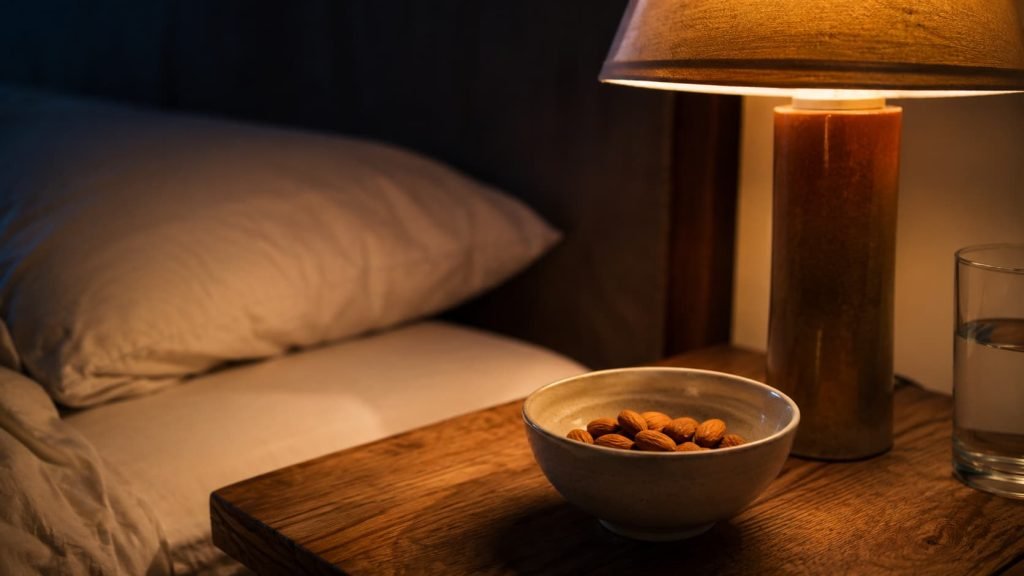
That is where eating almonds before bed makes the most sense to me. Not as some magical sleep trick. More as a small, boring snack that keeps you from making a louder snack choice.
Almonds before bed help most when hunger is the thing
If you are hungry, sleep gets harder. People can dress this up, but that is the basic truth.
I have tried lying there and pretending I was above hunger. Very noble. Very stupid. My stomach did not respect the performance.
Almonds can help because they have fat, fiber, and a bit of protein. That combination tends to sit longer than a sugary snack. Not heavy exactly, unless you overdo it. Just steadier.
The Sleep Foundation includes unsalted nuts and seeds as possible bedtime snack options, especially compared with salty snacks like chips.
That feels right.
If the choice is almonds or a bowl of something salty you eat while standing up and pretending it does not count, almonds win.
The magnesium story is real, but people stretch it
Almonds have magnesium. This is true.
Magnesium matters for muscle and nerve function, and it shows up in every sleep conversation eventually. Sometimes helpfully. Sometimes like it has hired a publicist.
I am not against it. I have used magnesium. I have also watched people online talk about magnesium-rich foods like they are tiny edible sleeping pills.
That is where I get skeptical.
The Sleep Foundation lists nuts like almonds, walnuts, pistachios, and cashews among foods often considered good for sleep. Notice the wording there. Considered. Not guaranteed. Not “eat twelve almonds and become unconscious.”
That distinction matters.
Almonds may support better sleep if they fit into the bigger picture. They will not overpower late caffeine, stress, or a bedtime that moves around like a target in a carnival game.
How many almonds before bed?
This is where I messed it up at first.
A “small handful” sounds simple until your hand gets ambitious. Mine does. I would grab some almonds, then go back for a few more, then a few more because the bag was still open and apparently I needed closure.
By the end it was not a bedtime snack.
It was an almond incident.
For me, 10 to 15 almonds is the range that makes sense. Maybe a little more if dinner was early. Not a bowl. Not endless grazing.
Mayo Clinic notes that nuts can be part of a healthy diet, but they are calorie-dense, so portions matter. Annoying, because nuts feel small. But small food can still add up fast.
Also, too many almonds before bed can feel heavy. Fat and fiber are useful until your stomach starts doing paperwork when you are trying to sleep.
Salted almonds are a trap
I love salted almonds.
There. Bias disclosed.
But before bed, they are not my first choice. Salt makes you thirsty. Thirst makes you drink water. Water makes you wake up to pee. Then you are standing in the bathroom at 2:17 a.m. wondering how almonds became a whole chain of events.
It happens.
Unsalted almonds are boring, yes. Lightly salted is maybe fine if you do not get thirsty. Honey-roasted almonds are delicious and absolutely not the same conversation.
That is dessert in a nut costume.
I am not saying never. I am saying do not act surprised if sleep gets weird after sweet, salty almonds at night.
Whole almonds or almond butter?
Whole almonds are safer for me because they make me slow down.
Almond butter has no brakes. A spoonful becomes a second spoonful because the first one left a weird mark in the jar. Then you need to even it out. This is not logic, but it is familiar.
Still, almond butter can work.
A thin spread on toast. A little with banana slices. That kind of thing. I mentioned almond butter in my piece on eating a banana before bed, and I still think that pairing makes sense. Banana gives you something softer and carby. Almond butter adds fat and makes it feel like an actual snack.
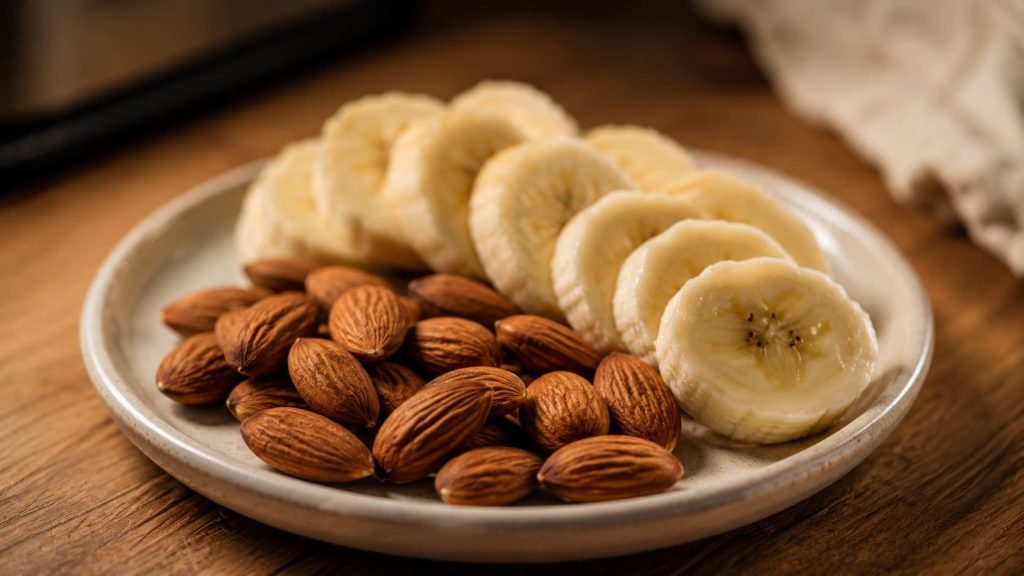
But if you know you cannot be trusted with the jar at night, use whole almonds.
I say this with experience.
When almonds before bed are not a good idea
Obvious thing first: if you have a nut allergy, no.
No sleep snack is worth that.
Less obvious: if almonds make you bloated, gassy, refluxy, or weirdly full, they are not your bedtime snack. Even healthy food can be badly timed. Especially food with fat and fiber.
Some nights I can eat almonds and feel fine. Other nights, if I eat them too late or too many, I feel like my stomach is still awake after the rest of me is trying to shut down.
That is not helpful.
If you are eating almonds because you are always hungry at bedtime, zoom out a little. Did you eat enough during the day? Was dinner too light? Did you skip protein and then expect ten almonds to fix the entire situation?
I have done versions of that.
It sort of works until it does not.
Almonds are better than some snacks, not all snacks
I would put almonds in the useful category.
Not miracle. Useful.
They are probably a better bedtime choice than cookies, chips, or chocolate if those foods keep you wired or snacky. But some people will sleep better with yogurt. Or oatmeal. Or a banana. Or nothing at all.
Annoying answer. Human bodies love annoying answers.
CalmNightly has a broader guide to good snacks to eat before bed, and that is the better way to think about this. Almonds are one option. Not the throne.
Sometimes the snack is not the problem
This is the part I hate because it is usually true.
You can obsess over the perfect bedtime snack while ignoring the obvious mess. Late caffeine. Random wake time. Phone in bed. Work stress. No morning light. A sleep schedule that slowly turned into nonsense.
Then the almonds get blamed.
Come on.
If your sleep timing is the real problem, almonds will not fix it. CalmNightly’s guide on how to fix circadian rhythm is a better place to start if your body clock feels off.
Food can help.
It cannot run the whole night.
So would I eat almonds before bed?
Yes, sometimes.
If I am a little hungry and want something small, unsalted almonds are a decent choice. They are easy. They do not feel chaotic. They are less likely to turn into a sugar spiral.
But I keep the portion small.
That is the whole trick. Not glamorous. Not fun. Just true.
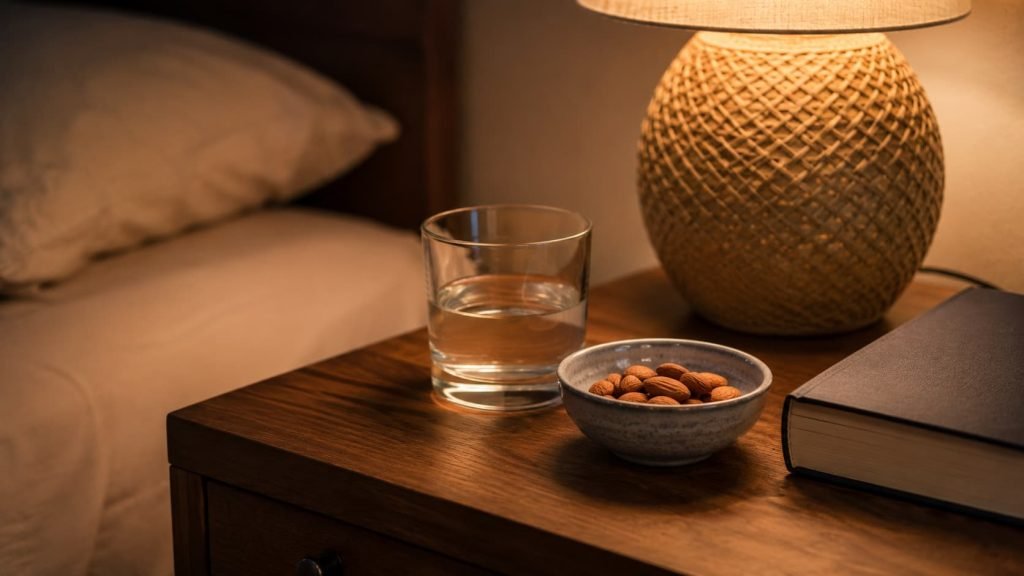
Try 10 to 15 almonds about 30 to 60 minutes before bed. Keep everything else mostly the same for a few nights. If you sleep better, great. If you feel heavy, thirsty, or uncomfortable, almonds are not your thing at night.
No drama.
It is a snack, not a personality test.
FAQ
Is eating almonds before bed good for sleep?
It can help if hunger is keeping you awake. Almonds have magnesium, fat, fiber, and a little protein, but they are not a direct sleep aid.
How many almonds should I eat before bed?
Start with 10 to 15 almonds. Too many can feel heavy because almonds are calorie-dense and contain fat and fiber.
Are almonds better than almond butter before bed?
Whole almonds are easier to portion. Almond butter can work too, but it is easier to overeat straight from the jar.
Should I eat salted almonds before bed?
Unsalted almonds are usually better. Salted almonds may make you thirsty, which can lead to drinking more water and waking up to use the bathroom.
Can almonds before bed cause weight gain?
Not by themselves. Weight gain depends on your overall intake over time. Large nightly portions can add extra calories, though.
Who should avoid almonds before bed?
Anyone with a nut allergy should avoid almonds. People who get bloating, reflux, or stomach discomfort from nuts may also want a different bedtime snack.
The short version
Eating almonds before bed can be useful if you are a little hungry and want something steady, simple, and low in sugar.
Keep the portion small. Choose unsalted. Do not turn it into a giant snack situation.
If almonds sit well with you, fine.
If they do not, skip them.
No snack works for everyone.
This article is for informational purposes only and does not constitute medical advice. Always consult a qualified healthcare professional before making changes to your diet or sleep routine.
This article is for informational purposes only and does not constitute medical advice. Always consult a qualified healthcare professional before making changes to your health routine.