Eating Honey Before Bed: Does It Actually Help You Sleep?
Eating honey before bed started for me on a night when I was already irritated before I even got into bed.
The kitchen light was too bright. The dishwasher was making that low humming sound. I had opened the fridge three times without wanting anything in it. You know that kind of tired where you are not hungry exactly, but you still keep looking for something?
That was the mood.
I ended up with a teaspoon of honey. Not because I had a plan. Because it was there, and because some part of my brain had filed away the old advice that honey before sleep was supposed to be calming.
It tasted good. Obviously. Honey usually does.
Did I sleep better that night? I think so, but not in a way I would defend in court. I remember feeling less snacky. Less restless. A little more done with the day.
That may not sound like much.
On a bad sleep night, it is actually a lot.
Honey before bed has the right feeling
This is probably why the idea sticks around.
Honey feels like a bedtime food even though, if we are being honest, it is basically sugar with better lighting. Put it in tea and suddenly it feels gentle. Put it on toast and it feels like a small ritual. Eat candy at night and you feel like you are making a questionable decision. Eat honey and somehow it feels old-world and wise.
I am not saying that is logical.
I am saying I understand it.
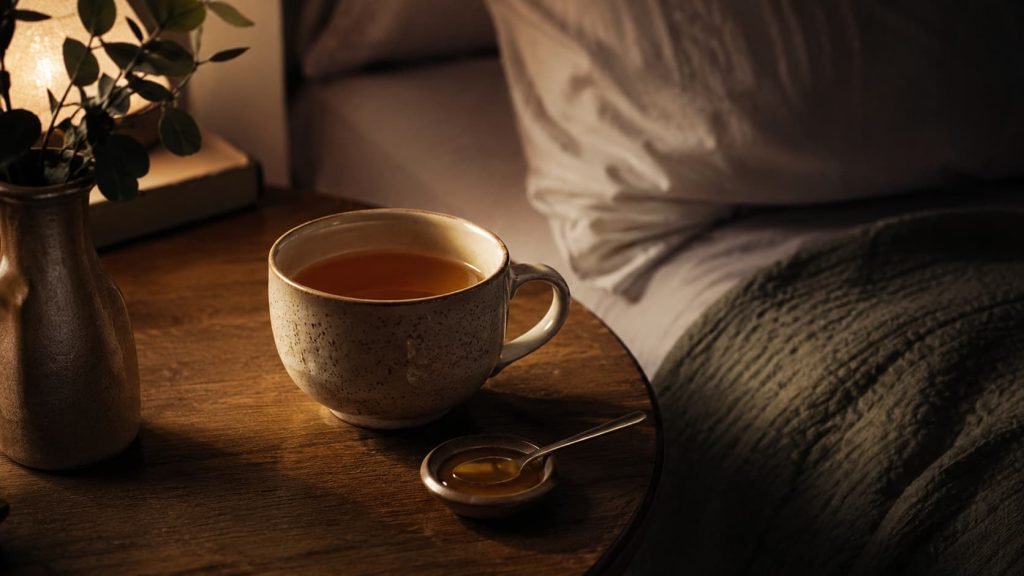
There is something about a warm drink with honey that slows the room down. For me, that was the useful part. Not the idea that honey was doing some secret biochemical trick while I slept. Maybe it was doing something. Maybe not. What I know is that it made me pause.
And I needed the pause.
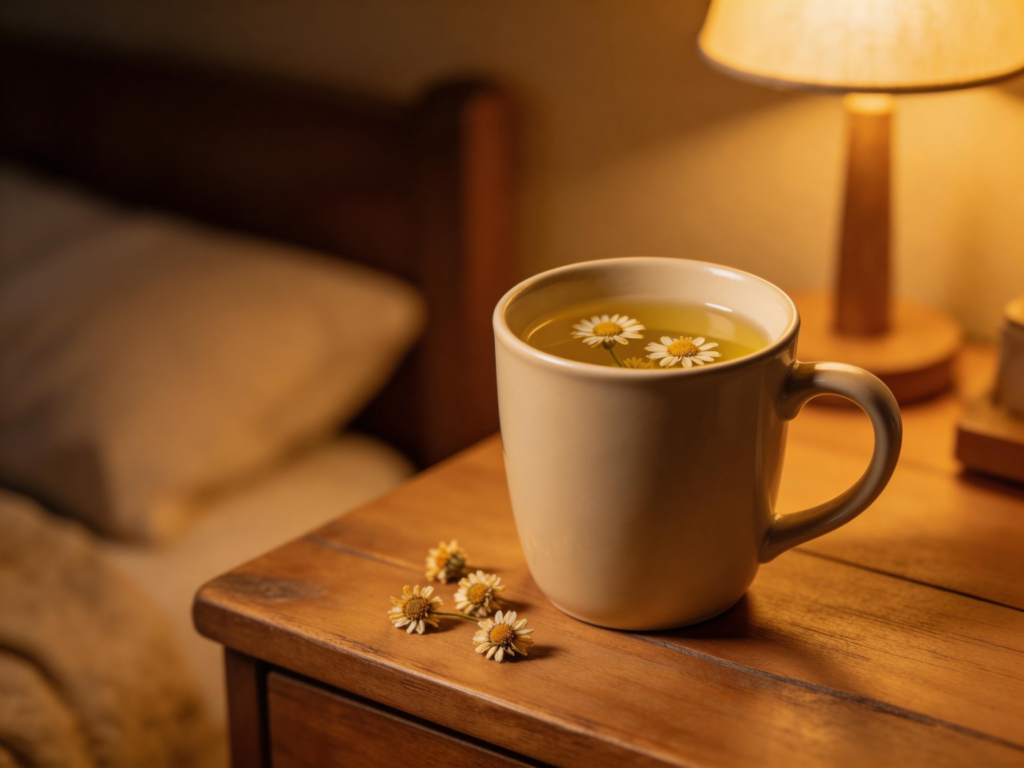
I have written about chamomile tea before bed, and honey fits naturally with that kind of routine. Tea, honey, low lights, no phone for five minutes. Very boring. Very hard to actually do when your brain wants stimulation.
The sleep claims get a little too confident
This is where I get skeptical.
People online talk about honey like it is running a tiny overnight repair crew in your liver. It stabilizes blood sugar. It fuels the brain. It prevents waking at 3 a.m. It balances stress hormones. It fixes the thing you could not fix with a normal bedtime.
Maybe some of those ideas have a little truth around the edges.
But the confidence is too much.
Mayo Clinic describes honey as mostly sugar, with small amounts of other compounds depending on the type. That does not make it bad. It just makes it less mystical.
And honestly, that is enough for me.
A small amount of honey may fit into a calming bedtime habit. Fine. I can believe that. But if someone tells you a tablespoon of honey is going to fix chronic insomnia, I would step back a little.
Maybe several steps.
A teaspoon is different from a “spoonful”
This sounds petty, but it matters.
When people say “take a spoonful of honey,” what spoon are we talking about? A teaspoon? A tablespoon? The big spoon from the drawer that nobody uses correctly?
I learned this with peanut butter too. “A spoonful” can become a lot of food very quickly if you are tired and not measuring anything.
With honey, I would start with one teaspoon. Small. Boring. Enough to test the habit without turning the end of the day into dessert.
I did more than that a couple of times. Not a disaster, but I noticed I wanted more sweet things afterward. That is not exactly the sleep direction I was aiming for.
If you want it in tea, use caffeine-free tea. This should be obvious, but I have absolutely made “sleep tea” with the wrong tea before. So. There we are.

Honey is still sugar
I know. Repetitive. But this is the part people skip because honey looks so innocent.
Natural sugar still counts.
Some people can have a little honey at night and feel fine. Others get thirsty, warmer, more alert, or just sleep a little lighter. Not dramatic. Just not great.
I had a stretch, maybe last winter, where I was adding honey to tea almost every night. At first it felt helpful. Then I realized I was slowly making the tea sweeter and sweeter. The routine had turned into a dessert loophole.
Classic.
That was when I pulled it back to a teaspoon. Some nights I skipped it completely. Nothing terrible happened. Which is usually a sign the thing was optional, not essential.
The Sleep Foundation has a broader point that diet and sleep are connected, but not in a one-food-fixes-everything way. I like that framing. It leaves room for real life.
Raw honey sounds better than it probably is for sleep
Raw honey tastes better to me.
There. That is my strongest opinion on it.
It may have more pollen or plant compounds than heavily processed honey. It feels less messed-with. I get the appeal.
But for sleep? I would not expect raw honey to act like a totally different food. It is still sweet. It still adds sugar. If it helps, it is probably because the small ritual helps, or because it replaces something worse, not because raw honey has unlocked some secret sleep pathway.
I am open to being wrong.
Just not open enough to take giant spoonfuls every night.
When honey before bed is probably a bad fit
If you have diabetes, prediabetes, or blood sugar concerns, honey is not something to casually add at night without thinking. Natural does not mean invisible to your bloodstream.
If you deal with reflux, also be careful. Honey may be fine for some people, but sweet foods or drinks close to lying down can bother others. Burning chest, sour taste, throat irritation, coughing. None of that feels like a soothing bedtime ritual.
And honey should never be given to babies under 12 months because of infant botulism risk. Different audience, I know, but it is one of those warnings worth keeping plain.
There is another situation too.
If you are using honey because you keep waking up in the middle of the night, do not assume the missing piece is sugar. It might be stress. Alcohol. Caffeine. Sleep apnea. A hot room. A body clock that has drifted completely sideways.
Annoying list. Real list.
Honey cannot fix a broken sleep rhythm
This is the trap I fall into with almost every sleep habit.
I want the small thing to fix the big thing.
The teaspoon of honey. The tea. The magnesium. The pillow. The perfect room temperature. Meanwhile I am checking my phone in bed, waking up at different times, getting no morning light, and pretending that does not count.
It counts.
If your sleep timing is chaotic, honey is not going to carry the whole system. CalmNightly’s guide on how to fix circadian rhythm is a better place to start if the issue is your body clock rather than the snack itself.
Food can support sleep.
It cannot do the entire job.
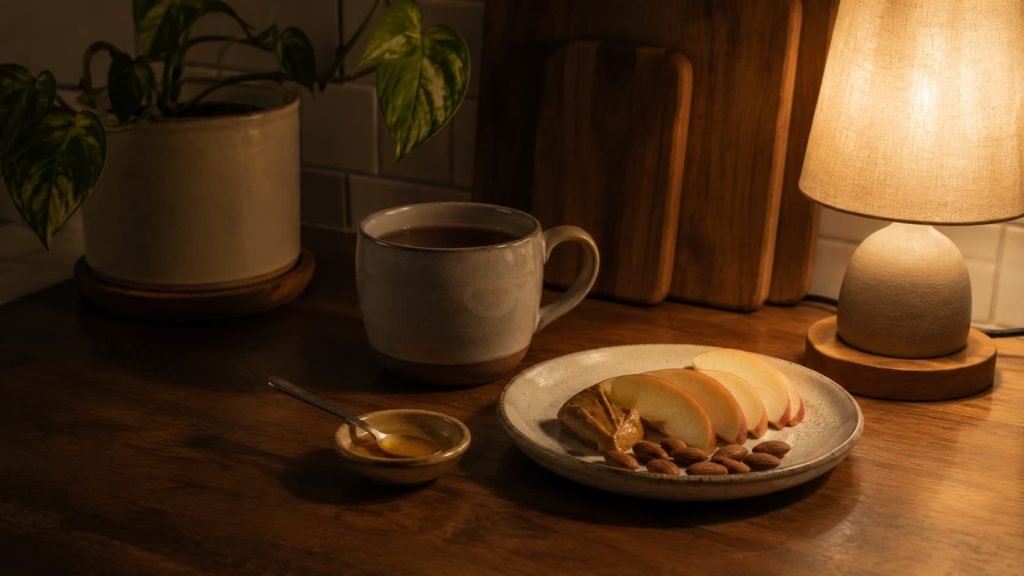
So would I eat honey before bed?
Sometimes.
Not every night.
If I am making chamomile tea and want it to feel a little more satisfying, I will add a teaspoon. If I am already craving sugar and prowling around the kitchen, honey is probably not the move. It just opens the door.
That is the honest distinction for me.
Honey as a quiet ritual? Fine.
Honey as a sugar craving wearing a wellness costume? Less fine.
Try it if you want. One teaspoon. A few nights. Keep everything else mostly the same so you can actually tell what is happening.
Not glamorous.
Useful though.
FAQ
Is eating honey before bed good for sleep?
It can be part of a calming routine, especially in caffeine-free tea. But honey is not a guaranteed sleep aid.
How much honey should I eat before bed?
Start with one teaspoon. More is not automatically better, especially close to bedtime.
Is raw honey better before bed?
Raw honey may taste better and may contain more natural compounds, but for sleep it is still mostly sugar. Portion size matters more.
Can honey before bed wake you up?
Yes, for some people. If it makes you thirsty, wired, refluxy, or snackier, it may not be a good bedtime habit.
Can I put honey in tea before bed?
Yes. Use caffeine-free tea, and keep the honey amount small.
Who should avoid honey before bed?
People with diabetes, blood sugar concerns, or reflux should be careful. Honey should never be given to babies under 12 months.
The short version
Eating honey before bed is not magic.
A teaspoon may help if it makes your bedtime routine feel calmer or replaces a bigger snack.
But it is still sugar.
If it helps, fine. If it makes sleep worse, skip it.
That is probably the least exciting answer.
Also probably the most useful one.
This article is for informational purposes only and does not constitute medical advice. Always consult a qualified healthcare professional before making changes to your diet or sleep routine.
This article is for informational purposes only and does not constitute medical advice. Always consult a qualified healthcare professional before making changes to your health routine.