why your body won’t just calm down when you lie down
anxiety isn’t just a thought problem. that’s the part that took me a while to really get. when you’re anxious — not panic-attack anxious, just the regular low-grade version that runs in the background of a stressful life — your body is running a whole physiological program. cortisol up. muscles carrying tension you didn’t consciously create. breathing shallow in a way you’ve stopped noticing. heart rate slightly elevated. your nervous system is treating normal tuesday-evening stress like something that requires physical readiness, and it doesn’t care that you know intellectually there’s no actual threat. so when you get into bed and try to sleep, you’re asking your body to do something it hasn’t gotten the signal to do yet. the activation hasn’t resolved. you’re horizontal but you’re not actually winding down. which is why lying awake feeling exhausted but unable to sleep is such a specific miserable experience — the tiredness is real but the off-switch isn’t engaging. what massage does — even self-massage, even the light rhythmic version you can do on yourself in bed — is give the nervous system a physical input it can actually respond to. touch activates the vagus nerve, which runs the parasympathetic side of your nervous system, the rest-and-recovery branch. when that activates, a bunch of things start moving in the right direction. cortisol edges down. the physical tension your muscles have been holding starts releasing. and — this is the part that connects massage to sleep specifically — serotonin rises a bit, and serotonin is what your body uses to make melatonin. the hormone that actually tells your brain to sleep. you’re not forcing sleep. you’re supplying conditions that make sleep possible. it’s the difference between trying to sleep harder and removing the thing that was blocking sleep in the first place. massage for anxiety and sleep works on both problems through the same mechanism, which is why treating them together makes more sense than treating them separately.professional versus doing it yourself
there’s actual research on professional massage and sleep — studies showing reduced cortisol, improved sleep quality, decreased anxiety scores in people with chronic insomnia. the evidence is decent. if you can access regular professional massage, it’s genuinely worth it. the practical problem is “regular.” once a month doesn’t move the needle the way consistency does, and weekly professional massage isn’t realistic for most people. so the more useful question is what you can do every night, yourself, for free. self-massage is less effective per session than professional work — you can’t fully relax muscles you’re also using to apply pressure, and there are angles you simply can’t reach. but self-massage done consistently every night adds up to something that one monthly appointment doesn’t. your nervous system responds to repeated signals. the goal before sleep isn’t deep tissue work anyway — you don’t want to be grinding out knots at 10pm, you want slow rhythmic light-to-moderate pressure that tells your nervous system the day is over. that’s entirely achievable on your own.where to focus and what to do
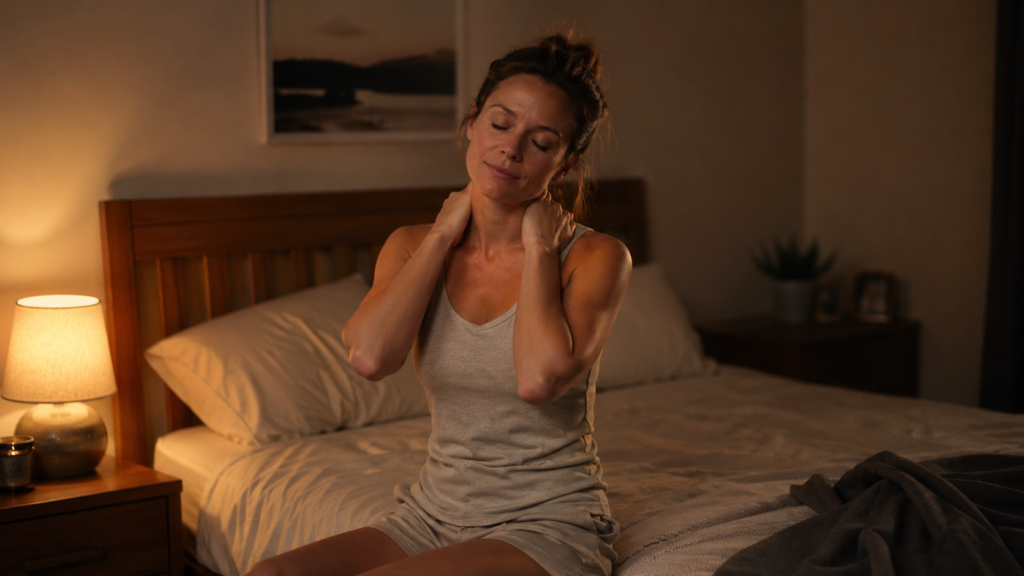
your body stores tension in predictable places after a day of stress and screens. neck and shoulders, jaw, hands, feet. these are the highest-yield areas for pre-sleep work and they’re all accessible without a partner or special equipment. neck and shoulders first. sit upright, reach across with one hand, apply moderate pressure at the base of your neck and work in slow circles out toward the shoulder. slower than feels natural — the speed itself is part of the signal you’re sending. switch sides. two or three minutes. don’t rush it. jaw next, which most people skip but probably shouldn’t. place your fingertips at the hinges of your jaw where the muscles are — a lot of people are surprised how much tension is sitting there — and make gentle circles. thirty seconds. then move to your temples and your scalp, fingertips spread, slow movements from front to back. the scalp responds strongly to this kind of touch and it genuinely settles something. feet last, and this is the one i’d fight hardest to keep if i had to cut the routine down to one thing. sit on the bed, take one foot in both hands, and work your thumbs along the sole from heel to toe in slow strokes. spend time on the arch and on the ball of the foot just below the big toe. five minutes per foot sounds like a lot until you’re doing it — it goes quickly and by the time i finish the second foot i’m usually already starting to feel heavy. not sleepy in a forced way. just… ready. timing: thirty to sixty minutes before bed is ideal. not right at bedtime if you can help it — you want the nervous system shift to have time to settle before you’re actually lying down trying to sleep. it fits naturally into the same window as a proper wind-down routine, which is when it works best anyway.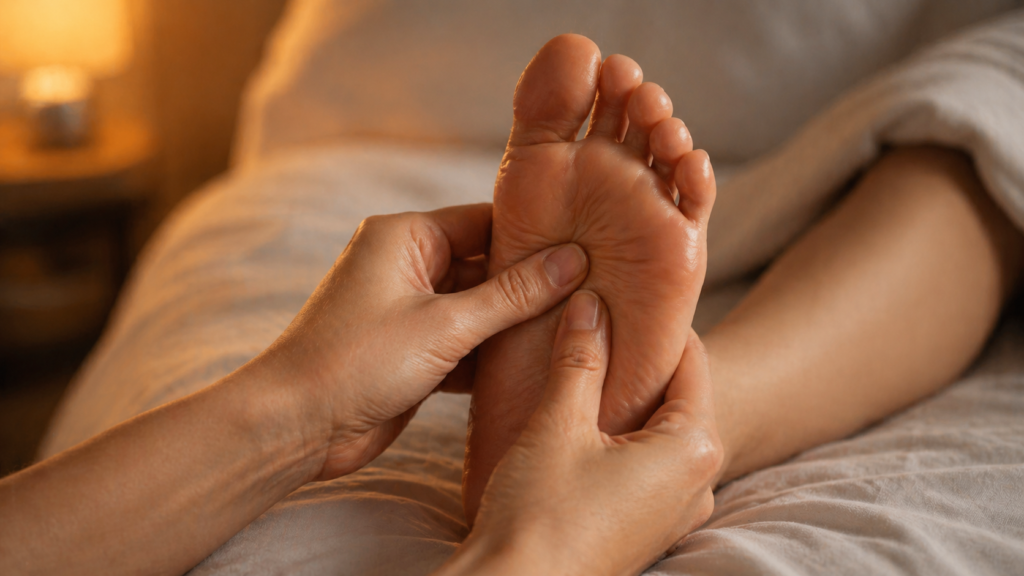
a few things that make it work better
do it after a warm shower rather than before. the shower raises your skin temperature, the post-shower cooling helps trigger the body temperature drop that sleep requires, and muscles are more receptive to pressure work when they’re warm. the sequence — shower, then massage, then bed — creates a physical routine your body starts to recognize over time. applying magnesium lotion or oil while you massage is worth trying. transdermal magnesium absorption is still debated in the research, but even if the absorption is minimal, the act of applying it makes the massage feel more intentional and gives better slip for the strokes. and magnesium taken any route — topical, oral, whatever — supports the GABA side of things, which is your brain’s calming mechanism. magnesium glycinate taken orally before bed does the same thing from a different angle. no phone, lights down. doing this while watching something or half-scrolling defeats the whole point. the signal you’re trying to send is: stimulation is over, the day is done. a lit screen running in the background sends the opposite signal simultaneously. boring, but the darkness and quiet are doing real work here. be consistent rather than intense. ten minutes every night beats forty-five minutes once a week, significantly. what you’re building is a conditioned response — over time your body starts to associate the massage with what follows it. it becomes the runway your nervous system needs to actually clock out, rather than something you’re doing occasionally when things get bad enough.the anxiety piece specifically
if your sleep problems are anxiety-driven — the specific version where you’re genuinely exhausted but your brain won’t stop, where cortisol spikes at night and keeps you wired past when you should be out — massage addresses the problem more directly than most sleep advice does. most sleep hygiene is about removing things. screens, caffeine, inconsistent schedule. all valid. but none of it actively brings the nervous system down. massage is one of the few things that does something rather than just getting out of the way. i pair it with ashwagandha earlier in the evening for the cortisol piece and magnesium glycinate before bed for the GABA piece. the massage is the physical, tactile part of the same approach — three things working on the same problem from different angles. none of them dramatic alone. together they’re the difference between a bad night and a workable one.
when self-massage isn’t enough
self-massage works well for the stress-and-tension end of sleep problems. anxiety-driven insomnia, physical tension from a hard day, a nervous system that just needs a signal to wind down — this stuff helps with all of that. it doesn’t fix clinical anxiety disorders, and it doesn’t substitute for proper treatment if you’re dealing with something more significant. if your sleep problems have been going on for months and aren’t responding to anything, it’s worth ruling out things like sleep apnea, thyroid issues, or anxiety that’s past the point where lifestyle interventions are sufficient. massage is a complement, not a treatment. and if professional massage is accessible to you, use it — the research is better than for self-massage and the per-session effect is stronger. use professional sessions when you can and fill the rest of the week with the ten-minute self version. they work the same mechanism and they compound. for a more detailed look at the evidence, the Sleep Foundation’s overview of massage for sleep covers the research more thoroughly than i have space for here. ten minutes. neck, jaw, feet. lights down, phone away. that’s really all of it. most people are surprised by how much tension they’ve been carrying into bed without realizing, and how much that tension has been the actual obstacle rather than something mysterious about how their brain works.This article is for informational purposes only and does not constitute medical advice. Always consult a qualified healthcare professional before making changes to your health routine.