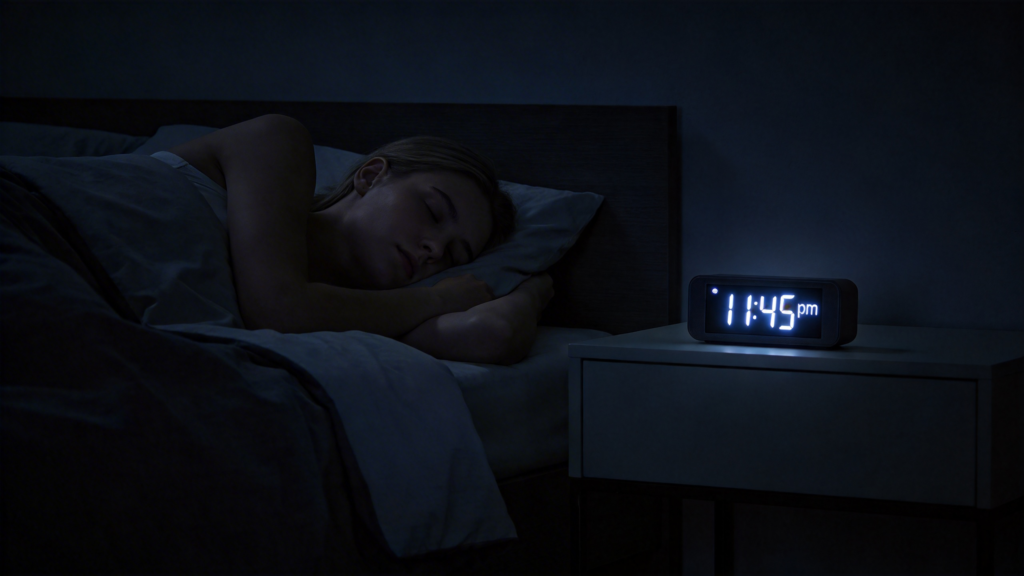
okay so i have a friend who sleeps ten hours a night and wakes up exhausted. every morning. sets three alarms. misses all of them. finally surfaces sometime around nine feeling like she’s been sedated rather than rested. spends the day doing that thing where you’re technically awake but not quite behind the eyes.
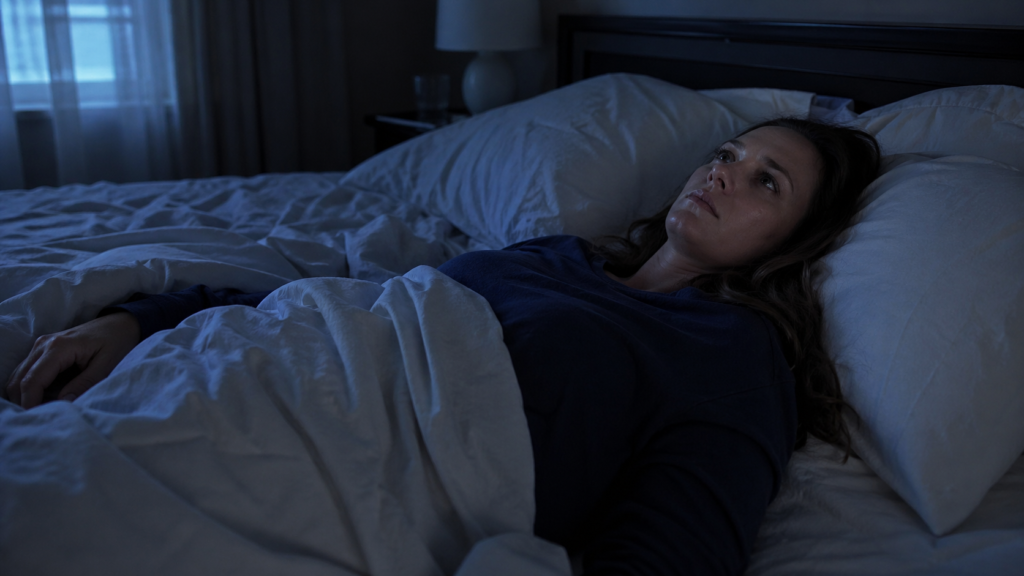
and then there’s me. can’t fall asleep. lie there until one, sometimes two in the morning, brain fully operational and annoyingly so — running through every unresolved thing from the past several days while my body is like please we have to be up at seven. wake up feeling like someone scooped out the inside of my skull with a spoon.
we both complained about sleep constantly. for years we assumed we had basically the same problem. we did not. we had opposite ones.
the core difference between insomnia vs hypersomnia comes down to this: one is sleep that won’t come, the other is sleep that comes fine and does nothing. both leave you wrecked. but they’re different things and they need different fixes, which is why figuring out which one you’re actually dealing with matters more than just trying every sleep remedy until something accidentally works.
the can’t-sleep version
insomnia. difficulty falling asleep, staying asleep, or getting sleep that actually does anything — despite having time and opportunity. that last part is the technical qualifier. sleeping five hours because you’re working until midnight is a scheduling problem, not insomnia. insomnia is when you’re in bed, you want to sleep, nothing is stopping you, and it just. doesn’t. happen.
there’s an acute version — triggered by something specific, a bad stretch at work or a breakup or a disrupted routine — usually fades when the trigger does. and then there’s chronic insomnia. three or more nights a week, three or more months. at that point it has its own momentum. the bed itself has become part of the problem — you’ve spent enough nights lying awake in it that your brain now treats it as a cue for wakefulness rather than sleep. you get in and something activates. sleep researchers call this conditioned arousal. which is a clinical way of saying your nervous system learned the wrong association and has been reinforcing it ever since.
the daytime version of insomnia is this specific wired-exhausted feeling. tired but unable to switch off. want to nap desperately, can’t fall asleep for that either. the fatigue stacks up but the activation level doesn’t drop to match it. lying awake for hours feels different from just being tired because it is different — it’s not a quantity problem, it’s a nervous system problem. cortisol isn’t dropping. the brain keeps finding material.
ten to thirty percent of adults deal with insomnia at meaningful levels at some point. which is why it gets most of the airtime when people talk about sleep.
the sleep-that-doesn’t-work version
hypersomnia is harder to explain to people who haven’t been inside it. it’s not just sleeping a lot. it’s sleeping a lot and the sleep not doing the thing it’s supposed to do.
my friend puts it this way: she wakes up feeling like she’s surfacing from something very deep and far down, slowly, with resistance. sleep inertia — that groggy transition between asleep and functional — lasts way longer than it should. an hour after waking and she still feels like her brain hasn’t loaded. the fog doesn’t lift when she has coffee, not really. and the sleepiness just. sits there. through the morning, through the afternoon, through dinners and conversations and things she actually wants to be present for.
the thing that distinguishes hypersomnia from just running a sleep deficit: naps don’t fix it. if you’re sleep-deprived a twenty-minute nap is genuinely restorative — you come out of it a different person. with hypersomnia you can take a two-hour nap and wake up the same kind of groggy, sometimes worse. the problem isn’t the hours. something is off in the quality of what’s happening during those hours, or in how the brain processes it afterward, or both.
there are different versions. idiopathic hypersomnia is the most frustrating — excessive sleepiness with no identifiable cause, which is its own special kind of awful because there’s nothing to point at and fix. narcolepsy is a neurological condition involving disrupted sleep-wake regulation, often with additional features like sudden muscle weakness triggered by strong emotions or vivid hallucinations at the edges of sleep. secondary hypersomnia is what happens when something else is driving the whole thing — sleep apnea, depression, thyroid dysfunction, certain medications doing their sedating thing.
four to six percent of the population, roughly. probably underdiagnosed, partly because excessive sleepiness is easy to explain away as depression or stress or just being “a tired person who needs more coffee.” 
how to actually tell which one you have
surface answer when comparing insomnia vs hypersomnia: insomnia means can’t sleep, hypersomnia means sleep doesn’t help. but both produce daytime fatigue and brain fog and irritability, so in practice it gets murkier than that. here’s what actually separates them when you look closer.
with insomnia the dysfunction is nocturnal. the nights are broken and the days are bad because of it. fix the nights and the days sort themselves out. the problem has a clear address.
with hypersomnia the nights aren’t obviously broken. sleep happens, it lasts a long time, it might even feel uninterrupted. the problem is you emerge from it unrefreshed anyway. the daytime sleepiness persists despite the sleep rather than flowing from a failure of sleep — which is what makes it so confusing and so easy to misattribute to something psychological.
a useful question: if you slept as long as you wanted with no alarm for several days in a row — would the daytime fog eventually lift? with insomnia or plain sleep debt, extended free sleep usually fixes the days after a while. with hypersomnia the sleepiness tends to hang around even then. it’s not a debt that can be paid off with more hours. that persistence is the tell.
worth knowing too: they can overlap. depression can produce disrupted nights and profound daytime fatigue simultaneously, looking like both at once. sleep apnea can fragment sleep badly enough to create insomnia-like waking while also causing hypersomnia-like exhaustion from the lack of deep restorative stages. this is part of why sleep problems that don’t respond to the usual fixes are worth actually evaluating properly rather than just cycling through more supplements.
what’s causing each one
insomnia. stress and anxiety are the most common drivers — the chronically activated nervous system that doesn’t downregulate when it should. elevated cortisol at night keeps the brain in alert mode past when it needs to be. irregular schedule, screens before bed messing with melatonin timing, a room that’s too warm for the body temperature drop sleep requires — all of these create it and maintain it. certain medications. caffeine timed wrong. alcohol, which sedates initially and then rebounds in the second half of the night in ways that look like insomnia without anyone connecting it.
hypersomnia causes vary more. sleep apnea preventing deep sleep stages is one of the most common secondary causes — nine hours of sleep with untreated apnea and you can still be functionally depleted because those nine hours are shallow and fragmented in ways you’re not consciously registering. depression more strongly associated with hypersomnia than most people realize, particularly in younger adults. hypothyroidism producing fatigue and excessive sleep that looks identical to idiopathic hypersomnia until someone checks the labs. various medications doing their sedating thing.
idiopathic hypersomnia — no clear cause — is still not fully understood. current research points toward abnormalities in how the brain regulates wakefulness, possibly something involving the GABA system. unsettled. frustrating if you’re living with it and looking for something to address.

what actually helps each one
this is where the distinction really earns its keep. the approaches that help insomnia are mostly irrelevant for hypersomnia, and the other way around too.
for insomnia: CBT-I has stronger evidence than any sleep medication and longer-lasting effects after treatment ends. it directly targets the conditioned wakefulness and anxious relationship with sleep that keeps chronic insomnia going. on the supplement side — magnesium glycinate for the nervous system downregulation piece, ashwagandha for cortisol. consistent wake time is probably the single most useful behavioral change. not bedtime — wake time. that’s what anchors the clock.
for hypersomnia: depends entirely on what’s causing it. sleep apnea — treat the apnea, usually CPAP, often produces dramatic improvement in daytime alertness relatively quickly. medication-related — conversation with whoever prescribed it. depression-driven — treating the depression is the path. for idiopathic hypersomnia options are more limited and typically involve a specialist. wakefulness-promoting medications, sleep schedule management that doesn’t push past optimal hours even when the body is asking for more. this is one of the cases where self-management has real limits and professional evaluation is genuinely necessary.
my friend eventually got evaluated. idiopathic hypersomnia. no clean fix. what’s helped most: keeping the sleep schedule tight even on days she wants to sleep for twelve hours, planning the most demanding things for her best hours, treating the worst hours as fixed costs rather than failures.
me: consistent wake time was the first thing that actually moved anything. the wired-exhausted thing is quieter. still there sometimes. but quieter.
we both spent years thinking we were just bad at sleeping. turns out we had specific, different, nameable problems — and knowing which one changed everything about what we tried.
for a clinical overview of both conditions, the Sleep Foundation’s guide to insomnia is a solid starting point if you’re looking to understand diagnosis and treatment options in more depth.
This article is for informational purposes only and does not constitute medical advice. Always consult a qualified healthcare professional before making changes to your health routine.