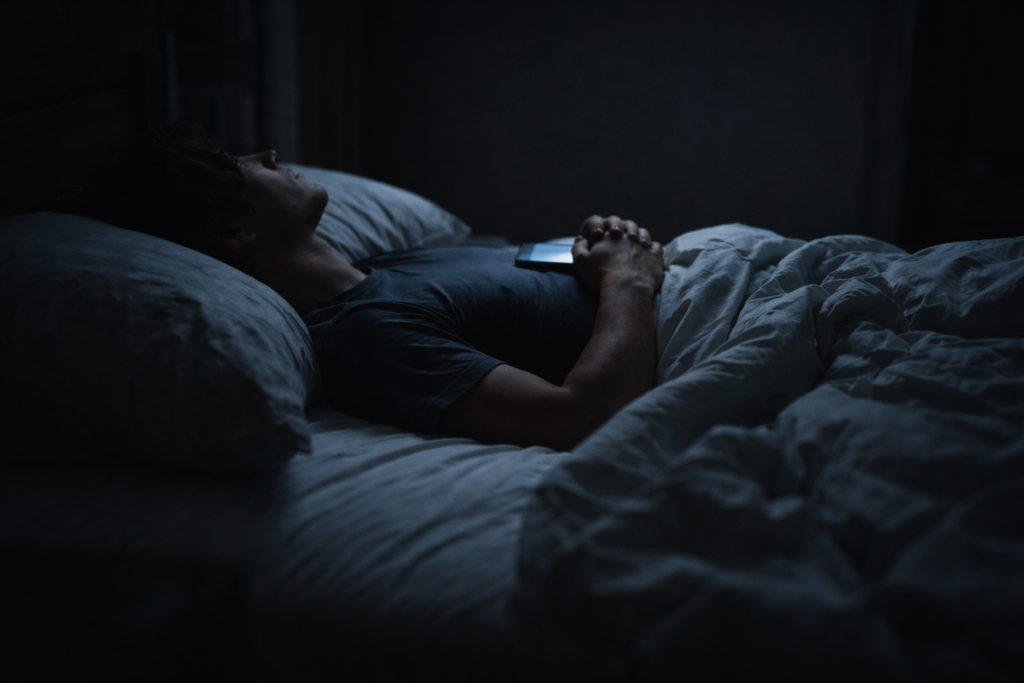
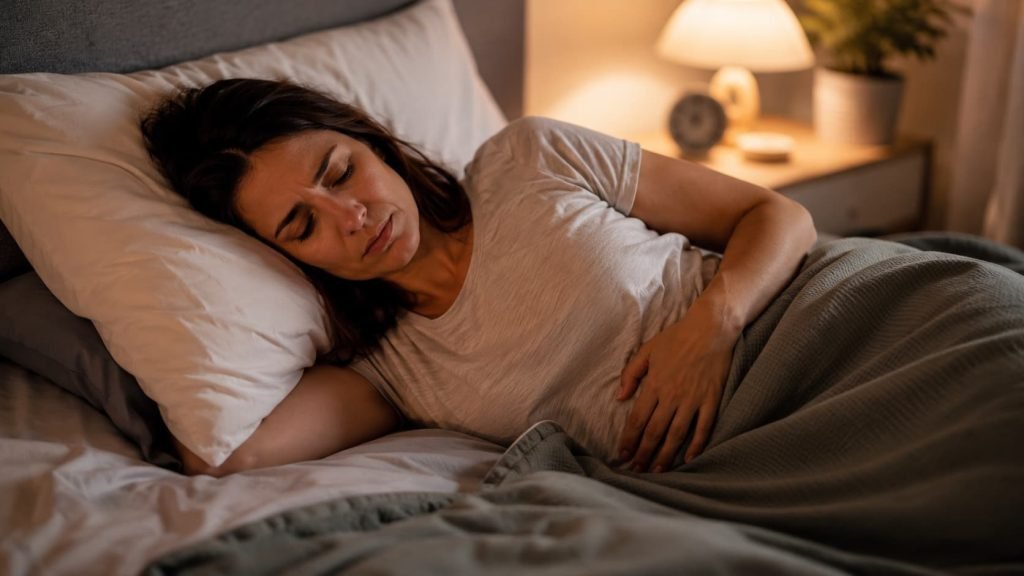
The best sleeping position for bloating is usually left-side sleeping with your upper body slightly elevated, especially if the bloating comes with gas, reflux, or that tight “too full” feeling after dinner. It will not magically deflate your stomach in five minutes. I wish. But the right position can make the pressure feel less miserable while your body works through it.
Bloating at night has a special way of making you dramatic.
You can be fine all evening, then lie down and suddenly your stomach feels like it has taken up too much space. The waistband that was normal an hour ago feels personal. You roll onto your back. Worse. You roll onto your right side. Maybe worse. You sit up, burp once, and think, okay, maybe I am not dying, but I am definitely not sleeping yet.
Left-side sleeping is usually the first position to try
Start on your left side if bloating is keeping you awake.
Left-side sleeping gets recommended a lot for digestion and reflux because of how the stomach sits in the body. It may help stomach contents stay lower and reduce the chance of reflux creeping up while you are lying down. That does not mean left-side sleeping directly “cures” bloating, but it can make the night feel less uncomfortable for some people.
The Sleep Foundation notes that left-side sleeping can be helpful for people with heartburn because of the way the stomach and esophagus are positioned. And honestly, bloating and reflux often travel together at night, especially after a big or late meal.
If your stomach feels tight and your chest or throat also feels burny, left side plus a little elevation is usually where I would start.
Elevating your upper body can take pressure off the night
If lying flat makes bloating feel worse, raise your upper body a little.
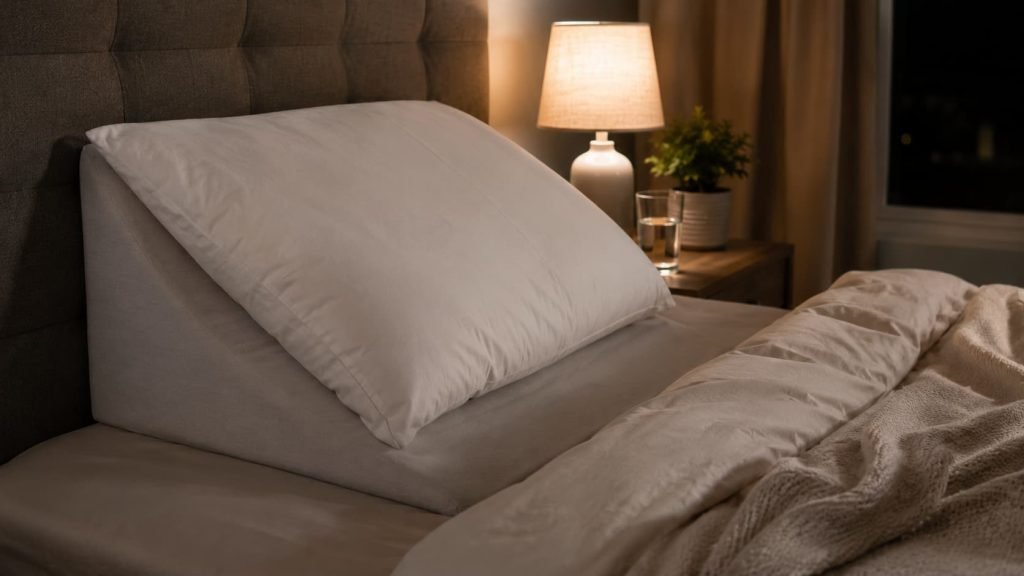
I do not mean stacking three sad pillows under your head until your neck is bent like you fell asleep in an airport. That usually just creates a new problem. A wedge pillow, adjustable base, or a steady incline from the torso works better.
Elevation can help if bloating is mixed with reflux, burping, or that heavy after-dinner pressure. It gives your stomach more room to settle and makes lying down feel less like you pressed pause on digestion.
If you already struggle with nighttime heat or heavy meals, your sleep environment matters too. The article on perfect temperature for sleep is worth reading if you notice bloating gets worse on warm, restless nights.
A curled side position may feel better than lying flat
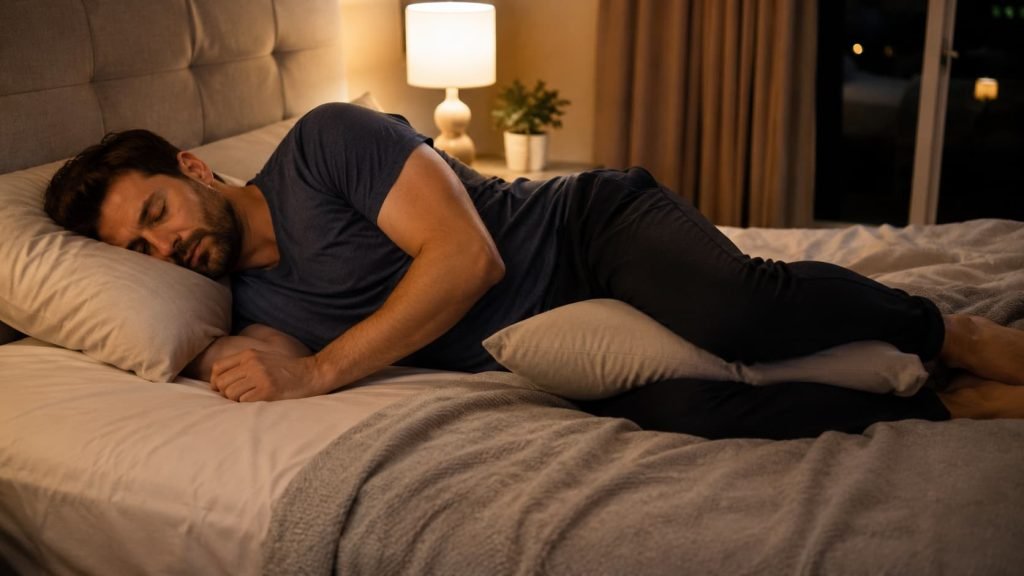
A gentle side curl can reduce that stretched, tight feeling.
Not a hard fetal curl where your knees are jammed into your stomach. Just a soft bend at the hips and knees. Sometimes that position feels easier because the abdomen is not pulled tight the way it can be when you are flat on your back.
I have had bloated nights where lying straight felt strangely tense, like my stomach had no room. A small bend made it more tolerable. Not fixed. Just less annoying.
Use a pillow between your knees if your hips or lower back complain. Bloating is bad enough without waking up with a twisted back. If side sleeping tends to bother your back, the guide on the best sleeping position for lower back pain may help you set up the position more comfortably.
Back sleeping can work, but not always when you feel too full
Back sleeping may be okay if your bloating is mild, but it can feel worse after a large meal.
When you lie flat on your back, the abdomen can feel stretched and heavy. If reflux is involved, flat back sleeping may also make symptoms more noticeable. That is the version where you lie there very still, hoping your stomach will quietly resolve itself, and it absolutely does not.
If back sleeping is your only comfortable option, try putting a pillow under your knees and raising your upper body a little. That can reduce tension through the belly and lower back.
What I would avoid is lying completely flat right after eating a big dinner. That is not giving your body much help.
Stomach sleeping is usually the least helpful choice
If you are bloated, stomach sleeping can feel awful.
Some stomach sleepers love the pressure, and I will not argue with someone’s lifelong sleep position at midnight. But for bloating, pressing your body weight into an already tight abdomen is not usually a great plan.
It can also twist your neck and lower back. So now you have bloating, neck strain, and regret. A full set.
If you are a stomach sleeper and cannot switch completely, try starting the night on your left side with a body pillow in front of you. It gives you something to lean into without smashing your stomach into the mattress.
When bloating is really trapped gas
If the bloating feels gassy, movement before bed often helps more than position alone.
A short walk after dinner is boring advice, but it works better than people want to admit. Even ten minutes around the house can help gas move along. Lying down immediately after a meal is where things often get stuck.
The Cleveland Clinic describes bloating as a feeling of tightness, pressure, or fullness in the belly, often related to gas, digestion, or other causes. That is exactly why position can help the feeling without solving the root cause.
If I had gas bloating before bed, I would walk first, then lie on my left side, knees slightly bent, upper body a little raised. Very unglamorous. Usually more useful than lying there angry.
Food timing matters more than the pillow arrangement
The best sleep position can only do so much if dinner was huge and late.
Bloating at night often starts before bedtime. Big meals, fast eating, carbonated drinks, salty foods, sugar alcohols, beans, cruciferous vegetables, dairy if you are sensitive, and spicy or greasy food can all make the belly feel louder later.
I do not think everyone needs a strict “no food after 7 p.m.” rule. That feels fake for real life. But if you keep going to bed bloated, look at the last three hours before sleep. That is usually where the clues are.
If late eating is part of the pattern, you may want to compare gentler options in good snacks to eat before bed. The goal is not to eat perfectly. It is to avoid choosing foods that make your stomach start a meeting at bedtime.
What to do if you are already bloated in bed
Do not keep flipping positions every thirty seconds. That usually just makes you more irritated.
Sit up for a few minutes. Sip water if you are thirsty, but do not chug. Try a slow walk around the room or hallway if you are uncomfortable. Then settle onto your left side with your knees slightly bent.
If burping or reflux is part of it, keep your upper body elevated. If gas is lower in the belly, a gentle side curl may feel better. If one position clearly makes pressure worse, believe that and stop testing it like the result will change.
I say that because I have absolutely tested the same bad position five times in one night. It was still bad.
When bloating needs more attention
Occasional bloating after a heavy meal is common. Constant or painful bloating is different.
The Mayo Clinic notes that gas and bloating can come from swallowed air, foods, constipation, and some medical conditions. If bloating is new, severe, persistent, or comes with weight loss, vomiting, blood in stool, fever, severe pain, ongoing diarrhea, constipation, or trouble eating, it is worth talking with a doctor.
Also, if bloating is ruining your sleep most nights, that counts as affecting your life. You do not have to wait until it sounds dramatic enough.
FAQ
What is the best sleeping position for bloating?
The best sleeping position for bloating is usually left-side sleeping with your knees slightly bent and your upper body a little elevated. This position may feel more comfortable when bloating comes with gas, reflux, or fullness after eating.
Is it better to sleep on the left or right side when bloated?
Left side is usually the better place to start, especially if reflux or burping is part of the problem. Some people feel fine on either side, but right-side sleeping can make reflux worse for certain people.
Does lying down make bloating worse?
It can. Lying flat too soon after eating may make fullness, reflux, or trapped gas feel more noticeable. Sitting upright, walking briefly, or sleeping slightly elevated may help.
Can sleeping on your stomach help bloating?
Usually not. Stomach sleeping can put direct pressure on the abdomen and may feel uncomfortable when you are already bloated. Side sleeping is usually easier to tolerate.
What should I do if I am bloated before bed?
Try sitting upright, taking a short slow walk, sipping water, and then lying on your left side with your knees slightly bent. Avoid lying flat immediately after a large meal.
Why do I get bloated mostly at night?
Night bloating often reflects what happened earlier: large meals, eating fast, carbonated drinks, high-salt foods, constipation, food sensitivities, or lying down too soon after dinner. If it happens often, track dinner timing and foods for a few nights.
My honest take
If bloating is keeping you awake, start simple: left side, slight elevation, knees relaxed, no stomach sleeping. Give your body a little help instead of lying flat and hoping pressure magically disappears.
But do not make the pillow setup do all the work. If bloating keeps showing up at bedtime, the real answer may be dinner timing, meal size, carbonated drinks, constipation, or a food your stomach does not love. The sleeping position helps the night. The pattern tells you what needs changing.
This article is for informational purposes only and does not constitute medical advice. Always consult a qualified healthcare professional before making changes to your health routine.