
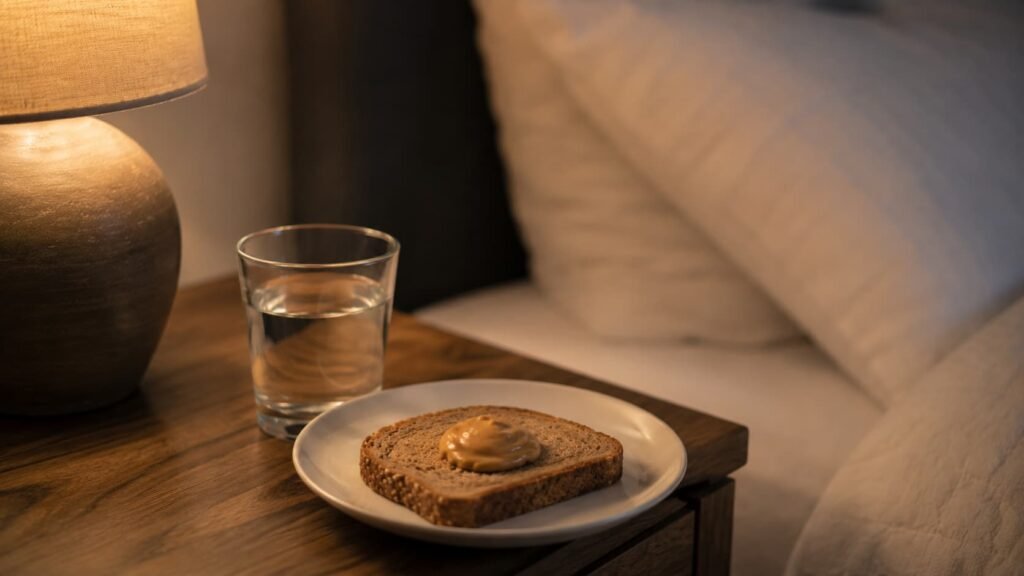
Eating Peanut Butter Before Bed: Does It Actually Help You Sleep?
Eating peanut butter before bed sounds like one of those tiny sleep hacks that should either be genius or complete nonsense.
A spoonful of peanut butter. Maybe on toast. Maybe with a banana if you are pretending this is a balanced adult decision. You eat it, brush your teeth, get in bed, and hope the protein-fat combo carries you gently through the night like some kind of edible weighted blanket.
I get the appeal.
Because going to bed hungry is awful. Not dramatic-awful, but annoying-awful. The kind where you are technically tired, but your stomach keeps tapping your brain like, hey, quick question, are we ignoring dinner now? And then you lie there thinking about snacks instead of sleeping, which is not exactly a peaceful bedtime routine.
So can peanut butter help? Sometimes. But not in the magical way people online make it sound.
Why peanut butter before bed might help
Peanut butter has a few things going for it.
It has fat. It has protein. It has some fiber. That combination digests more slowly than a sugary snack, which means it may help you feel full for longer. If your sleep problem is that you wake up hungry at 2 a.m., a small spoonful of peanut butter before bed might genuinely help.
Not because peanut butter is a sedative. It is not.
More because hunger can be loud at night. And if you are under-eating during the day, working late, training hard, or eating dinner too early, your body may simply not be thrilled about going eight or nine hours without food.
This is where a small bedtime snack can make sense. The Sleep Foundation notes that some people may benefit from a light snack before bed, especially when hunger is interfering with sleep. The word light is doing a lot of work there.
A spoonful? Fine.
Half the jar while standing in the kitchen in pajama pants? Different conversation.
The tryptophan thing
You will see a lot of articles mention tryptophan when talking about eating peanut butter before bed.
Tryptophan is an amino acid your body uses to make serotonin and melatonin, both of which are involved in sleep. Peanuts do contain tryptophan. So technically, yes, peanut butter has a nutrient connected to sleep.
But I would not oversell this.
You are not eating peanut butter and immediately flooding your brain with melatonin. Nutrition does not work that neatly. The amount matters, what else you eat matters, timing matters, and your overall diet matters more than one bedtime spoonful.
Still, as bedtime snacks go, peanut butter is more sensible than cookies or candy. It is slower-digesting. It is satisfying. It does not hit your blood sugar the same way a sweet snack might.
That alone may be the real benefit.
Peanut butter and blood sugar at night
This is where peanut butter can be useful for some people.
A snack that includes protein and fat may help avoid the quick rise-and-crash feeling that comes with more sugary foods. If you are the kind of person who wakes up at night feeling restless, hungry, or weirdly alert, a steadier snack might help more than something sweet.
I learned this with other bedtime snacks too. I wrote about eating a banana before bed because bananas have their own sleep-related nutrients, but honestly, a banana alone does not work for everyone. Some people do better when a little fat or protein is included.
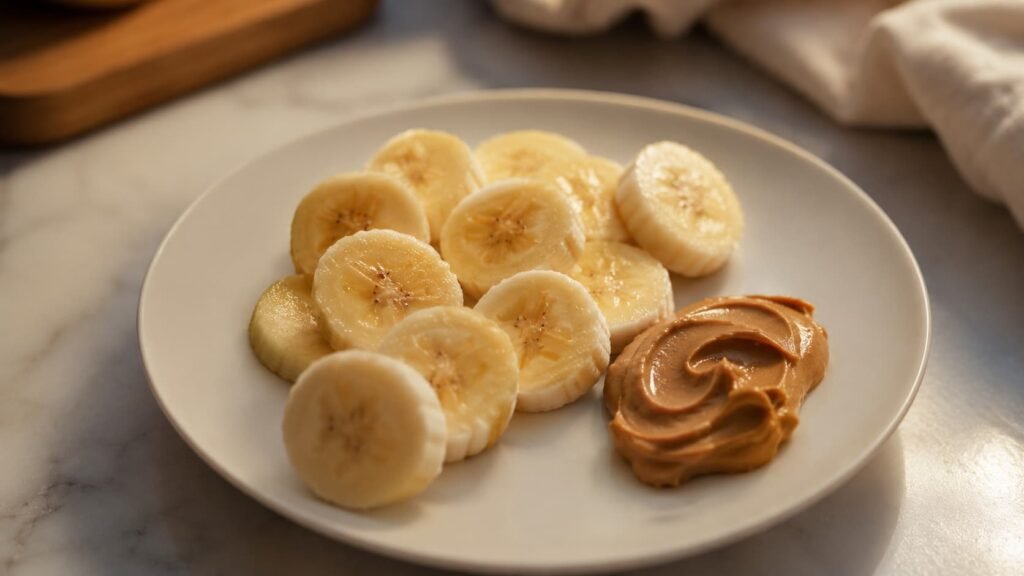
Banana plus peanut butter is the classic version. Not groundbreaking. Just practical.
A few slices of apple with peanut butter can work too. Or a small piece of toast. The point is not to build a full meal. The point is to stop hunger from becoming the main character once the lights are off.
When peanut butter before bed is a bad idea
Here is the part people skip because it ruins the snack enthusiasm.
Peanut butter is dense. Very dense. Two tablespoons can easily be around 180 to 200 calories, depending on the brand. That is not bad. Calories are not evil. But if you are casually scooping from the jar, portions get weird fast.
Also, peanut butter is high in fat. For some people, that is exactly why it works. For others, especially people with reflux, it can backfire.
If you deal with heartburn, GERD, or that burning feeling when you lie down, eating peanut butter close to bedtime may make sleep worse. Mayo Clinic recommends waiting at least three hours after eating before lying down if you have GERD symptoms, and NIDDK gives similar guidance for nighttime reflux.
That is annoying, but it matters.
If peanut butter sits heavy in your stomach, makes you thirsty, gives you reflux, or makes you feel too warm at night, it is not your bedtime snack. Even if some blog says it should be.
Including this one.
How much peanut butter should you eat before bed?
Start smaller than you think.
A reasonable bedtime amount is usually 1 tablespoon, maybe 2 if you know it sits well with you and you are genuinely hungry. I would not start with a giant peanut butter sandwich at 11:30 p.m. and call it a sleep experiment.
Try:
- 1 tablespoon of peanut butter on whole-grain toast
- 1 tablespoon with apple slices
- 1 tablespoon with half a banana
- 1 spoonful on its own if you are keeping it simple
Give it 45 to 90 minutes before bed if you can. Right before lying down is where things get dicey, especially if digestion or reflux is already a problem.
And choose the boring peanut butter.
The ingredient list should be peanuts, maybe salt. A lot of peanut butter products are closer to dessert spread than food. Added sugar, hydrogenated oils, chocolate swirls, honey flavor, all that stuff. Fun? Sure. Sleep-supportive? Less convincing.
Peanut butter vs. other bedtime snacks
Peanut butter is not the only decent bedtime snack.
Greek yogurt, cottage cheese, nuts, kiwi, banana, oatmeal, or a small piece of toast can all make sense depending on what your body tolerates. The best bedtime snack is the one that solves the actual problem without creating another one.
If the problem is hunger, peanut butter may help.
If the problem is anxiety, peanut butter probably will not fix it.
If the problem is a chaotic sleep schedule, the snack is not the main lever. Your body clock still matters more. If your sleep timing is all over the place, start with something like CalmNightly’s guide on how to fix circadian rhythm before trying to solve everything with food.
I say this because I have absolutely tried to snack my way out of bad sleep timing.
It does not work.
Food can support sleep. It cannot replace a rhythm.

Will eating peanut butter before bed make you gain weight?
Not automatically.
Weight gain comes down to overall calorie intake over time, not the moral character of eating after 9 p.m. Peanut butter before bed becomes a problem if it pushes you into eating more than your body needs, especially because it is so easy to underestimate.
One spoonful can turn into three. Three can turn into “why is this jar almost empty?” Peanut butter has that power.
But if a small portion fits your day and helps you avoid waking hungry, it is not automatically a bad habit. For some people, it may be better than going to bed starving, sleeping badly, and then waking up ravenous.
The trick is being honest about the portion. Annoying, but true.
My honest take
Eating peanut butter before bed is not a miracle sleep hack.
It will not fix insomnia. It will not override stress. It will not repair a terrible schedule, a bright bedroom, too much late caffeine, or your decision to answer work messages at 10:47 p.m. I say that with love and also mild personal experience.
But as a small snack? It can be useful.
Especially if your issue is nighttime hunger, blood sugar dips, or waking up too early because your body is asking for food. In that case, peanut butter makes more sense than a sugary snack because it is slower, heavier, and more satisfying.
The danger is turning “a little peanut butter” into a full bedtime meal. That is where sleep can go sideways.
FAQ
Is eating peanut butter before bed good for sleep?
It can be, especially if hunger is keeping you awake or waking you during the night. Peanut butter contains fat and protein, which may help you feel full longer. But it is not a direct sleep aid.
How long before bed should I eat peanut butter?
Try eating it 45 to 90 minutes before bed. If you have reflux or heartburn, you may need to avoid eating close to bedtime altogether or leave a longer gap.
Is peanut butter hard to digest at night?
It can be for some people because it is high in fat. If it gives you reflux, bloating, or a heavy stomach, it is probably not a good bedtime snack for you.
What is the best way to eat peanut butter before bed?
Keep it small. Try 1 tablespoon with apple slices, half a banana, or whole-grain toast. Avoid sugary peanut butter spreads if your goal is better sleep.
Is peanut butter better than a banana before bed?
Not better, just different. A banana gives you carbs, potassium, magnesium, and vitamin B6. Peanut butter gives you more fat and protein. Some people do best with a small amount of both.
The short version
Eating peanut butter before bed can help if you are genuinely hungry and need a small, filling snack. It works best in modest portions, ideally 45 to 90 minutes before sleep.
If it causes reflux, heaviness, thirst, or worse sleep, skip it.
That is the boring answer. Also probably the right one.
This article is for informational purposes only and does not constitute medical advice. Always consult a qualified healthcare professional before making changes to your health routine.