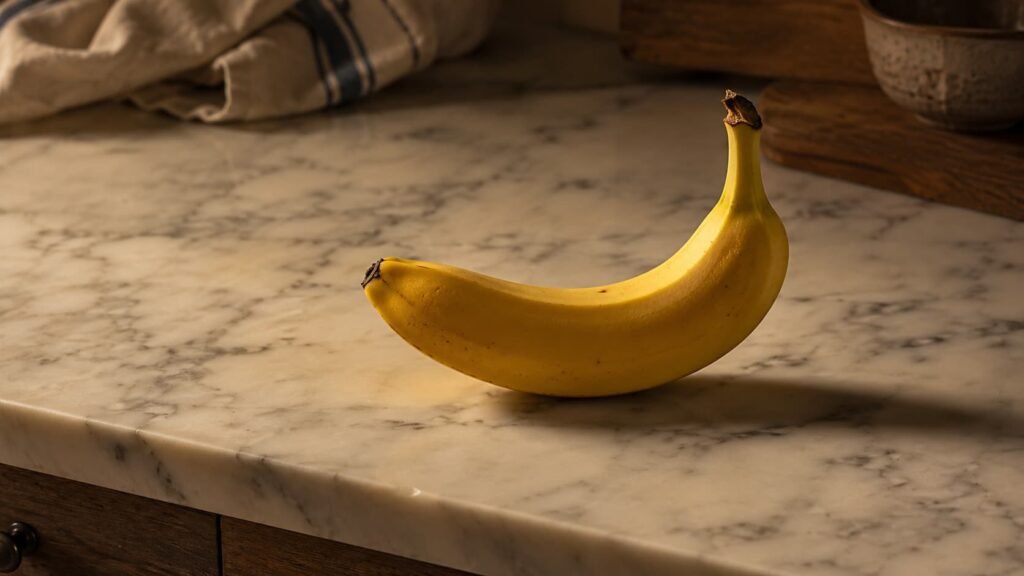
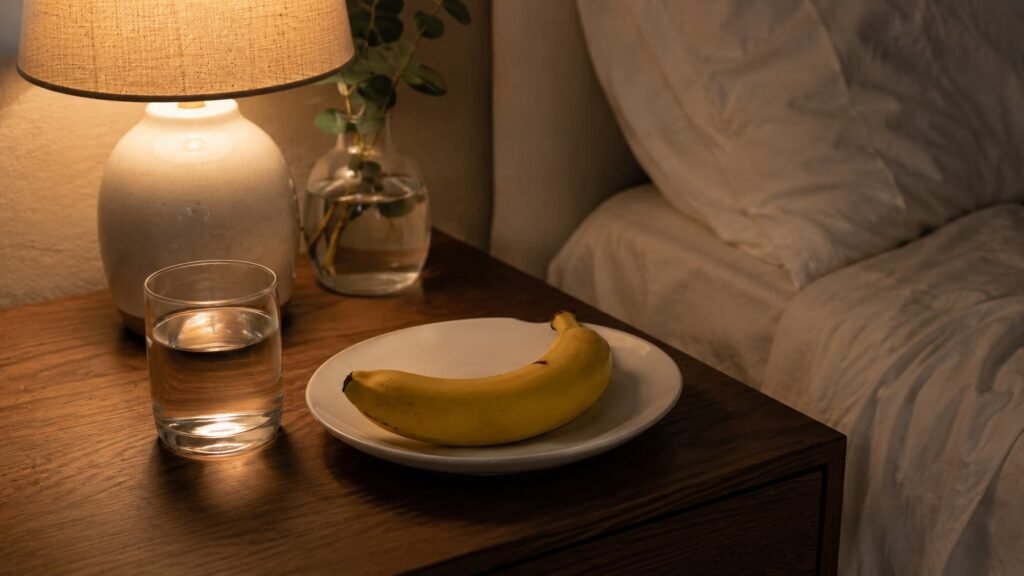
Eating a banana before bed means reaching for one of the few snacks with a real, science-backed argument for sleep support — magnesium, potassium, tryptophan, and vitamin B6, all working together toward melatonin production and muscle relaxation. A medium banana has around 32mg of magnesium and a solid chunk of your daily B6. It won’t fix chronic insomnia. But as a nightly snack, it’s a genuinely smarter choice than most things in your kitchen at 10pm.
I’ll be honest — when someone first mentioned this to me, I kind of rolled my eyes. Bananas are fine. They’re a perfectly acceptable fruit. But a sleep hack? That felt like something from the kind of wellness content that also recommends making your bed every morning as a form of trauma healing.
Then I had about three weeks last winter where I kept waking up sometime around 2 or 3am with this low-grade muscle tension in my legs that wouldn’t let me fall back asleep. Not pain exactly. Just tight and restless, like my legs hadn’t gotten the memo that we were done for the night. I’d been eating badly, skipping meals, general chaos. A friend mentioned bananas — something about potassium and magnesium. I started eating one most nights mostly because I was hungry anyway. The leg thing calmed down. And I got curious.
what’s in a banana before bed that actually affects sleep
Four things. And they work together in a way that’s more interesting than just “it has some nutrients.”
Magnesium is the first one worth knowing about. A medium banana has around 32 milligrams — roughly 8% of your daily intake, according to the NIH. That’s not huge on its own, but magnesium helps activate the parasympathetic nervous system — the calm-down side — keeps GABA levels stable, and supports your body’s melatonin production. If you’ve been meaning to dig into the magnesium-sleep connection more, I’ve written about it in more depth over in my piece on which magnesium is best for sleep and anxiety. The short version: a lot of people are running low on it without knowing.
Tryptophan is what most people have heard of, but the mechanism usually gets glossed over. Tryptophan is an amino acid your body converts to serotonin, which then converts to melatonin. The chain is: banana → tryptophan → serotonin → melatonin → sleep. But here’s the catch — tryptophan has to compete with other amino acids to cross into the brain. The carbohydrates in a banana help solve this. When you eat carbs, your body releases insulin, which clears out those competing amino acids and gives tryptophan a cleaner path. The carb-protein combination matters, which is why pairing a banana with something works better than eating it alone.
Vitamin B6 is what actually powers the tryptophan-to-serotonin conversion. Without enough B6, that whole chain doesn’t run efficiently. A medium banana covers about 20% of your daily requirement — more than most people realize.
Potassium helps regulate muscle function and reduces the likelihood of those nighttime leg cramps that yank you out of deep sleep at 3am. Low potassium is a surprisingly common contributor to that kind of disruption, and it’s one that most people don’t think to connect to sleep.
does the research actually back this up
More than I expected, honestly. A 2020 review published in Nutrients found that tryptophan-rich foods were associated with improvements across multiple sleep measures — total sleep time, how quickly people fell asleep, fewer nighttime wakings. Bananas aren’t the most concentrated tryptophan source around (turkey and seeds have more), but the carbohydrate context makes the tryptophan more usable. That’s the part that makes bananas specifically interesting, rather than just any tryptophan-containing food.
On the magnesium side, Harvard Health has noted that magnesium deficiency is associated with difficulty sleeping and nighttime waking. The Sleep Foundation estimates roughly 60% of Americans don’t meet their daily magnesium target — which is a lot of people, when you think about it.
None of this means a banana will knock you out. The effect is mild and cumulative, not immediate. What it can do is give your body a quiet nudge toward the conditions sleep needs: lower cortisol, stable blood sugar, relaxed muscles, a bit more melatonin support. That’s worth something, especially if you’re also struggling to wind down — which I’ve written about separately in my piece on screen time before bed and how it interferes with exactly this process.
timing and ripeness — both matter a bit
About 60 to 90 minutes before bed is the general sweet spot. Long enough for digestion, early enough that your body can actually use the tryptophan before you’re trying to sleep. Eating it right as you’re climbing into bed isn’t a disaster, but you’re losing some of the benefit.
Ripeness does change things more than most people expect. Greener bananas have more resistant starch and a lower blood sugar impact. Fully ripe, spotty ones have more natural sugar and digest faster — which gives you a quicker insulin response but could also cause a mini blood sugar crash later in the night if you’re sensitive to that. A medium-ripe banana (yellow, maybe a few spots) is probably the sweet spot. Or maybe I just say that because that’s what’s usually left in my kitchen by Thursday.
what to pair it with
A banana alone is fine. A banana with something else is better. The combination of carbohydrates and protein gives tryptophan the best shot at reaching your brain — the carbs clear the path, the extra protein brings more tryptophan to work with.
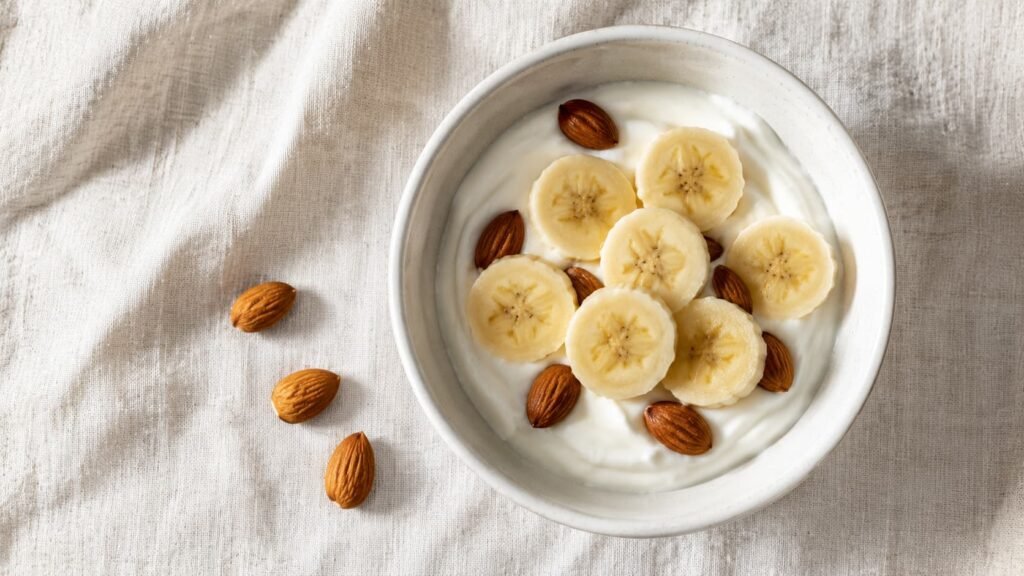
The pairings that actually work: a small handful of almonds, a spoonful of almond or peanut butter, a few spoonfuls of plain Greek yogurt. Almonds in particular are worth mentioning — they have their own magnesium and some melatonin precursors, so the combination genuinely stacks. Keep the total portion to something reasonable. You’re not eating dinner. A banana and a tablespoon of nut butter is maybe 200 calories — enough to stabilize blood sugar through the night without putting your digestion to work while you’re trying to sleep. If you’ve been exploring this kind of bedtime routine territory, you might also find my piece on the best tea for sleep and anxiety useful — a warm cup alongside is a nice combo.
what it won’t fix
A racing mind. If you lie down and spend an hour running through every awkward interaction from the past week, no amount of potassium is getting you out of that. Racing thoughts at night are a nervous system regulation issue. They need different tools — a proper wind-down, slower breathing, writing things down before bed. The banana is not that tool.
It also won’t compensate for a fundamentally broken sleep environment. Room too warm, too much light, no consistent wake time — those things matter more than any snack. And it won’t replace actual sleep treatment for real disorders. If you’re dealing with chronic insomnia, sleep apnea, or restless leg syndrome, a banana is a mild adjunct at best, not a strategy.
when to see a doctor
If you’ve been waking up regularly at night for more than a few weeks and it’s affecting your days — your focus, mood, general ability to function — that’s worth mentioning to your doctor. Chronic nighttime waking can point to sleep apnea, blood sugar regulation issues, thyroid problems, or anxiety disorders. None of those respond to dietary tweaks.
Persistent, severe nighttime leg cramps especially — don’t just assume more bananas will fix it. Severe cramps can signal a mineral deficiency that needs actual testing and supplementation, not just food-based guesswork.
The Sleep Foundation describes CBT-I — cognitive behavioral therapy for insomnia — as the most evidence-backed first-line treatment for chronic sleep problems, with effects that tend to outlast medication. There are digital programs now. More accessible than it sounds, and worth knowing about.
Frequently Asked Questions
Q: Does eating a banana before bed actually help you sleep?
A: It can, in a mild way. Bananas contain magnesium, tryptophan, vitamin B6, and potassium — all of which support melatonin production, muscle relaxation, and nervous system calm. The effect is gentle rather than dramatic, and it works best as part of a broader sleep routine rather than as a standalone fix.
Q: How long before bed should you eat a banana?
A: About 60 to 90 minutes is a reasonable target. This gives your body time to digest and begin converting tryptophan to serotonin and melatonin before you’re actually trying to fall asleep.
Q: What’s the best thing to pair with a banana before bed?
A: A small amount of protein or healthy fat — almond butter, peanut butter, a handful of almonds, or a few spoonfuls of Greek yogurt. The combination of carbohydrates and protein helps tryptophan reach the brain more effectively than eating a banana alone.
Q: Can bananas help with nighttime leg cramps?
A: Possibly. Nighttime leg cramps are often linked to low potassium or magnesium, and a medium banana provides around 420mg of potassium and 32mg of magnesium. If cramps are severe or happening often, it’s worth talking to a doctor — there may be a deficiency that goes beyond what food alone can address.
Q: Does banana ripeness matter for sleep?
A: A little. Riper bananas have more natural sugar and a faster blood sugar impact. Medium-ripe (yellow with a few spots) is probably the best balance — enough carbohydrates to help tryptophan, without a sugar spike that could disrupt sleep later in the night.
Q: When should I see a doctor instead of trying food-based sleep solutions?
A: If sleep problems have been going on consistently for more than three to four weeks, or if they’re affecting your daily functioning, it’s time to talk to a doctor. Chronic insomnia, sleep apnea, and anxiety disorders have more targeted treatments than dietary adjustments. Food-based approaches are supportive habits, not medical treatments.
I still eat a banana most nights — not with any great ceremony. It’s just what I reach for when I’m a bit hungry at 9pm and don’t want to actually cook anything. The leg tension from last winter hasn’t really come back. Could be the bananas. Could be that I started eating actual meals again. Probably both.
Either way — it’s a banana. Costs about eighty cents. The downside is you ate some potassium. The upside is you gave your body a few quiet raw materials to work with overnight. That math is pretty easy.
This article is for informational purposes only and does not constitute medical advice. Always consult a qualified healthcare professional before making changes to your health routine.