You usually cannot increase REM sleep by targeting REM directly. The most reliable approach is to give your brain enough uninterrupted sleep, protect the later part of the night, and address anything that is repeatedly disrupting normal sleep cycles.
REM stands for rapid eye movement sleep. It is associated with vivid dreaming, memory processing, learning, and emotional regulation. However, a low REM estimate from a watch or ring does not automatically mean that something is wrong. Consumer devices estimate sleep stages from signals such as movement and heart rate; only a clinical sleep study directly records the brain and physiological signals used to classify sleep stages.
How REM sleep changes across the night
Sleep alternates between non-REM and REM phases. According to the National Heart, Lung, and Blood Institute, a sleep cycle usually restarts every 80 to 100 minutes, and most people complete four to six cycles during a night.
Deep non-REM sleep is concentrated earlier in the night, while REM periods generally become more prominent later. That pattern explains why shortening the end of your sleep period can disproportionately reduce the opportunity for REM sleep. It does not mean that everyone needs an identical number of REM minutes or that sleeping at a specific clock time guarantees REM.
Sleep-stage amounts vary with age, recent sleep loss, medicines, alcohol, sleep disorders, and normal night-to-night variation. For most people, the goal should be adequate, refreshing sleep rather than achieving a particular REM percentage on an app.
1. Allow enough total time for sleep
For adults ages 18 to 60, the Centers for Disease Control and Prevention recommends at least seven hours of sleep per night. Some adults need more. If you regularly allow only five or six hours in bed, there may simply be too little time to complete the longer REM periods that tend to occur later in the sleep period.
Start by working backward from your required wake time. Allow for the sleep duration you need plus a reasonable amount of time to fall asleep. Extending time in bed is useful only when the schedule is realistic and you are able to sleep; spending many extra hours awake in bed can worsen insomnia.
If you consistently sleep for an adequate length of time but remain very sleepy, do not assume that you only need more REM. Fragmented sleep, sleep apnea, restless legs syndrome, medication effects, and other conditions may be reducing sleep quality.
2. Keep your sleep and wake times reasonably consistent
A stable schedule supports the circadian system that coordinates sleep timing. Large shifts between workdays and weekends can make it harder to fall asleep at the intended time and may shorten sleep when the schedule shifts back.
Choose a wake time that you can maintain most days. If your schedule is currently several hours late, adjust it gradually instead of forcing a dramatic change in one night. Morning light exposure and dimmer light in the evening can also help reinforce the desired schedule.
Consistency does not need to be perfect. The practical goal is to avoid repeatedly cutting the night short or creating large swings that leave you unable to sleep when you need to.
3. Reduce alcohol near bedtime
Alcohol may make falling asleep feel easier, but sedation is not the same as normal sleep. Controlled polysomnography studies have found that higher presleep alcohol exposure can reduce REM sleep during the first half of the night and increase lighter, more disrupted sleep later.
The size of the effect depends on dose, timing, metabolism, and the individual. Claims that every drink reduces REM by a fixed percentage are not supported. Still, if REM estimates are low or sleep is fragmented, reducing evening alcohol is one of the more useful variables to test.
Try comparing several alcohol-free nights with your usual pattern. Focus on awakenings, sleep duration, morning alertness, and how you function during the day rather than judging the experiment from one wearable score.
4. Identify what is interrupting the second half of the night
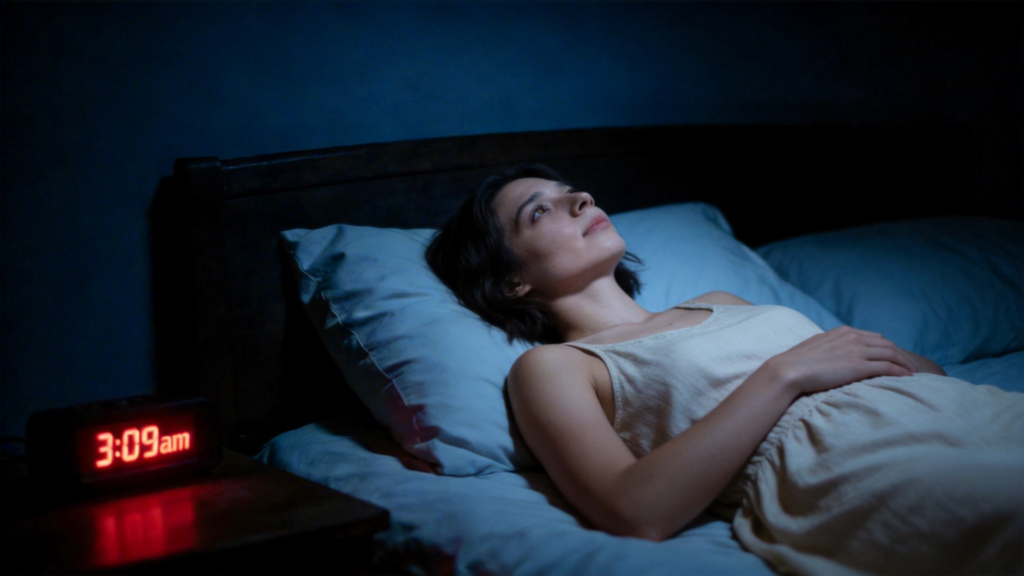
Because REM is generally more prominent later in the night, repeated early-morning awakenings can reduce the opportunity to complete those periods. Common causes include noise, light, alcohol, pain, hot flashes, reflux, anxiety, an inconsistent schedule, and sleep disorders.
Keep a simple sleep log for one to two weeks. Record:
- Bedtime and estimated sleep time
- Wake time and time out of bed
- Awakenings you remember
- Alcohol, caffeine, and medication timing
- Snoring, gasping, leg discomfort, pain, or hot flashes
- Daytime sleepiness and concentration
A pattern is more useful than a single bad night. If awakenings occur at roughly the same time, look for environmental or behavioral triggers, but avoid assuming that the clock time identifies a specific organ or hormone problem.
5. Make the bedroom comfortable and limit early light
The CDC recommends a quiet, relaxing bedroom kept at a cool temperature. There is no single ideal temperature for every person, and extremely cold conditions are not a REM strategy. The aim is to avoid overheating or discomfort that repeatedly wakes you.
REM sleep also occurs when the body’s temperature regulation is reduced, making a comfortable environment relevant. In an experimental study of adults over 65, a hotter bedroom reduced sleep efficiency and REM duration compared with a less hot condition. The study does not establish a universal thermostat setting, but it supports avoiding excessive heat and poor ventilation.
Use curtains or an eye mask if dawn light wakes you earlier than intended. Address intermittent noise with earplugs or steady background sound when appropriate. These changes help by reducing awakenings, not by directly manufacturing REM sleep.
6. Review medicines and sleep aids with a clinician
Several prescription medicines and over-the-counter products can alter sleep architecture. The effect may be expected, harmless, or clinically important depending on why the medicine is used and how you feel during the day.
Do not stop an antidepressant, sedative, blood pressure medicine, or other prescribed treatment because a wearable reports low REM. Abruptly stopping some medicines can cause withdrawal symptoms, REM rebound, or a return of the condition being treated.
If the timing of low REM estimates matches a medication change and you also feel unwell, discuss it with the prescriber or pharmacist. Ask whether the medicine, dose, timing, or an interaction could be affecting sleep. The clinical benefit of treatment may outweigh a change in sleep-stage measurements.
7. Support overall sleep quality
Regular physical activity, daytime light exposure, and a predictable wind-down period can improve sleep opportunity and continuity. Exercise does not need to occur at one universal time. If vigorous late exercise makes it difficult for you to fall asleep, move it earlier; if it does not disturb your sleep, there is no need to change it solely to chase REM.
Manage persistent stress with methods that have a clearer evidence base than REM supplements. Options include structured relaxation, cognitive behavioral therapy for insomnia, and treatment for an anxiety disorder when appropriate.
No over-the-counter supplement has been established as a reliable way to selectively increase REM sleep in the general population. Melatonin can help shift circadian timing in certain situations, but it should not be treated as a direct REM booster. Be cautious with products that promise a specific increase in REM percentage.
How accurate is your sleep tracker?
Wearables can be useful for observing bedtime, wake time, and broad trends, but sleep-stage accuracy is more limited. In a 2024 study comparing three commercial devices with polysomnography in 35 healthy adults, sleep-stage sensitivity varied substantially by device and stage. Another laboratory validation study found that a wearable classified REM with about 70% sensitivity in a small healthy sample.
Those results are useful, but they do not mean that every device performs the same way in every person. Accuracy may differ in people with insomnia, irregular sleep, heart rhythm changes, or a sleep disorder.
Use these principles:
- Look at multiweek trends, not one night.
- Do not compare REM minutes across different device brands as if they are interchangeable.
- Prioritize daytime alertness and functioning over a single sleep score.
- Seek clinical testing when symptoms suggest a sleep disorder.
When low REM may need medical evaluation
A wearable’s low REM estimate alone is not usually a reason for a sleep study. Evaluation is more appropriate when it occurs alongside symptoms such as:
- Loud snoring, witnessed breathing pauses, or waking while gasping
- Dangerous daytime sleepiness or drowsy driving
- Persistent insomnia lasting months
- Uncomfortable urges to move the legs at night
- Dream enactment, such as punching, kicking, or falling out of bed
- Sudden muscle weakness, sleep paralysis, or uncontrollable sleep attacks
- A major change in sleep after starting or changing medicine
A clinician can determine whether a sleep diary, medication review, home sleep apnea test, or in-lab polysomnography is appropriate.
Frequently asked questions
How much REM sleep should an adult get?
REM commonly accounts for a meaningful portion of adult sleep, but there is no single nightly target that every person must achieve. Age, total sleep time, recent sleep loss, medicines, and normal variation all affect the amount. A consumer device cannot diagnose REM deficiency.
Does sleeping longer increase REM?
It can increase the opportunity for REM when your usual sleep period is too short, because REM is generally more prominent later in the night. Sleeping longer will not necessarily solve fragmented sleep or an untreated sleep disorder.
Can supplements increase REM sleep?
No common supplement has been proven to selectively and reliably increase REM sleep for the general population. Treat the cause of inadequate or disrupted sleep instead of trying to manipulate one stage.
Are vivid dreams proof of good REM sleep?
No. Vivid dream recall may occur after waking during REM, after medication changes, or during REM rebound, but it does not measure sleep quality or prove that you received an ideal amount of REM.
Bottom line
The most practical way to support REM sleep is to protect normal sleep: allow enough time, keep a reasonably consistent schedule, reduce evening alcohol, prevent repeated awakenings, and evaluate symptoms of a sleep disorder. Treat wearable REM numbers as estimates rather than diagnoses. If sleep remains unrefreshing despite adequate opportunity, investigate the cause instead of adding another supplement.
Sources
- National Heart, Lung, and Blood Institute: Sleep Phases and Stages
- Centers for Disease Control and Prevention: About Sleep
- Roehrs et al. Effects of Alcohol on Polysomnographically Recorded Sleep in Healthy Subjects
- Chan et al. The Acute Effects of Alcohol on Sleep Architecture
- Lee et al. Accuracy of Three Commercial Wearable Devices for Sleep Tracking in Healthy Adults
- Miller et al. Validation of a Commercial Wearable Against Polysomnography
- Lan et al. Bedroom Temperature, Ventilation, and Sleep Quality in Older Adults
This article is for general educational purposes and is not a diagnosis or a substitute for care from a qualified healthcare professional.
Related sleep guides
- How much deep sleep do you need?
- Measure your sleep debt
- Why you may wake up tired after eight hours
- How to reset your sleep schedule
This article is for informational purposes only and does not constitute medical advice. Always consult a qualified healthcare professional before making changes to your health routine.