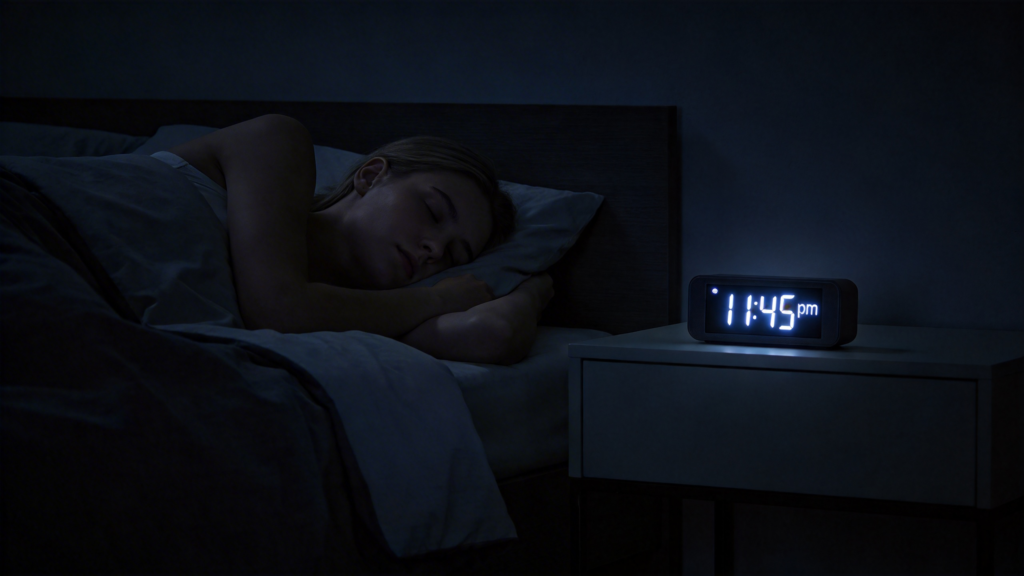

how to fix circadian rhythm comes down to three things: morning light within an hour of waking, consistent wake time every day including weekends, reduced light exposure in the two hours before sleep. mild disruption responds in three to five days. significant disruption takes one to two weeks of consistency. the thing that keeps people stuck most often is the weekend drift — late nights and sleeping in that restart the misalignment just as it was resolving.
once it’s fixed, it stays fixed fairly easily as long as the signals stay consistent. the hard part is the reset. after that, it mostly runs itself.
my sleep schedule didn’t break overnight. it drifted. later bedtimes here, sleeping in on weekends there, and then one Sunday I found myself lying awake at midnight genuinely baffled about why I couldn’t fall asleep when I had work at 7am. I’d been doing this for months. I just hadn’t connected the dots.
circadian rhythm. I’d heard the phrase a hundred times and never really understood what it meant in practice — like, what it actually is and why messing with it feels so physical. so I went and looked it up properly. what I found was more straightforward than I expected, and more fixable.
what a circadian rhythm actually is — before the fix makes sense
it’s a biological clock. roughly 24 hours, runs inside you whether or not you’re paying attention to it, controls when your body wants to sleep and when it wants to be awake. not metaphorically — actually controls it. the cortisol that makes you alert in the morning, the melatonin that makes you sleepy at night, your core body temperature rising and falling throughout the day. all of it tied to this internal rhythm.
and the main thing it uses to stay calibrated is light. specifically light hitting your eyes. morning light tells it “this is when the day starts.” darkness in the evening tells it “this is when the day ends.” it’s not complicated once you understand that — but it does mean that what you do with light, and when you sleep and wake, matters in a very direct way.
when the clock is off — when your behavior and environment are sending it conflicting signals — you get what I had. tired at the wrong times. wired at the wrong times. falling asleep feeling impossible. waking up feeling like punishment. that’s not a character flaw. it’s just a clock that’s been given bad information for too long.
how to fix circadian rhythm — the things that actually matter
morning light first. this kept coming up everywhere I looked and I kept wanting it to be more complicated than it was. it isn’t. getting bright light — real sunlight if possible — within the first hour of waking is the single most effective thing you can do to anchor your clock. ten to thirty minutes outside without sunglasses. that’s it. the light hits your retinas, your brain registers when morning is, and it sets the countdown for when melatonin will start rising that night. one input, genuinely outsized effect.
if you can’t get outside — winter, bad weather, weird work hours — a light therapy lamp rated at 10,000 lux does the same job. twenty to thirty minutes in the morning while you have coffee or eat breakfast. it looks slightly medical and feels a bit strange at first but the research on it is solid. some people use a circadian rhythm alarm clock that simulates sunrise — gradually brightening the room over twenty or thirty minutes before your target wake time — which works on the same principle and is gentler than a sudden blaring alarm.
evening light is the other half. the same kind of bright light that resets your clock in the morning disrupts it at night. your body needs light levels to drop in the couple of hours before sleep so melatonin can actually build. circadian rhythm lighting matters here more than most people realize — warm, dim light sources in the evening, overhead lights down, screens reduced. screen time before bed is a specific problem because screens emit blue-wavelength light that’s particularly good at suppressing melatonin at exactly the wrong moment.
consistent wake time. this is the one I resisted most because weekends felt sacred. but your circadian clock anchors itself to your wake time more than your bedtime — the morning light exposure that follows waking is the primary reset signal. inconsistent wake times are essentially giving your clock a different “start of day” every 24-48 hours, which is why it never settles. same wake time seven days a week, including weekends. it’s annoying. it works. I hate how much it works.
how long does it take to reset your circadian rhythm
depends on how far off it is. mild disruption — a rough week, a couple of late nights — usually responds within three to five days of consistent morning light and stable wake times. you can feel the difference faster than you’d expect when you’re giving the clock clear signals.
significant disruption — a chronically delayed schedule, recovering from shift work, long-haul jet lag — takes longer. one to two weeks of genuine consistency before things feel stable. the jet lag rule of thumb is roughly one day per hour of time zone shift, which gives a rough sense of the timescale for serious misalignment.
the thing that keeps most people stuck is the weekend. they do everything right Monday through Friday, then stay up late Saturday and sleep in Sunday, which resets the disruption just as it was resolving. the clock doesn’t care about your social schedule. it responds to the signals it actually gets. resetting a sleep schedule that keeps drifting usually comes down to this one thing — the weekend consistency problem — more than anything else. 
circadian rhythm fatigue — what it feels like and why it happens
circadian rhythm fatigue is a result of your body clock being chronically out of sync with your actual schedule. it’s not the same as just being tired from not sleeping enough. it’s more specific than that — a kind of wrong-time tiredness, where you’re exhausted at 8pm and inexplicably alert at midnight, or dragging through mornings even after eight hours of sleep because your clock thinks it’s the middle of the night.
people with significant circadian disruption often describe feeling like they’re operating slightly outside of time. not dramatically — just always slightly off. never quite rested, never quite alert at the right moments. it’s subtle enough that it’s easy to attribute to other things, and that’s partly why it goes unaddressed for so long.
the cortisol connection is relevant here too. cortisol follows a circadian pattern — peaking sharply in the first hour after waking to promote alertness, then declining through the day. when your rhythm is off, that cortisol peak shifts or blunts, and you lose the biological mechanism that’s supposed to make mornings functional. morning light exposure helps anchor that cortisol response back to your actual wake time, which is part of why it affects daytime energy and not just nighttime sleep.
circadian rhythm and ADHD — why it’s harder for some people
if you have ADHD and your sleep schedule consistently drifts later no matter what you try — falling asleep is impossible before 1am, mornings are genuinely brutal, the schedule keeps shifting toward later and later — that pattern has a name. delayed sleep phase. research consistently finds it’s more common in people with ADHD, and it’s not just poor habits. it appears to be related to how the brain processes light signals and regulates melatonin timing differently.
the same interventions apply — morning light, consistent wake times, evening light reduction — but they may need to be more deliberate and more consistent to produce the same effect. if you’ve tried the standard advice repeatedly and your schedule keeps drifting back, that’s worth discussing with a doctor. delayed sleep phase disorder has specific treatments beyond general sleep hygiene.
the practical version — what to actually do
pick a wake time. same every day. non-negotiable including weekends, at least while you’re fixing the clock. don’t pick something dramatically earlier than you currently wake up — move it by 30 minutes at most if you’re shifting earlier, and give each adjustment a few days before moving again.
get outside within an hour of waking. no sunglasses. even on cloudy days, outdoor light is significantly brighter than indoor lighting and produces the circadian signal. five minutes is better than nothing, twenty is better than five. 
two hours before your target bedtime, start dimming. warm light sources, reduced overhead lighting, screens down or on night mode. you’re not trying to be in darkness — just removing the bright blue light that suppresses melatonin. this pairs with the deep sleep you actually need — melatonin rising properly is what makes the transition into deep sleep easier.
according to the Sleep Foundation, light is the strongest external cue for circadian rhythm regulation — and consistency of timing matters more than any single session. it’s the repeated pattern that resets the clock, not one morning of sunlight.
the short version
how to fix circadian rhythm comes down to three things: morning light within an hour of waking, consistent wake time every day including weekends, reduced light exposure in the two hours before sleep. mild disruption responds in three to five days. significant disruption takes one to two weeks of consistency. the thing that keeps people stuck most often is the weekend drift — late nights and sleeping in that restart the misalignment just as it was resolving.
once it’s fixed, it stays fixed fairly easily as long as the signals stay consistent. the hard part is the reset. after that, it mostly runs itself.
This article is for informational purposes only and does not constitute medical advice. Always consult a qualified healthcare professional before making changes to your health routine.