
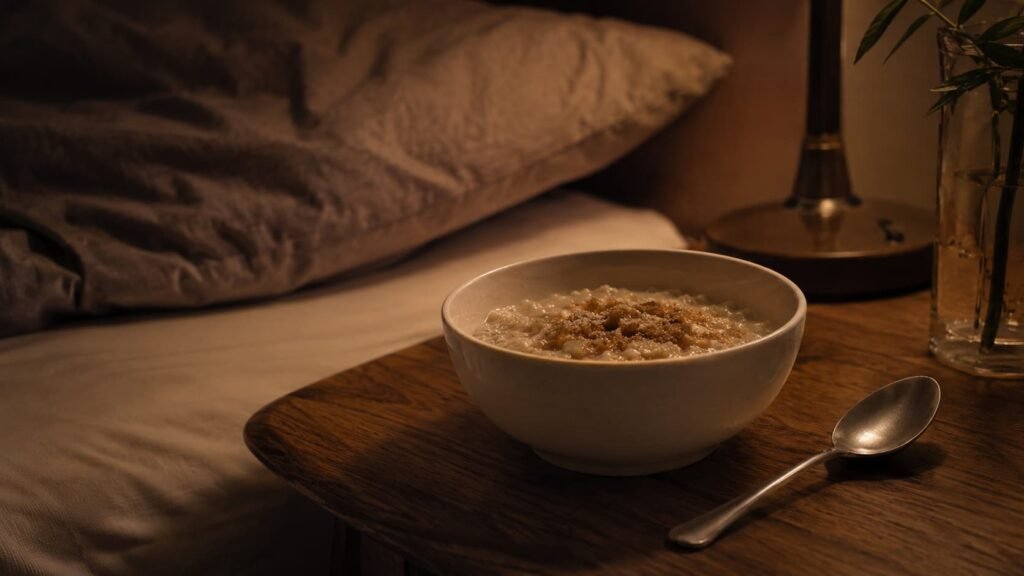
Eating Oatmeal Before Bed: Does It Actually Help You Sleep?
The first time I tried eating oatmeal before bed, it was not because I had read some brilliant sleep study.
I was just hungry.
That was it. Very scientific. Dinner had happened too early, I had ignored the little stomach-noise situation for maybe an hour, and by the time I got into bed my body was basically filing a complaint. So I got back up, made a small bowl of oats, dumped in cinnamon, stood at the counter like a tired raccoon in human form, and ate it.
And yeah. It helped.
Not dramatically. I did not float into a perfect eight-hour sleep while gentle moonlight blessed my nervous system. Please. But I stopped thinking about food. My body settled a little. That was enough.
That was also the moment I realized a lot of bedtime snack advice is asking the wrong question. People want to know if oatmeal is a sleep food. I’m not even sure I like that phrase. The better question is: are you awake because you’re hungry, or are you awake because your whole sleep routine is a mess?
Different problems. Very different.
Eating oatmeal before bed can help if hunger is the actual problem
Oatmeal is not magic. I know that sounds obvious, but the internet needs to hear it every few minutes.
What oatmeal does have is slow-ish carbs, fiber, and a little protein. That makes it more satisfying than a sugary snack, but usually less heavy than a full meal. For a bedtime snack, that is a decent middle ground.
If hunger is keeping you awake, a small bowl can help. Not because oats are sedating you like medication. More because your stomach finally stops sending little emergency messages to your brain.
The Sleep Foundation includes oatmeal as a possible bedtime snack and notes that oats contain magnesium and melatonin. That sounds impressive, and it is interesting, but I would not build a whole personality around it.
For me, the more practical benefit is simpler.
Warm food. Steady carbs. Less hunger noise.
The carb panic is overdone
People get weird about carbs at night.
I have been weird about carbs at night too, so I’m not saying this from some enlightened mountain. I remember doing the “no food after dinner” thing for maybe two weeks. Maybe three. I felt very disciplined and slept worse, which was not exactly the victory arc I had imagined.
Oatmeal is mostly carbohydrate, yes. But it is not the same as eating cookies in bed. Oats have fiber, so they digest more slowly. They feel steadier. Less chaotic.
That said, I do push back on the idea that everyone needs carbs before bed. Some people sleep better with no snack at all. Some people feel heavy if they eat anything after dinner. Fair.
Your body gets a vote here.
Oatmeal before bed makes the most sense when you are actually hungry, or when you tend to wake up early because your body seems to be asking for food. If you are eating it because some article promised deeper sleep, I’d be skeptical.
Including this article, honestly.
The toppings are where things go sideways
Plain oatmeal is pretty innocent.
The problem is what we do to it.
Brown sugar. Maple syrup. Chocolate chips. Sweetened dried fruit. A heroic spoonful of peanut butter that starts as “a little” and becomes structural engineering. I have made bowls like this and still called them healthy, which was generous of me.
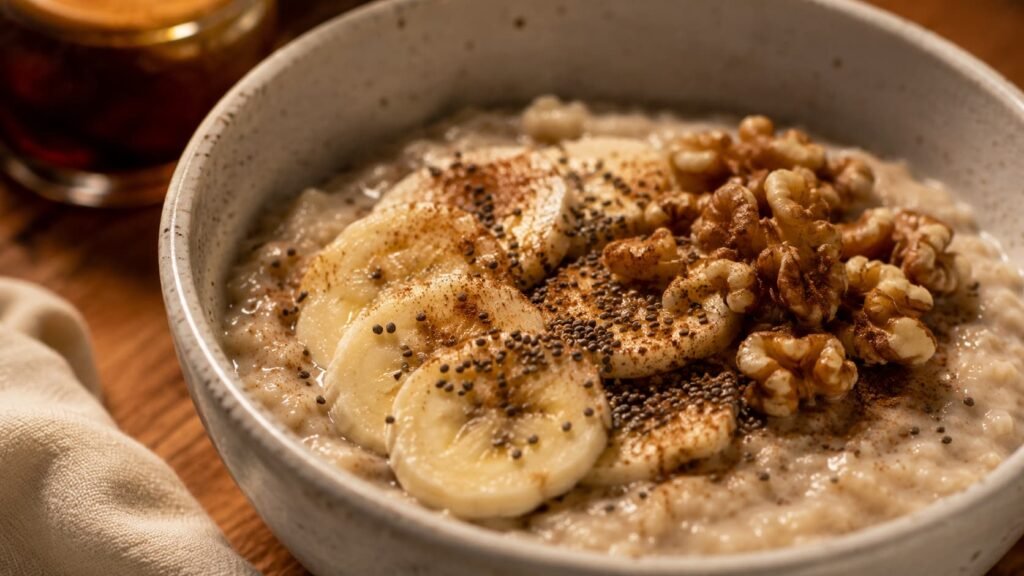
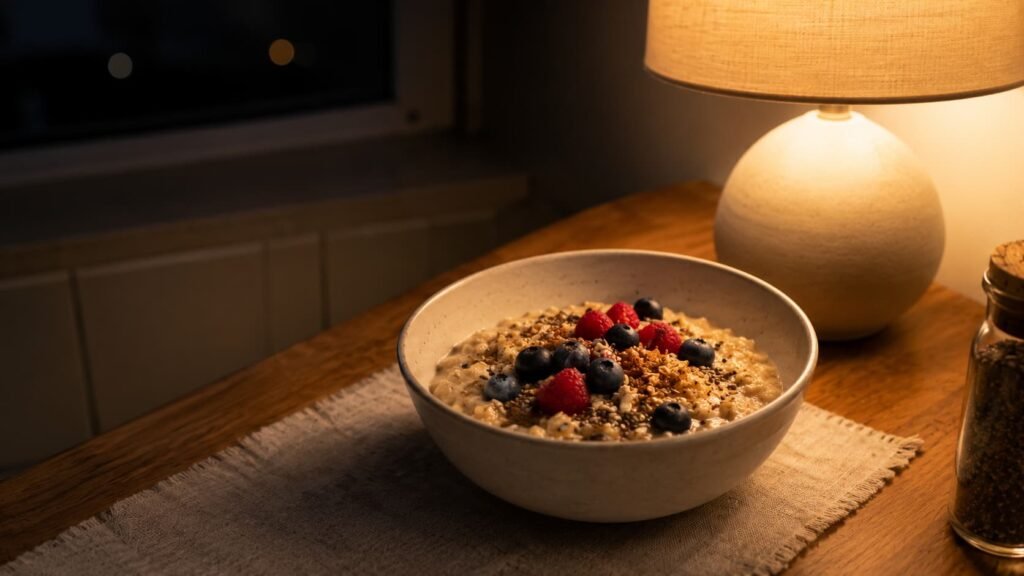
If sleep is the goal, keep the toppings boring. Banana, cinnamon, berries, walnuts, chia seeds, maybe a small spoon of peanut butter. That kind of thing.
If you turn oatmeal into dessert, it may behave like dessert. Shocking, I know.
The Sleep Foundation notes that diet can affect sleep and that eating too close to bedtime may worsen reflux for some people. Very unsexy information. Also useful.
Oats can be gentle. Your toppings may not be.
What kind of oatmeal works best at night?
I would not overcomplicate this.
Rolled oats are fine. Quick oats are fine. Steel-cut oats are fine if you are the kind of person who has the patience to make steel-cut oats at night. I admire you from a distance.
Instant oatmeal can work too, but check the packet. Some flavored packets are basically candy dust with oats nearby. Apple cinnamon sounds harmless until the sugar number starts looking suspicious.
My lazy version is oats, cinnamon, a few banana slices, and maybe walnuts if I remember they exist.
That’s it.
If you want something fruit-based instead, I wrote about eating a banana before bed. Banana and oatmeal together actually make sense. Not exciting. But it works as a calm little snack, which is more useful than exciting at 10 p.m.
How much oatmeal before bed is enough?
Less than a breakfast bowl.
This is where I used to mess it up. I would make what looked like a normal morning serving, eat it at night, then wonder why my stomach felt busy when I lay down. My body was not being mysterious. I had just eaten too much.
For most people, a small bowl is enough. Half a cup of cooked oatmeal, maybe a little more if you are genuinely hungry. Not a mountain.
Timing matters too. I like the 60 to 90 minute window before bed. It gives digestion a little time to get started before you lie flat.
Right before bed can work for some people, but it is riskier. Especially if you get bloating or reflux.
If acid reflux is part of your life, be careful here. A food can be healthy and still be badly timed.
Oatmeal vs other bedtime snacks
Oatmeal is not the only option. It is just one of the calmer ones.
Yogurt can work. Fruit can work. A few nuts can work. Peanut butter can work if it sits well with your stomach. I wrote about eating peanut butter before bed, and that one is more filling because of the fat and protein.
Oatmeal is different. Warmer. Softer. More like a landing pad.
If you want a broader list, CalmNightly has a guide to good snacks to eat before bed. I like that approach better than pretending one food is the secret answer.
One food is almost never the secret answer.
When oatmeal before bed is a bad idea
Oatmeal is gentle for a lot of people.
Not everyone.
If oats make you bloated, gassy, too full, or weirdly uncomfortable, they are not your bedtime snack. Fiber is helpful until your stomach decides it is a personal attack.
Also, if you are eating oatmeal every night because you are always starving at bedtime, look at the rest of the day. Are you eating enough dinner? Enough protein? Enough actual food before 9 p.m.?
I ask because I have done the thing where I eat too little during the day, then try to solve it with a nighttime snack.
It sort of works.
Badly.
Mayo Clinic’s general sleep tips mention being careful with food, caffeine, and alcohol close to bedtime because they can interfere with sleep. Basic advice, yes. But basic advice keeps being relevant because we keep ignoring it.
When oatmeal is not the real problem
This is the part I have to remind myself of.
You can spend a ridiculous amount of energy adjusting the snack and still ignore the obvious sleep wreckage. Bright screens in bed. Late caffeine. No consistent wake time. Work messages at night. Random bedtime. Random everything.
Then you blame the oats.
Come on.
That was the moment I realized I had been asking too much from food. Not just oatmeal. All of it. I wanted the right snack to fix a rhythm problem, which is unfair to the snack and also kind of ridiculous.
If your sleep timing is all over the place, start with your body clock. CalmNightly’s guide on how to fix circadian rhythm gets into morning light, wake time, and evening light exposure.
That stuff matters more than oatmeal.
Food can support sleep. It cannot run the whole operation.
So should you try oatmeal before bed?
Sure. If hunger is part of the problem.
Try a small bowl 60 to 90 minutes before bed. Keep the toppings simple. Do it for a few nights without changing ten other things at the same time.
That last part matters. If you add oatmeal, cut caffeine, start exercising, buy blackout curtains, and meditate for the first time in your life, you will have no idea what helped.
Just test the oatmeal.
If you sleep better, good. If you feel bloated or heavy, stop. No drama.
It is a snack. Not a contract.
FAQ
Is eating oatmeal before bed good for sleep?
It can be if hunger is keeping you awake. Oatmeal has slow-digesting carbs and fiber, which may help you feel full longer. It is not a direct sleep aid.
How long before bed should I eat oatmeal?
Try eating it 60 to 90 minutes before bed. If you get reflux or bloating, give yourself more time or keep the portion smaller.
Is oatmeal too heavy before sleep?
Sometimes. A small bowl is usually fine for many people. A large bowl with heavy toppings may feel too filling and disrupt sleep.
What should I put in oatmeal before bed?
Keep it simple. Banana, berries, cinnamon, chia seeds, walnuts, or a small spoon of peanut butter can work. Go easy on sugar.
Is oatmeal better than cereal before bed?
Usually, if the cereal is sugary. Oatmeal has more fiber and tends to digest more steadily. Plain, low-sugar cereal may be fine for some people.
Can oatmeal before bed cause weight gain?
Not by itself. Weight gain depends on overall intake over time. Oatmeal becomes a problem if it adds extra calories you do not need, especially with heavy toppings.
The short version
Eating oatmeal before bed can help if you are hungry and need something warm, steady, and not too stimulating.
Keep it small. Keep it simple. Give it about an hour before sleep.
If it makes you bloated, refluxy, or too full, skip it.
That is pretty much it.
Useful, not magical.
This article is for informational purposes only and does not constitute medical advice. Always consult a qualified healthcare professional before making changes to your diet or sleep routine.
This article is for informational purposes only and does not constitute medical advice. Always consult a qualified healthcare professional before making changes to your health routine.