Eating Chocolate Before Bed: Does It Help or Hurt Sleep?
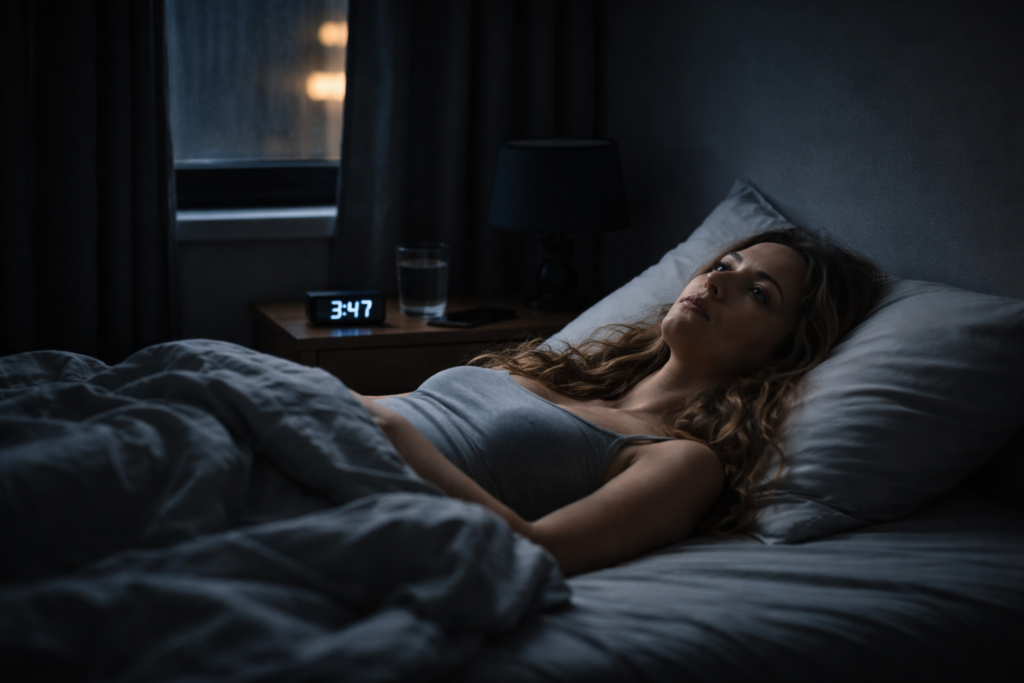
Eating chocolate before bed sounds harmless until it is 12:43 a.m. and you are lying there with your eyes open, weirdly awake, trying to figure out why your brain has decided now is the correct time to replay an awkward conversation from years ago.
And the worst part is, it never feels like the chocolate did it.
Because it is not coffee. It is not an energy drink. It is just chocolate. One square. Maybe two. Maybe the little broken corner too because leaving it there would be strange. This is how these things happen.
I have done this more times than I want to admit.
Finish dinner. Want something sweet. Tell myself it is “just a little dark chocolate,” which sounds very adult and controlled. Then later I am in bed, technically tired, but not quite able to drop. Not wired exactly. Just… on.
That is the sneaky thing.
Chocolate before bed does not always hit like caffeine. Sometimes it just quietly moves sleep a few inches farther away.
Why chocolate before bed can be a problem
Chocolate has a few things going on that are not very bedtime-friendly.
There is caffeine. Not as much as coffee, obviously, but enough to matter for some people. There is also theobromine, another stimulant from cocoa. Then there is sugar. Then fat. Then digestion. None of these things are evil. I am not trying to turn chocolate into a villain with a cape.
But if your sleep is already delicate, eating chocolate before bed is one of those tiny habits that can push things in the wrong direction.
The Sleep Foundation explains that caffeine can block adenosine, which is one of the chemicals that helps sleep pressure build. That matters because you can feel tired and still not feel sleepy enough. Very rude distinction, but real.
Mayo Clinic Health System also lists chocolate as a hidden source of caffeine. Hidden is the right word. Nobody is standing in the kitchen thinking, ah yes, my 9 p.m. stimulant square.
But that is kind of what it can be.
Dark chocolate is the tricky one
Dark chocolate has excellent PR.
People talk about it like it is basically medicine. Antioxidants. Less sugar. Higher cocoa. Serious-person chocolate. And sure, compared with some candy, it can be a better choice.
For sleep though, higher cocoa can mean more caffeine and more theobromine. That is the catch. The “healthier” chocolate may be the one most likely to keep you awake.
I find dark chocolate especially sneaky. It does not make me feel energetic. I do not suddenly want to clean the kitchen or answer emails. I just fail to become sleepy at the usual time. My body is tired, but my brain is standing in the doorway refusing to leave.
Small difference. Big annoyance.
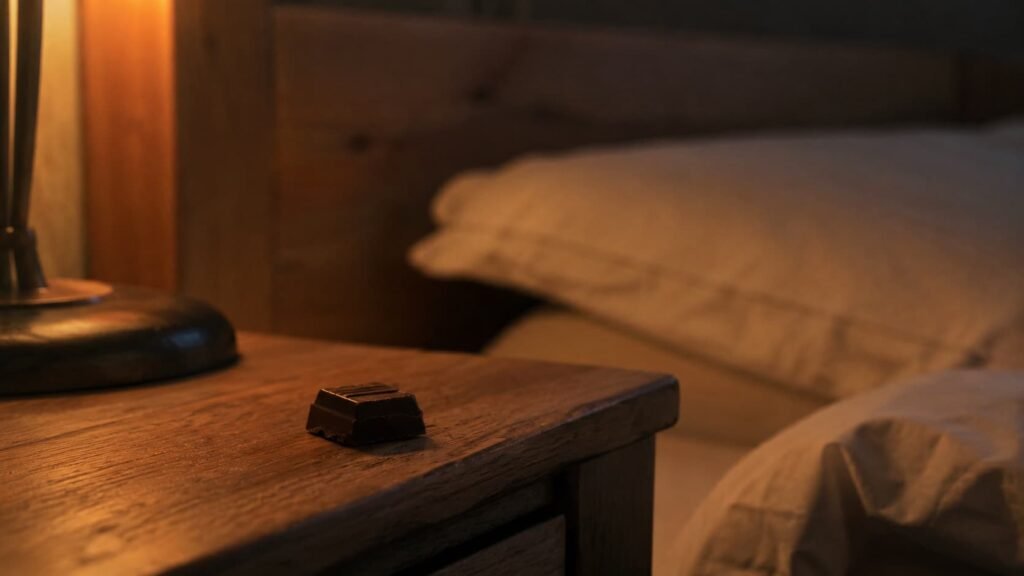
If you are sensitive to caffeine, dark chocolate at night is worth testing. Not debating forever. Just test it.
Milk chocolate has its own issues
Milk chocolate usually has less cocoa than dark chocolate, so it may have less caffeine. Good.
It usually has more sugar. Less good.
This is where people want a clean answer and I do not have one. Some people eat a sweet dessert at night and sleep like a rock. Some people eat the same dessert and wake up at 3 a.m. thirsty, warm, restless, or just vaguely annoyed to be conscious.
I hate how individual this stuff is. Truly.
But sugar before bed can be part of the problem for some people. Not always. Not for everyone. But if you notice lighter sleep, more wakeups, or that weird “my body is tired but something feels active” feeling, it is worth looking at the chocolate.
Especially if the chocolate is not one square. Because let us be honest. Sometimes it is not one square.
Hot chocolate feels innocent, but still counts
Hot chocolate is the most emotionally convincing version of this whole thing.
Warm mug. Blanket. Maybe rain outside if life is being cinematic. It feels like the exact opposite of a sleep problem.
And maybe it is fine for you. A small, not-too-sweet hot chocolate earlier in the evening may not cause any issue. I am not here to ruin cozy drinks.
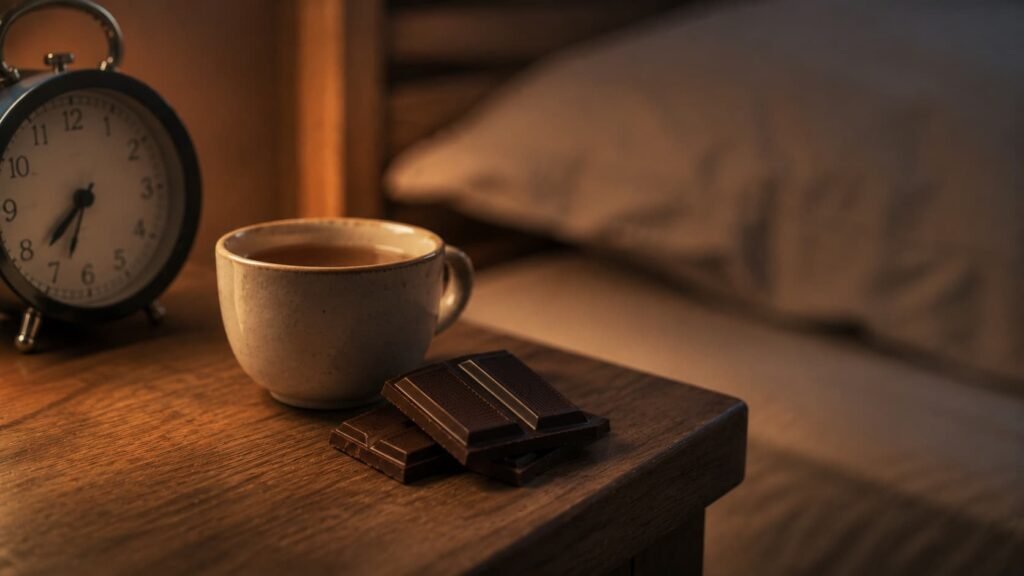
But hot chocolate can still contain cocoa, caffeine, and sugar. If it is a big mug close to bedtime, especially the extra-sweet kind, it may be less relaxing than it feels.
The Sleep Foundation suggests limiting caffeinated foods and drinks before bed, especially for people who are sensitive. Mayo Clinic says something similar about caffeine taking hours to wear off.
So if hot chocolate is your thing, try moving it earlier. Or make it smaller. Or less sweet.
Annoying advice. Usually useful.
When eating chocolate before bed is probably fine
If you sleep well, do not have reflux, and are not sensitive to caffeine, a small piece of chocolate after dinner may be fine.
That is the honest answer.
Sleep advice gets too dramatic sometimes. One tiny piece of milk chocolate at 7 p.m. is not the same as eating a brownie in bed at 11:45 while scrolling through messages that make you mad. These are different events. Your body knows the difference.
If your sleep is already solid, I would not panic over chocolate. Just keep it small and not too late.
If your sleep is not solid, different story.
Then chocolate becomes one of the easiest experiments to run. Move it earlier for two weeks. Or skip it for two weeks. See what happens. No identity crisis required.
When I would avoid it
If caffeine hits you hard, do not pretend chocolate is exempt. I have tried this. It is not exempt.
If you have insomnia, nighttime anxiety, frequent wakeups, reflux, or that wired-but-exhausted feeling, I would not make eating chocolate before bed a nightly habit. Especially dark chocolate. Especially right before lying down.
Reflux is the other big one. Chocolate can bother some people, and lying down makes that whole situation worse. Burning chest. Sour taste. Coughing. Throat irritation. Waking up uncomfortable and then blaming your pillow for no reason.
Been there with other foods. Not fun.
Also, portion size matters more than we want it to. A little chocolate is a little chocolate. A bowl of chocolate ice cream is dessert. A handful of chocolate chips eaten directly from the bag while standing in kitchen light is… a choice.
No judgment.
But it counts.
If you actually need a bedtime snack
Sometimes the craving is not really about chocolate.
Sometimes you are hungry. Or under-fed from the day. Or you ate dinner too early. Or you just want a little landing pad between the day and sleep.
That is fair.
If hunger is the issue, something gentler may work better. Banana. Plain yogurt. Oatmeal. Toast. A few nuts. Nothing exciting. Bedtime snacks do not need to be exciting. Exciting is kind of the opposite of what we are going for.
I wrote about eating a banana before bed, and that makes more sense to me as a sleep snack than chocolate. It is simple, easy, and not secretly bringing caffeine to the party.

Banana with a little peanut butter can work too. Same with yogurt if dairy sits well with you. The point is not to find the perfect snack. The point is to stop hunger from being loud.
There is a difference.
Sometimes chocolate is not the real problem
This is where I have to be honest.
I have absolutely blamed one small food habit while ignoring the giant sleep mess around it. Late caffeine. No consistent wake time. Bright screens in bed. Work messages at night. Random bedtime. Random wake time. Chaos, basically.
Then I would act like the problem was one square of chocolate.
Come on.
Chocolate can make sleep worse, yes. But if your sleep rhythm is already broken, chocolate may just be the little shove on top of the bigger problem.
If your body clock is all over the place, start there. CalmNightly has a guide on how to fix circadian rhythm that explains morning light, wake time, and why your sleep timing can drift so badly.
Food matters.
Rhythm matters more.
So should you eat chocolate before bed?
Maybe. Sorry.
If you sleep fine, a small piece earlier in the evening is probably okay. If your sleep is fragile, I would move chocolate earlier or cut it for 10 to 14 nights and watch what happens.
Do not change ten things at once. That is how you learn nothing.
Just move the chocolate.
If sleep improves, great. If nothing changes, chocolate probably was not the main issue.
Boring experiment. Good experiment.
FAQ
Is eating chocolate before bed bad for sleep?
It can be, especially if you are sensitive to caffeine, sugar, or reflux. Chocolate can be stimulating for some people when eaten close to bedtime.
Does chocolate have caffeine?
Yes. Chocolate can contain caffeine. Dark chocolate usually has more than milk chocolate because it contains more cocoa solids.
Is dark chocolate worse before bed than milk chocolate?
For caffeine-sensitive people, yes, it can be. Dark chocolate often has more caffeine and theobromine. Milk chocolate may have less caffeine but usually more sugar.
How long before bed should I stop eating chocolate?
Try stopping 4 to 6 hours before bed. If you are very sensitive to caffeine or have insomnia, keep chocolate earlier in the day.
Can hot chocolate help you sleep?
It may feel relaxing because it is warm, but it can still contain sugar and caffeine. If it makes your sleep worse, switch to something caffeine-free.
What should I eat instead of chocolate before bed?
If you are hungry, try banana, plain yogurt, oatmeal, toast, or a few nuts. Keep it small. Heavy snacks can create their own problems.
The short version
Eating chocolate before bed is not automatically terrible.
But it can interfere with sleep if you are caffeine-sensitive, eating dark chocolate, having sugary dessert late, or dealing with reflux.
If your sleep is fine, do not obsess over one small piece.
If your sleep is messy, move the chocolate earlier for two weeks.
That is it.
Not glamorous. Useful though.
This article is for informational purposes only and does not constitute medical advice. Always consult a qualified healthcare professional before making changes to your diet or sleep routine.
“`
This article is for informational purposes only and does not constitute medical advice. Always consult a qualified healthcare professional before making changes to your health routine.