why you keep waking up too early — the actual causes
the most common cause that doesn’t get enough attention is a sleep schedule that’s drifted too early. if you’re consistently going to bed at 9 or 9:30pm, waking up at 4:30am isn’t a problem — that’s roughly seven and a half hours of sleep, and your body is done. it feels wrong because 4:30am feels wrong, but the issue is the bedtime, not the wake time. going to bed too early and waking up too early is a circadian pattern, not a sleep disorder. light is another major driver. in the early morning hours, sleep gets lighter — you’re spending more time in REM and light sleep stages, less in deep sleep. your brain becomes increasingly sensitive to light as morning approaches, and even small amounts of light coming through curtains can trigger waking. if you’re waking up too early every morning consistently, blackout curtains are one of the first things worth trying. it sounds too simple. it’s often the whole answer. cortisol starts rising in the early morning hours as part of its natural circadian pattern — it peaks in the first hour after waking to promote alertness. but when cortisol levels are elevated from chronic stress, that morning rise can happen too early, pulling you out of sleep before you’re ready. this is why waking up too early often worsens during stressful periods — it’s not just psychological, the stress hormones are literally waking you up. sleep apnea can cause early morning waking too, particularly in the lighter sleep stages of the second half of the night when apnea events are more likely to produce full waking rather than just brief arousal. if early waking is accompanied by night sweats, snoring, or unrefreshing sleep, sleep apnea is worth ruling out before trying other fixes. alcohol is an underappreciated cause of early morning waking. it helps people fall asleep faster but disrupts sleep architecture in the second half of the night — REM rebound and lighter sleep stages lead to waking earlier than usual. if you drink in the evenings and consistently wake too early, the connection is probably real. age shifts things too, and this one can’t really be fixed — just understood. as people get older, the whole sleep schedule tends to drift earlier. you get tired earlier, you fall asleep earlier, you wake up earlier. deep sleep decreases. the second half of the night gets lighter and more fragmented. waking at 5am when you used to sleep until 7 isn’t a sign that something’s broken. it’s just what sleep does over time. knowing that doesn’t make 5am feel better, but it does change what you’re trying to solve.waking up too early and nausea — why it happens
this one surprised me when I looked into it — nausea from waking up too early is apparently pretty common, and the reason makes sense once you understand what your body is actually doing at that hour. your digestive system, blood sugar, and cortisol are all calibrated to your normal wake time. wake up an hour or two before that, and those systems haven’t finished preparing. you’re essentially arriving early to a party where nothing is ready yet. the cortisol spike that happens on waking can cause nausea when it occurs too abruptly or at the wrong time. low blood sugar after a long overnight fast can contribute — your body expects food at a certain time and the timing is off. inner ear disruption from fragmented sleep can also produce mild nausea, particularly if you sit up quickly. feeling sick when waking up too early tends to resolve on its own once you’ve been awake for 20-30 minutes and your systems have caught up. eating something small, moving slowly, and getting some light exposure helps accelerate that adjustment. if nausea is severe or persistent, that’s worth mentioning to a doctor — but mild morning nausea from early waking is common and usually benign.waking up too early in specific situations
ADHD and waking up too early has a specific connection. ADHD is associated with circadian rhythm irregularities — some people with ADHD have delayed sleep phase, but others experience early waking as part of disrupted sleep architecture. the hyperactive nervous system that makes it hard to wind down at night can also produce fragmented, lighter sleep that ends too early. perimenopause and waking up too early is extremely common and directly hormonal. declining estrogen and progesterone levels disrupt sleep architecture, increase nighttime cortisol, and cause the kind of early morning waking that feels impossible to sleep through. this often occurs alongside night sweats and generally lighter sleep. if early waking started around the same time as other perimenopausal symptoms, hormonal changes are almost certainly the mechanism. 15 and 18 month babies waking up too early is one of the most commonly searched variations of this problem, and for good reason — early waking in toddlers is genuinely difficult and the causes are slightly different. at this age, overtiredness can paradoxically cause earlier waking rather than later — a baby who goes to bed too late may wake earlier because of accumulated sleep debt and elevated cortisol. earlier bedtimes, darker rooms, and consistent wake times are the standard approach.
jet lag and waking up too early is straightforward circadian disruption — your internal clock is still set to your origin time zone and waking you up at the “correct” time for where you came from. morning light exposure in the new time zone is the primary reset tool, combined with staying awake until local bedtime rather than napping. fixing a disrupted circadian rhythm from jet lag typically takes about one day per hour of time zone difference with consistent effort.
15 and 18 month babies waking up too early is one of the most commonly searched variations of this problem, and for good reason — early waking in toddlers is genuinely difficult and the causes are slightly different. at this age, overtiredness can paradoxically cause earlier waking rather than later — a baby who goes to bed too late may wake earlier because of accumulated sleep debt and elevated cortisol. earlier bedtimes, darker rooms, and consistent wake times are the standard approach.
jet lag and waking up too early is straightforward circadian disruption — your internal clock is still set to your origin time zone and waking you up at the “correct” time for where you came from. morning light exposure in the new time zone is the primary reset tool, combined with staying awake until local bedtime rather than napping. fixing a disrupted circadian rhythm from jet lag typically takes about one day per hour of time zone difference with consistent effort.
is waking up too early insomnia
early morning waking is one of the recognized presentations of insomnia — specifically called sleep maintenance insomnia or terminal insomnia. the clinical definition requires that it happens regularly, causes distress, and affects daytime functioning. by that standard, yes — consistent early waking that leaves you feeling unrefreshed and affects your days qualifies as insomnia and warrants the same evidence-based approaches. early morning waking is also a known symptom of depression. it’s not just that depression makes sleep worse generally — early morning waking specifically is more common in depression than other sleep disturbances, and it tends to be accompanied by the low mood and rumination that’s often worst in the early morning hours. if early waking is happening alongside persistent low mood, that’s worth discussing with a doctor rather than trying to fix it with sleep hygiene alone.how to stop waking up too early — what actually helps
push your bedtime later. if you’re going to bed at 9pm and waking at 4:30am, the solution is not to try to sleep longer from 9pm — it’s to move bedtime to 10 or 10:30 and let sleep pressure build longer before you sleep. this feels counterintuitive because you’re tired at 9pm. but that tiredness is sleep pressure that will work in your favor if you let it build a bit more. sleep debt and sleep pressure are your friends here — use them. blackout the room properly. early morning light is a genuine biological trigger for waking. curtains that let in light around the edges, or windows facing east, can produce enough light in the early morning to pull you out of the light sleep you’re in at that hour. blackout curtains or a sleep mask — properly dark, not just dimmer — make a meaningful difference for a lot of people who think they have an intractable early waking problem.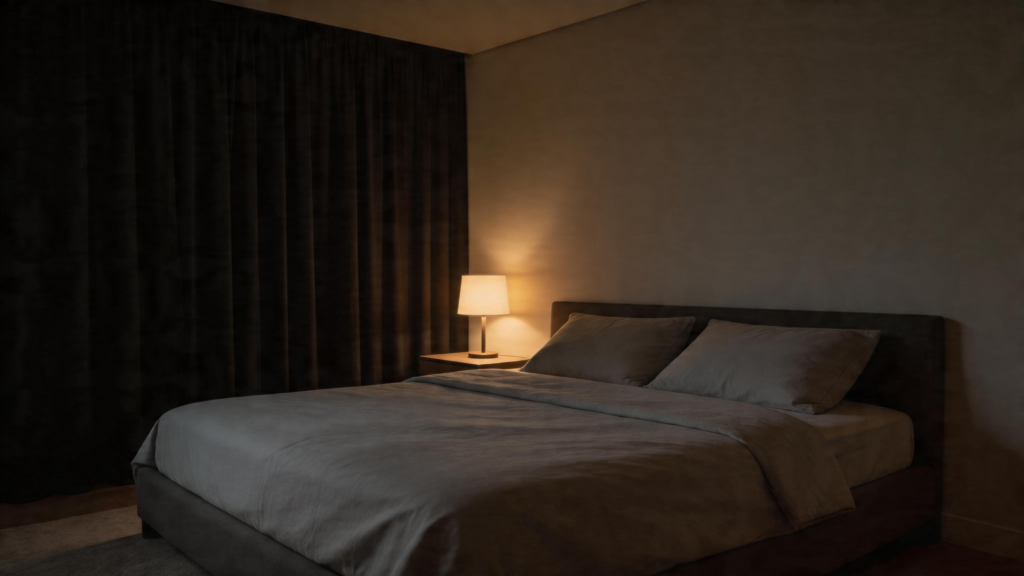 keep the room cool. your core body temperature rises in the early morning as part of the waking process. a warm room accelerates that process and can trigger earlier waking. the same temperature range that helps you fall asleep — 65-68°F — helps you stay asleep longer in the morning.
don’t look at the clock. checking the time when you wake early immediately activates a mental calculation — “I only have two hours left, I need to fall back asleep, why can’t I fall back asleep” — that makes falling back asleep much harder. turn the clock face away or put your phone out of reach. removing that calculation removes a significant source of the arousal that keeps you awake.
if you wake early and can’t fall back asleep, the worst thing to do is lie there anxious and frustrated for two hours. get up, do something quiet and boring in dim light, and go back to bed when you feel sleepy. this is the same logic as managing sleep anxiety — staying in bed awake and frustrated reinforces the association between the bed and wakefulness.
according to the Sleep Foundation, cognitive behavioral therapy for insomnia — CBT-I — is the most effective treatment for early morning waking as a form of insomnia, with more durable results than sleep medication. if consistent early waking has been happening for more than a month and is affecting your functioning, CBT-I is worth pursuing properly.
keep the room cool. your core body temperature rises in the early morning as part of the waking process. a warm room accelerates that process and can trigger earlier waking. the same temperature range that helps you fall asleep — 65-68°F — helps you stay asleep longer in the morning.
don’t look at the clock. checking the time when you wake early immediately activates a mental calculation — “I only have two hours left, I need to fall back asleep, why can’t I fall back asleep” — that makes falling back asleep much harder. turn the clock face away or put your phone out of reach. removing that calculation removes a significant source of the arousal that keeps you awake.
if you wake early and can’t fall back asleep, the worst thing to do is lie there anxious and frustrated for two hours. get up, do something quiet and boring in dim light, and go back to bed when you feel sleepy. this is the same logic as managing sleep anxiety — staying in bed awake and frustrated reinforces the association between the bed and wakefulness.
according to the Sleep Foundation, cognitive behavioral therapy for insomnia — CBT-I — is the most effective treatment for early morning waking as a form of insomnia, with more durable results than sleep medication. if consistent early waking has been happening for more than a month and is affecting your functioning, CBT-I is worth pursuing properly.
the short version
waking up too early every morning is usually caused by one or more of: bedtime that’s too early, light exposure in the morning, elevated cortisol from stress, alcohol disrupting the second half of sleep, or the natural earlier wake time that comes with age. nausea on early waking is common and usually resolves within 20-30 minutes. early waking in perimenopause is hormonal. in ADHD it’s circadian. in babies it’s often overtiredness producing a cortisol-driven early wake. fixes that actually work: later bedtime, blackout curtains, cool room, no clock-checking, and getting out of bed rather than lying there frustrated if you can’t fall back asleep. if it’s been going on for a month or more and is affecting your days, CBT-I is the intervention with the strongest evidence behind it.Related reading: When the early awakening repeatedly occurs around the same time, our main guide covers the common causes of waking at 3 AM.
This article is for informational purposes only and does not constitute medical advice. Always consult a qualified healthcare professional before making changes to your health routine.