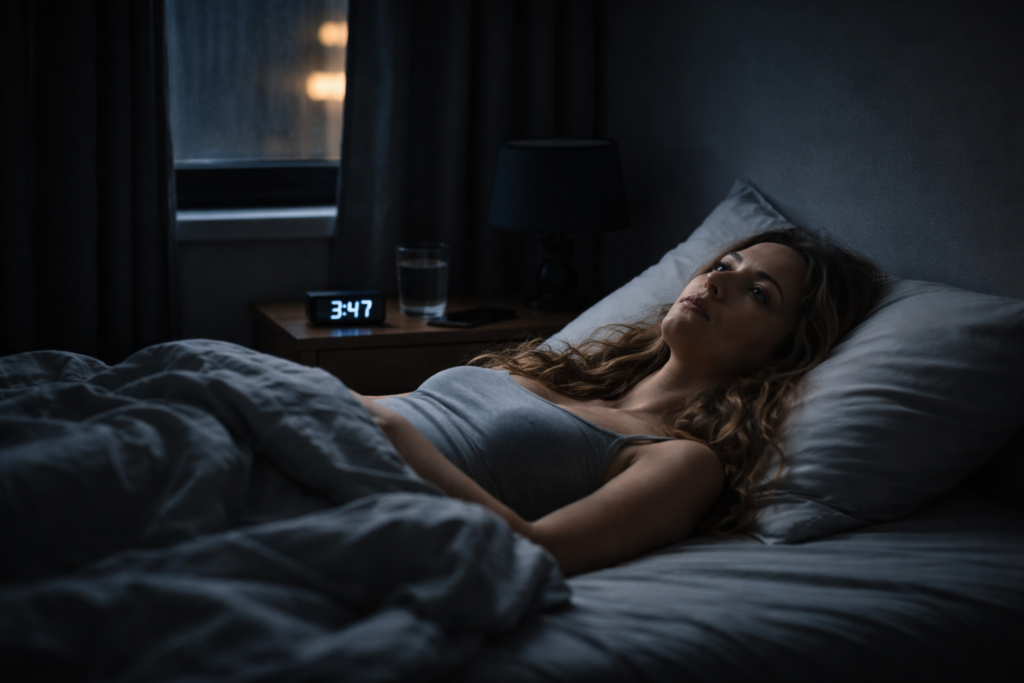

why temperature affects sleep so much
your body has to lower its core temperature to fall asleep. not just feel comfortable — actually drop its internal temperature by about 1 to 2 degrees Fahrenheit. that cooling process is part of what initiates sleep and keeps you in deeper stages through the night. this is why you naturally feel sleepy in the evening. it’s not just tiredness accumulating — it’s also your body beginning that temperature drop as part of the circadian rhythm. your hands and feet get warmer (blood moves to the surface to release heat), your core cools, and sleep becomes more accessible. when the room is too warm, the body struggles to complete that cooling process. it can’t offload heat efficiently. so sleep becomes lighter, more fragmented, you toss and turn trying to find a cool spot on the pillow — which is literally your body trying to help itself cool down. research reviewed by the Sleep Foundation consistently points to ambient temperature as one of the most significant environmental factors in sleep quality.what is the perfect temperature for sleep
the range that comes up most consistently in sleep research is 65 to 68 degrees Fahrenheit — roughly 18 to 20 degrees Celsius. that’s the range where most adults seem to sleep best. 65°F to 68°F. that’s probably cooler than your bedroom is right now, if you’re being honest. the number isn’t universal — there’s individual variation, and factors like what you’re wearing, what your blankets are like, and whether you sleep next to someone who runs warm all affect how the ambient temperature actually feels to your body. some people genuinely sleep better closer to 70°F. some need it closer to 63°F. but 65 to 68 is a reasonable starting point for most people. what matters more than hitting an exact number is that the room is cool enough for your body to complete that temperature drop without fighting the environment. a room that’s 72°F or 74°F — which feels totally comfortable when you’re awake — is often too warm for deep sleep.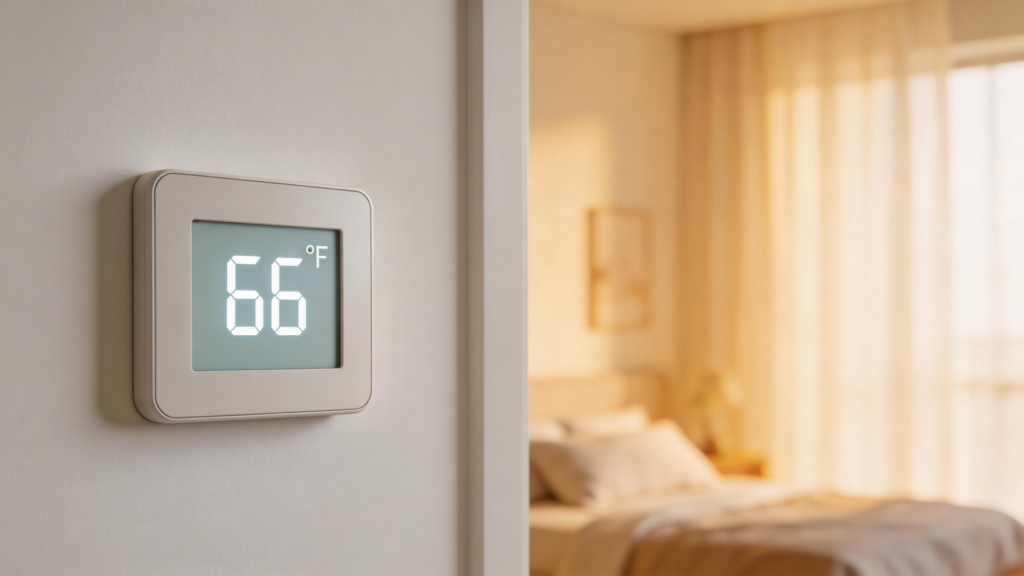
what happens when you sleep too warm
beyond just feeling uncomfortable, sleeping above the perfect temperature for sleep range has pretty specific effects on sleep architecture. you spend more time in light sleep and less time in deep slow-wave sleep and REM sleep — the stages that are actually restorative. this is why you can sleep 8 hours in a warm room and wake up feeling like you barely slept. the hours were there. the quality wasn’t. deep sleep is when physical restoration happens — tissue repair, immune function, growth hormone release. REM is when emotional processing and memory consolidation happen. if the temperature is keeping you in lighter stages, you’re missing out on both. there’s also the middle-of-the-night waking. a room that starts out manageable but gets warmer through the night — because you’ve been in it for hours with the door closed, or because the heating kicks on early — can pull you out of sleep in the early morning hours, right when you’d otherwise be getting your longest REM periods. if you tend to wake up at 4 or 5am feeling weirdly alert and can’t get back to sleep, temperature is worth looking at.how to actually get your room to the right temperature
set the thermostat lower than feels intuitive
if you have central heating or cooling, try setting it to 66 or 67°F for sleep and see how it feels over a week. most people resist this initially because it sounds cold. it’s not — you’ll be under blankets. the goal is to give your body a cool environment to lose heat into, not to freeze yourself.use layered bedding instead of one heavy blanket
the advantage of layers is that you can regulate temperature throughout the night without fully waking up. kick off a layer when you’re warm, pull it back when you cool down. one heavy duvet gives you fewer options. a lighter blanket with an extra throw at the foot of the bed gives you more.try a fan even if you don’t need the airflow
a fan does two things — it moves air across your skin, which helps with evaporative cooling, and it creates consistent white noise that can reduce the micro-arousals that come from irregular sounds. even a small fan pointing generally in your direction rather than directly at you can make a noticeable difference in sleep quality, especially in warm months.cool down before bed, not just during sleep
here’s something that sounds counterintuitive: a warm shower or bath 1 to 2 hours before bed actually helps you sleep. not because warmth is good for sleep, but because when you get out of the warm water, your body temperature drops sharply as the heat dissipates. that rapid drop mimics and accelerates the natural cooling process your body goes through at sleep onset. a meta-analysis published in Sleep Medicine Reviews found that warm water bathing 1 to 2 hours before bed improved sleep quality and reduced the time it takes to fall asleep. cold shower right before bed, on the other hand, can actually be stimulating — it triggers a stress response that raises alertness. the warm bath or shower is the move, just not right before lying down.
if you sleep hot naturally
some people just run warm. if you’re someone who kicks off blankets, wakes up sweaty, or can never seem to get comfortable temperature-wise, a few things are worth trying beyond just lowering the thermostat. cooling mattress pads or toppers make a real difference for hot sleepers — they actively circulate cool water or use materials that dissipate heat more effectively than standard foam. moisture-wicking sheets (linen or percale cotton rather than flannel or microfiber) also help the body stay cool rather than trapping heat. if you’re sleeping next to someone who runs colder than you, temperature negotiation is real. dual-zone solutions exist — two separate blankets instead of one shared one being the simplest version.temperature and specific sleep problems
trouble falling asleep
if you lie in bed for a long time before falling asleep, temperature is one variable worth checking alongside the others. a cool room helps trigger that initial sleep-onset process. if you’re also dealing with the mental side of it — thoughts racing, can’t switch off — there’s more on that in the why it takes so long to fall asleep piece.waking up in the middle of the night
if the temperature is fine when you go to sleep but rises during the night, that can be what’s pulling you awake at 3 or 4am. worth checking whether your heating schedule is adding warmth in the early morning hours, or whether a closed-door bedroom just accumulates heat overnight. leaving the door slightly open or having the fan on a timer can help with this.night sweats
night sweats that happen without any obvious reason — not just being warm, but actually waking up damp — can be hormonal (they’re very common in perimenopause) or related to other underlying things. lowering room temperature helps but might not fully address it if there’s a hormonal driver. worth being aware of the distinction.the simple version
the perfect temperature for sleep for most people is somewhere between 65 and 68°F. cooler than most bedrooms are set. the goal is to give your body a cool enough environment that it can complete the temperature drop it needs to fall into deep, restorative sleep. if you’ve been sleeping in a room that’s 70°F or warmer and you try dropping it to 66°F for a week, there’s a decent chance you’ll notice a difference in how rested you feel — even without changing anything else. it’s one of those variables that doesn’t require buying anything or building any habits. you just turn the thermostat down and see what happens. worth trying before the more complicated stuff. if you’re also dealing with restless sleep more broadly — waking up a lot, sleep feeling fragile — temperature is one piece of it, but there are usually a few other things going on too. the restless sleep causes and remedies article covers the fuller picture.This article is for informational purposes only and does not constitute medical advice. Always consult a qualified healthcare professional before making changes to your health routine.