not in a dramatic way. I just lay there in the dark thinking, why does this sound like a broken hotel air conditioner, and why is everyone online pretending this is peaceful?
then I turned it off.
then the room got too quiet.
then I could hear the tiny clicks in the wall, a car passing outside, my own breathing, and some mysterious house sound that only appears when you are already anxious and trying very hard to sleep.
so I turned the noise back on.
not white noise that time. brown noise.
and that was the first one that made sense to me. lower. softer. less sharp around the edges. it did not feel like a machine yelling static at me. it felt more like distant rain through a wall, even though it was just an app doing its little digital job.
so if you are asking what color noise is best for sleep and anxiety, my honest answer is this: start with brown noise or pink noise. white noise can work too, especially if you need to block sudden sounds, but for anxiety, white noise can feel too sharp for some people.
not everyone. but definitely some people.
me included.
the short answer, because I know you probably want one
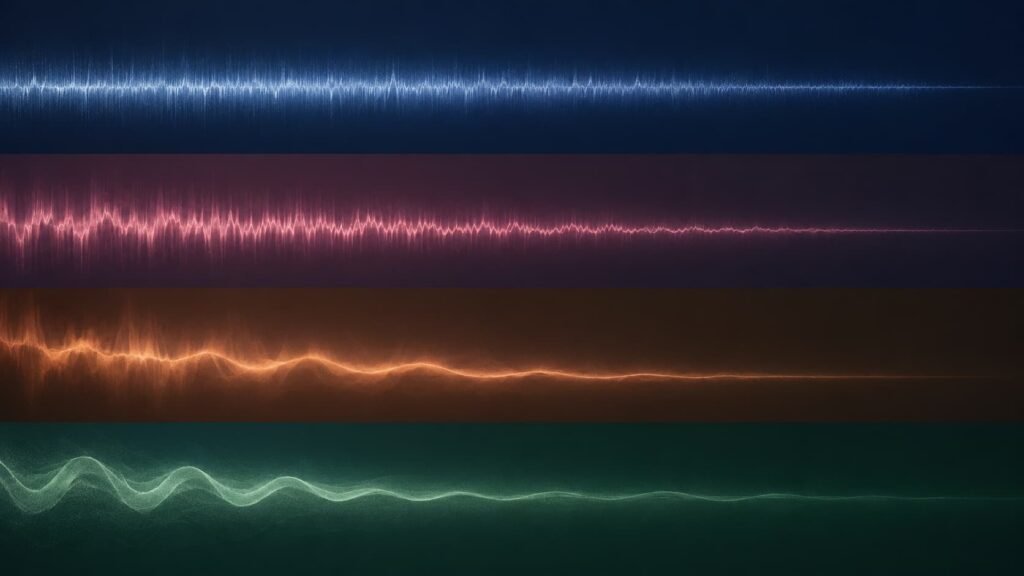
for sleep and anxiety, brown noise is often the most calming if you like deep, low sounds. pink noise is a good middle option because it is softer than white noise but not as deep as brown noise. white noise is best when you mainly need to cover up traffic, neighbors, doors, or random sharp sounds in the night. green noise can feel nice if you like nature-style sound, but it is more of an internet nickname than a strict scientific category.
that is the practical answer.
the more annoying answer is: the best color noise is the one your nervous system does not argue with.
because that is really what this is about.
not finding the “correct” frequency like you are tuning a spaceship. just finding a sound that gives your brain less to grab onto.
why noise helps at all
quiet is not always peaceful.
people say “sleep in a quiet room” like quiet is automatically relaxing. sometimes it is. sometimes quiet turns the volume up on everything else.
the fridge. the hallway. the neighbor’s door. the one car that somehow sounds personal. your own thoughts, which are usually worse than the car.
what steady noise does is cover the uneven stuff. it gives the room a floor. instead of lying there waiting for the next sound, your brain has one steady thing to sit on.
Sleep Foundation has a useful overview of how noise can affect sleep, especially when sounds are sudden or disruptive. I like that framing because it matches real life. it is not always sound itself that ruins sleep. it is the random change. the startle. the “what was that?” moment. source here: Sleep Foundation on noise and sleep.
this is why a fan can be weirdly comforting even if it is not “quiet.”
same sound. same rhythm. nothing to solve.
white noise is the obvious one, but not always the best one
white noise is the one most people hear about first.
it has that classic static sound. all the frequencies mixed together, at least in the simple explanation. like radio fuzz. like a fan that got turned into a math problem.
white noise can be great if you are trying to mask other sounds. traffic outside. someone watching TV in another room. a roommate closing cabinets like they are settling a personal dispute.
but for anxiety, white noise can be hit or miss.
some people love it because it blocks everything. some people find it harsh. I am in the second group unless the volume is very low. if it is too loud, my brain does not relax. it starts monitoring the noise itself, which is exactly the opposite of what I wanted.
if you already use a fan and it works, great. you may like white noise. if white noise makes you tense, you are not broken. try something lower.
also, do not blast it. louder is not more calming. louder is just louder.
pink noise is the one I’d try next
pink noise feels less sharp than white noise.
that is the easiest way to describe it. softer. warmer. more even. like rain, wind, or a steady shower, depending on the version you find.
if white noise feels too bright but brown noise feels too deep, pink noise is probably where I’d go.
I like pink noise on nights when my brain is busy but not fully panicking. it fills the room without taking over. it does not feel like it is pushing against me.
and that matters, because when anxiety is already there, anything slightly irritating becomes huge. a tiny sound can become a whole storyline. a bad loop can become the main event.
pink noise gives my brain something dull enough to ignore.
which sounds like an insult, but for sleep, dull is a compliment.
brown noise is the one that feels most calming to me
brown noise is deeper.
less hiss. more low rumble.
some versions sound like strong rain. some sound like a distant waterfall. some sound like sitting inside an airplane, but in a good way, if that makes any sense.
this is the one I usually pick when anxiety is the issue.
not because it cures anything. it does not. I am still me. my inbox still exists. tomorrow still has tasks. but brown noise makes the room feel less empty, and that helps.
the worst part of anxiety at night is not always the anxiety itself. it is the silence around it. the way every thought gets room to echo.
brown noise shrinks the room a little.
I know that sounds strange. I mean it in a good way.
if your mind gets jumpy in quiet, brown noise may be worth trying first.
green noise is nice, but I would not overthink it
green noise is one of those terms that shows up a lot in apps and videos.
it usually means a sound that sits somewhere in the middle frequencies and feels nature-ish. forest, wind, soft water, that kind of thing.
is it a strict technical thing like people make it sound? not really, at least not in the way most sleep apps use it.
but does it matter?
not that much.
if green noise sounds good to you, use it. if it feels like fake nature in a loop and starts annoying you after three minutes, skip it. the label matters less than the feeling in your body.
I like green noise when I am reading before bed. for actual sleep, I usually go lower. pink or brown.
the volume matters more than the color sometimes
this is the part a lot of people mess up.
they find the right sound and play it too loud.
I did this too. I thought the sound had to fully cover everything. like I was building a wall. but when the volume is too high, it becomes another thing your brain has to deal with.
now I keep it low. just loud enough that the room has texture. not loud enough that I notice it constantly.
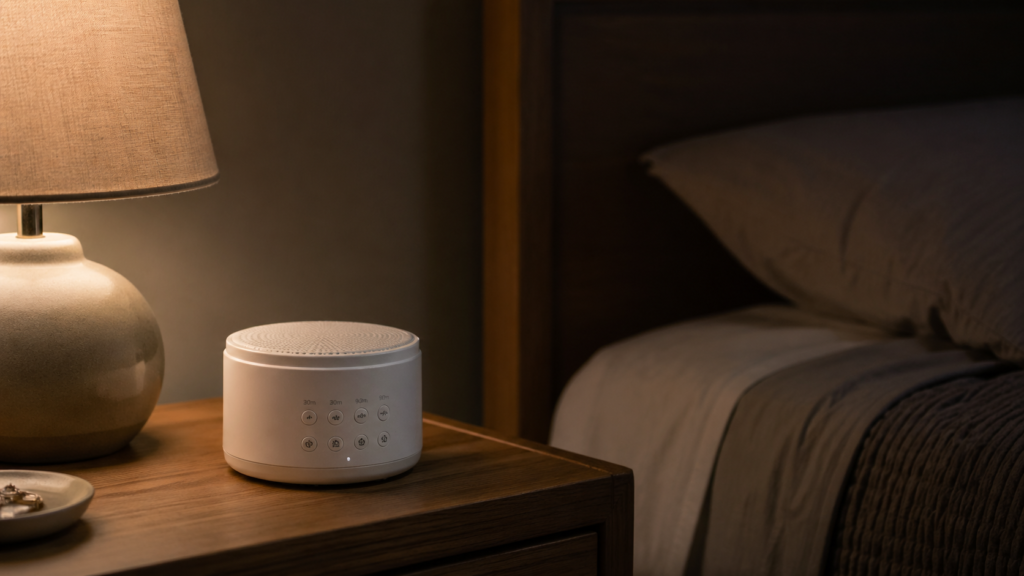
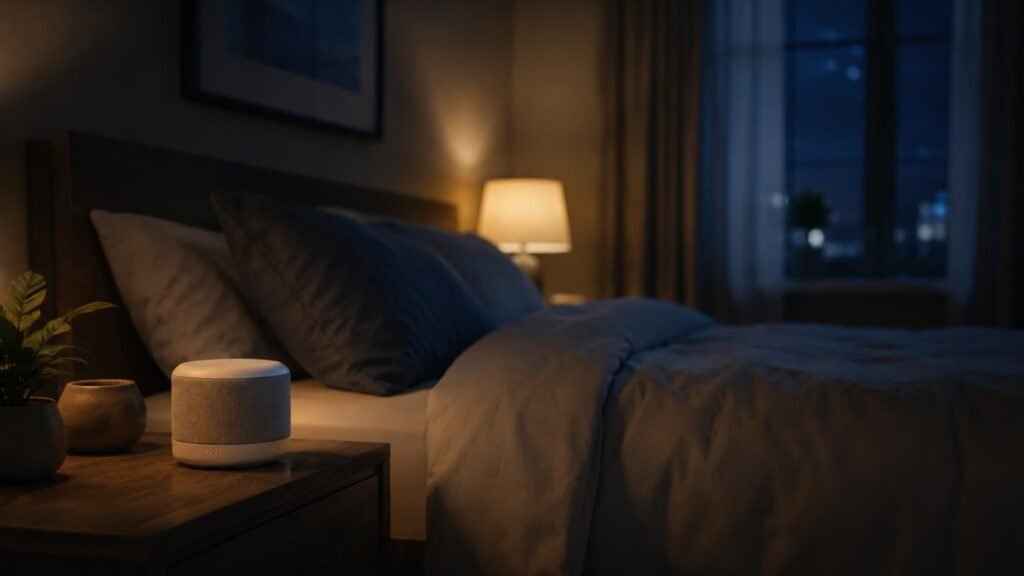
if you use earbuds, be careful. I prefer a speaker across the room or a white noise machine at a low volume. earbuds can feel too direct, and sleeping with them is not comfortable for everyone.
your article on white noise machines for sleep is a natural internal link here because the machine matters less than how you use it. low, steady, and not right next to your ear is usually the safer direction.
what I’d use for anxiety specifically
if anxiety is the reason you are using noise, I would start with brown noise.
then pink.
then white, if your main problem is external noise.
that is my order.
brown noise feels more grounding to me. pink noise feels softer and more balanced. white noise feels practical but less emotionally calming. useful, yes. cozy, not always.
but some people are the opposite. I have seen people say white noise knocks them out in ten minutes, while brown noise makes them feel weird. fine. nervous systems have preferences. annoying, but true.
try each one for two or three nights before deciding. one night is not always enough because the first night you may just be judging the sound.
and please do not test twelve sounds in one night.
that becomes a hobby, not a sleep routine.
what noise cannot fix
this is where I have to be honest.
color noise can help with sleep and anxiety, but it cannot do every job.
if you drank caffeine too late, brown noise is not a miracle. if you are doom-scrolling in bed, pink noise is fighting for its life. if your room is too hot, if your sleep schedule is chaotic, if your anxiety is really intense, sound may help around the edges but not solve the center.
I learned this the boring way.
I kept changing sounds and thinking maybe I had not found the right one. but the problem was not always the sound. sometimes the problem was that I was still on my phone. sometimes the room was too warm. sometimes I was just stressed and pretending an app could carry the whole situation.
if anxiety is a big part of your sleep problem, your article on how to fall asleep with anxiety fits naturally here. and if breathing or body tension is part of it, massage for anxiety and sleep is another useful internal link.
my actual setup
nothing fancy.
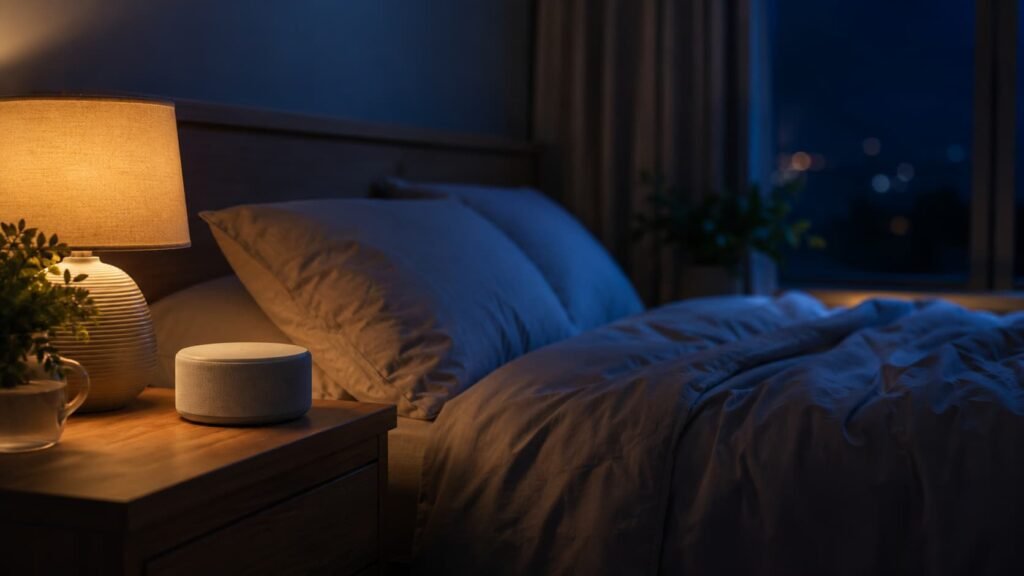
brown noise, low volume, speaker across the room.
phone face down. not in my hand. because if the sound app becomes an excuse to keep touching the phone, the whole thing falls apart.
I set the timer for about an hour. sometimes two. all night is fine for some people, but I do not always need it. I mostly need help getting past the first part of sleep, when my brain is still trying to hold meetings.
if I wake up at 3am, I might turn it back on. depends on the night.
I do not make it a big deal anymore. that helped too. the more dramatic I make sleep, the worse I sleep.
unfair, but consistent.
so, what color noise is best for sleep and anxiety?
for me, brown noise.
for a lot of people, pink noise.
for blocking loud neighbors or traffic, white noise.
if you like nature-style sounds, green noise might be your thing.
but the best one is the one you stop noticing.
that is the whole point. it should not be interesting. it should not be impressive. it should not make you think, wow, what a beautiful soundscape. it should fade into the room and give your brain fewer little things to chase.
start with brown noise tonight if anxiety is the main issue. keep it low. give it a few nights. do not keep switching every five minutes.
let the room become boring.
boring is underrated when you are trying to sleep.
sources
This article is for informational purposes only and does not constitute medical advice. Always consult a qualified healthcare professional before making changes to your health routine.