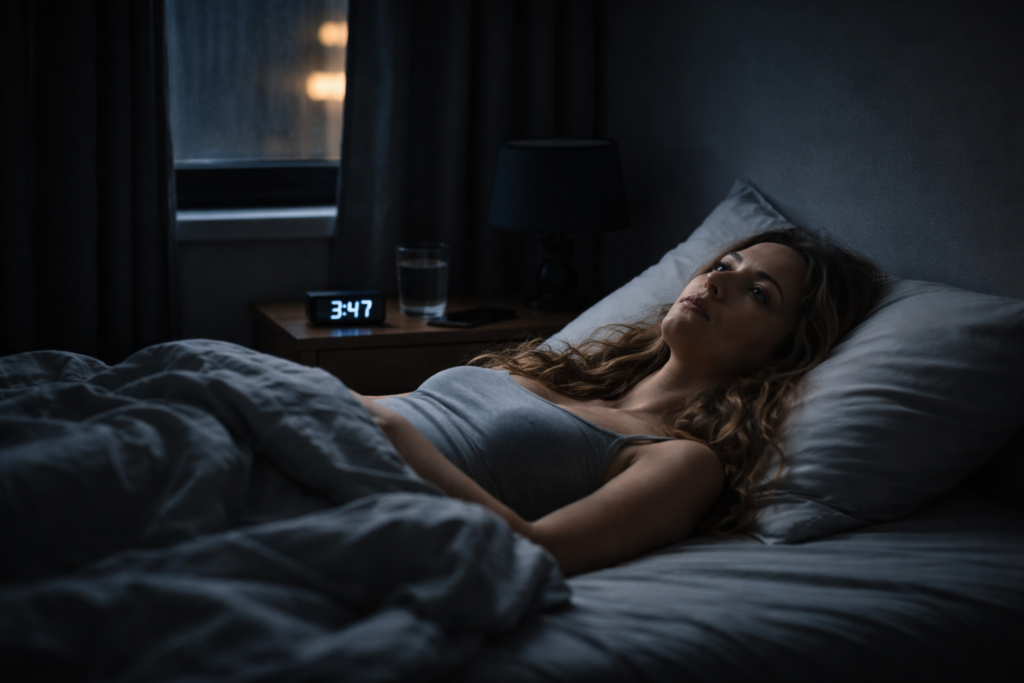
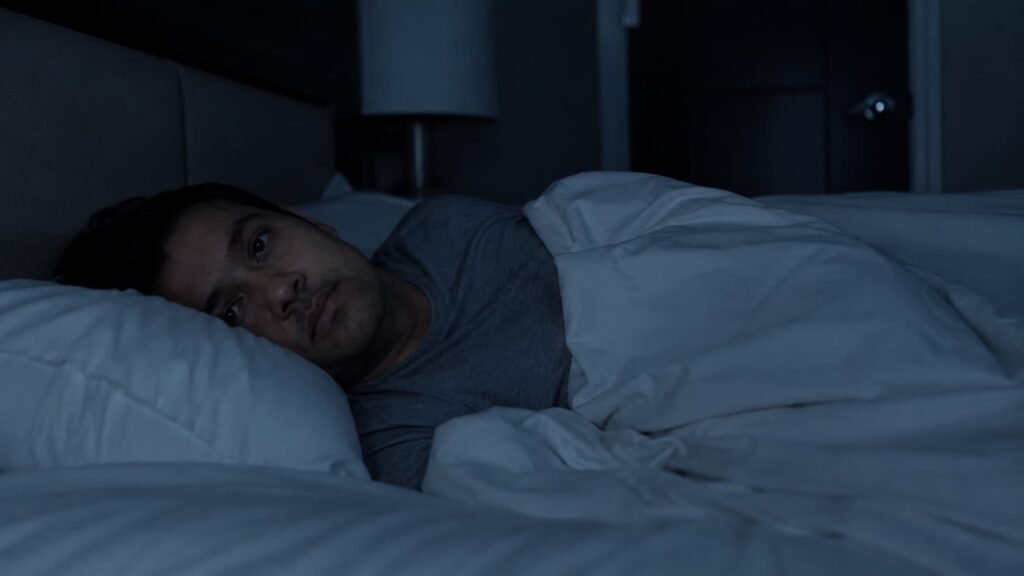
that.
except it keeps going.
your brain is awake enough to notice the room. the ceiling. the shape of the window. maybe the pile of clothes on the chair that looks, for one deeply stupid second, like a person standing there.
and then you try to move.
nothing.
not a finger. not your head. not your mouth. you try to call out and it feels like the words hit a locked door somewhere in your throat.
the room looks normal, which somehow makes it worse.
same blanket. same ceiling. same little light from the charger near the floor.
but your body is not answering.
so yes. if you are searching how to wake up from sleep paralysis at some horrible hour, I get why. because “it is harmless” is technically comforting in the same way someone saying “the elevator is safe” is comforting while you are stuck in it.
nice to know. still hate it.
Cleveland Clinic explains sleep paralysis as being caught between sleep and wakefulness, where your mind is aware but your body is still in the REM sleep muscle-relaxed state. that is the clean medical version. the lived version is: I am awake, I am trapped, and my nervous system has apparently chosen violence.
the thing that helps me most is not trying to explode out of it.
that was my first instinct. fight the whole body awake. jerk up. shout. kick. force it. very cinematic. mostly useless.
because when nothing moves, the panic gets bigger. and when the panic gets bigger, everything feels heavier. the chest pressure feels worse. the room feels darker. your brain starts adding details nobody asked for.
so I go small.
ridiculously small.
how to wake up from sleep paralysis without fighting your whole body
one finger. that is the whole assignment.
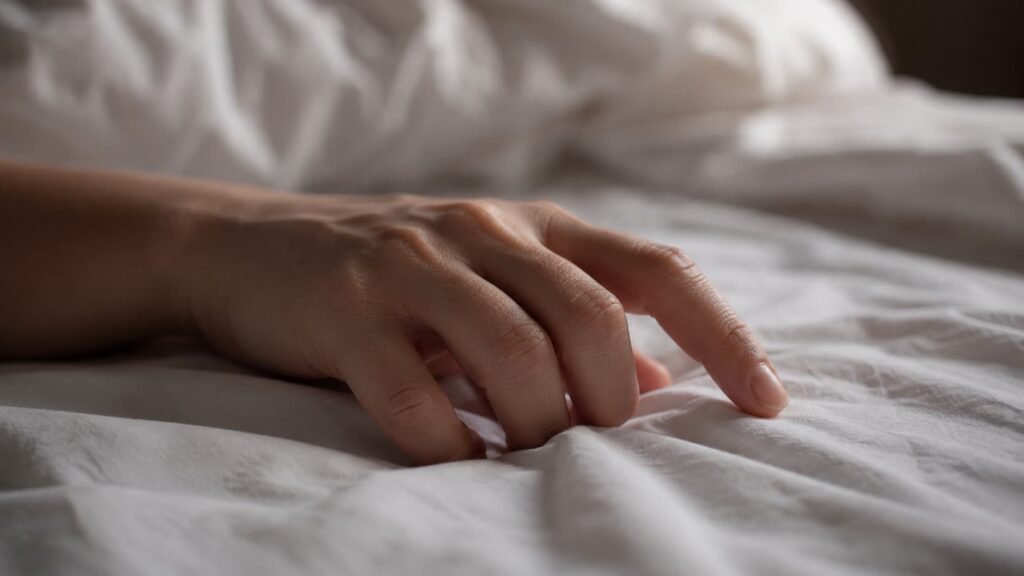
not your arm. not your shoulders. not the dramatic movie-version sit-up.
one finger.
or one toe. sometimes the tongue works. sometimes blinking works if your eyes feel available, which is a weird sentence but sleep paralysis is full of weird sentences.
the point is to stop asking the whole body to come back at once. give it one tiny job.
curl the toe.
tap the fingertip.
press your tongue against the roof of your mouth.
blink if you can.
and if it does not happen immediately, I try not to take that personally. which is hard, because being ignored by your own hand feels personal.
Cleveland Clinic mentions that focusing on small body movements, like moving one finger and then another, may help people come out of an episode sooner. I like that because it matches the messy real-life version. you are not escaping all at once. you are finding the first loose thread.
then another.
then suddenly your shoulder twitches, or your jaw works, or you inhale in a different way and the whole thing breaks.
not gracefully, necessarily. sometimes I come out of it like someone restarted an old computer. but out is out.
the breathing part, which sounds annoying until you need it
I hate being told to breathe when I am scared.
obviously I am breathing. I am doing the main task of being alive. thanks.
but during sleep paralysis, breathing becomes the only thing I can reliably notice without needing my body to cooperate. and that makes it useful.
the chest can feel heavy. a lot of people feel pressure there, like something is sitting on them. it is one of the reasons sleep paralysis feels so creepy. your brain is awake enough to panic but not awake enough to explain the body mechanics calmly.
so I keep it stupid simple.
longer exhale.
that is it.
I do not do a perfect breathing technique. I do not become a monk. I just try to make the out-breath a little longer than the in-breath. in, then longer out. again. again.
if counting helps, fine. in for three, out for five. if counting makes it worse, forget the counting. this is not homework.
the breath gives your brain something boring to hold onto.
and boring is good here. boring is the opposite of “there is definitely someone in the corner.” boring is a rope back to normal.
Sleep Foundation describes sleep paralysis as temporary and tied to REM sleep. I repeat that to myself sometimes, not in a pretty inspirational way. more like a tired person muttering facts at a haunted-looking laundry chair.
temporary.
REM.
body catching up.
move one finger.
that is enough of a script.
what to say in your head while it is happening
you probably cannot talk during an episode. which is rude, because “hey, I am having sleep paralysis” would be a useful sentence to have.
so I say it inside my head.
this is sleep paralysis.
it will pass.
my body is waking up.
or, on less elegant nights: oh, this crap again.
honestly, that one works too.
the sentence does not need to be beautiful. it just needs to interrupt the panic story. because the panic story is always dramatic. something is wrong. something is in the room. I will be stuck like this. I cannot breathe. something terrible is happening.
and then the boring sentence walks in wearing socks and says, no, this is the REM thing again.
that does not make it pleasant. it makes it named.
named is better than shapeless.
some people get hallucinations with sleep paralysis. shadows. sounds. a sensed presence. footsteps. pressure. the feeling that someone is close by. I am not going to sit here and say “just ignore it,” because in the moment it can feel extremely real. half-awake brains are incredible liars.
but I try not to negotiate with the hallucination.
I do not inspect it. I do not build a theory. I do not start a mental documentary about what might be standing there.
I go back to the tiny job.
finger.
breath.
boring sentence.
that is the whole room now.
if someone sleeps next to you
tell them during the day.
not at 3 a.m. not while frozen. not through telepathy, which I have personally found unreliable.
just say: if I seem awake but I am not moving, say my name and touch my shoulder.
that is usually enough. Cleveland Clinic says someone can safely wake a person from sleep paralysis by talking to them or touching them. no shaking. no panic. no horror-movie nonsense. just a calm outside signal.
if you sleep alone, it is more annoying. then the tiny movement and breathing stuff matters more. I wish there were a better trick. a secret button. a phrase. some ancient sleep hack involving the left eyebrow.
there is not, at least not that I have found.
small movement is the closest thing.
how to wake up from sleep paralysis and not spiral after
people talk about the episode like it ends and then everything is fine.
not always.
sometimes you wake fully and your heart is still going. the room still feels wrong for a minute. you sit up and look around, embarrassed even though nobody did anything. the blanket is normal. the chair is a chair. your body is back online like nothing happened. rude.
I usually turn on a small light. not the big overhead light. that feels aggressive. just enough to make the room boring again.
water helps. sitting up helps. touching the wall helps sometimes. something solid. something not dream-textured.
what does not help me: immediately grabbing my phone and searching every possible meaning of sleep paralysis until the internet starts feeding me nightmare stories from 2012.
bad idea.
very tempting. still bad.
the morning after, I write down the boring stuff.
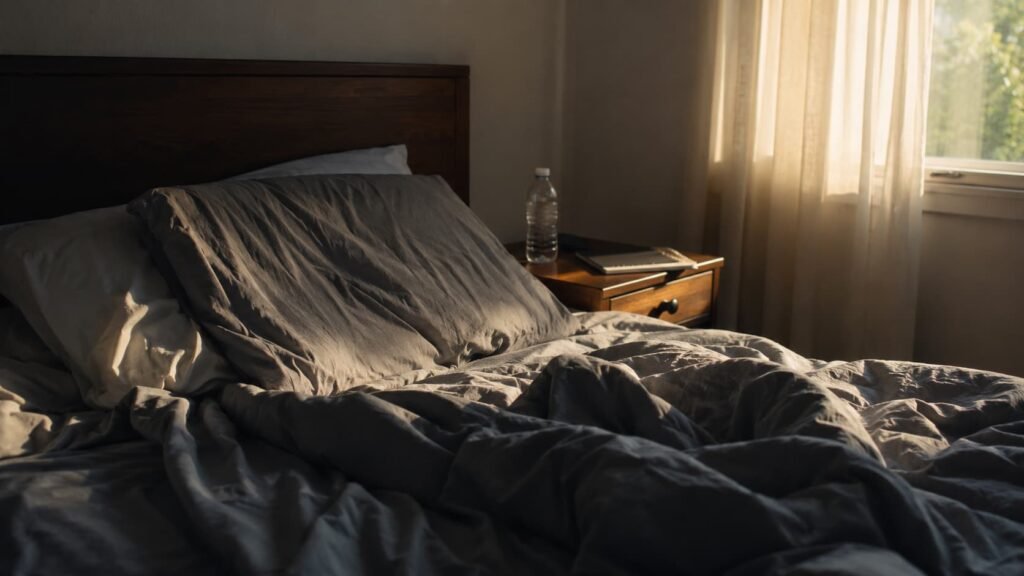
bedtime. wake time. stress level. whether I fell asleep on my back again like an idiot.
I also note alcohol, naps, bad sleep, weird schedule, late caffeine, doom scrolling, all the usual suspects. not because I enjoy making my life into a spreadsheet. because patterns show up if you let them.
for me, sleep paralysis likes messy sleep.
too little sleep. irregular sleep. falling asleep stressed. sleeping on my back. the classic combo platter.
not everyone has the same triggers, but sleep disruption is a common one. Cleveland Clinic lists sleep deprivation, irregular sleep schedules, anxiety, PTSD, sleep apnea, narcolepsy, and some medications as possible links. which is a lot. bodies are not tidy.
so the prevention work is boring. painfully boring.
sleep enough.
keep the schedule less chaotic.
try side sleeping if back sleeping seems to invite episodes.
wind down before bed like your nervous system is an old machine that needs time to shut off.
do not fall asleep with videos yelling into your face. I say this as someone who has absolutely done that and then acted surprised when sleep got weird.
if bedtime anxiety is part of the problem, these might help too: why it takes so long to fall asleep, how to fall asleep fast without forcing it, and what to do when sleep anxiety shows up at night.
when it is more than just one bad night
one sleep paralysis episode can happen and then never really become a thing.
great. love that. ideal.
but if it keeps happening, or you are afraid to sleep, or you are exhausted during the day, it is worth talking to a healthcare provider. especially if you also fall asleep suddenly during the day, have vivid dream-like experiences as you fall asleep, or get sudden muscle weakness with strong emotions. those can point to narcolepsy or other sleep issues that deserve an actual evaluation.
same if you snore heavily, wake up choking, or feel wrecked after a full night in bed. sleep apnea can mess with sleep in ways that make everything stranger.
sleep paralysis itself is usually not dangerous. Cleveland Clinic says it is temporary and not physically harmful, though it can be scary and emotionally rough. that distinction matters. not dangerous does not mean “who cares.” if it is making you dread bedtime, it matters.
useful outside references: Cleveland Clinic on sleep paralysis and Sleep Foundation on sleep paralysis.
so when it happens tonight, if it happens, do not try to win a wrestling match with your whole body.
that is the trap.
go small.
one finger.
one toe.
slow breath out.
name it.
this is sleep paralysis.
it will pass.
my body is catching up.
that is basically how to wake up from sleep paralysis without feeding the panic machine.
maybe the room still feels weird. maybe your heart is hammering. maybe you are annoyed that your brain has chosen this particular form of nonsense when all you wanted was eight normal hours like a reasonable person.
fair.
still. tiny movement. longer exhale. boring sentence.
let the body come back piece by piece.
then turn on the little light if you need it.
drink water.
call the chair a chair.
go back to sleep if you can.
This article is for informational purposes only and does not constitute medical advice. Always consult a qualified healthcare professional before making changes to your health routine.