What Color Light Helps You Sleep? I Changed My Bedroom Lights and Finally Got It
okay so I used to think bedroom lighting was one of those fake wellness problems.
like. if you’re tired, sleep. if you’re not sleeping, maybe stop drinking coffee at 6pm and staring at your phone like it’s going to apologize to you. simple enough.
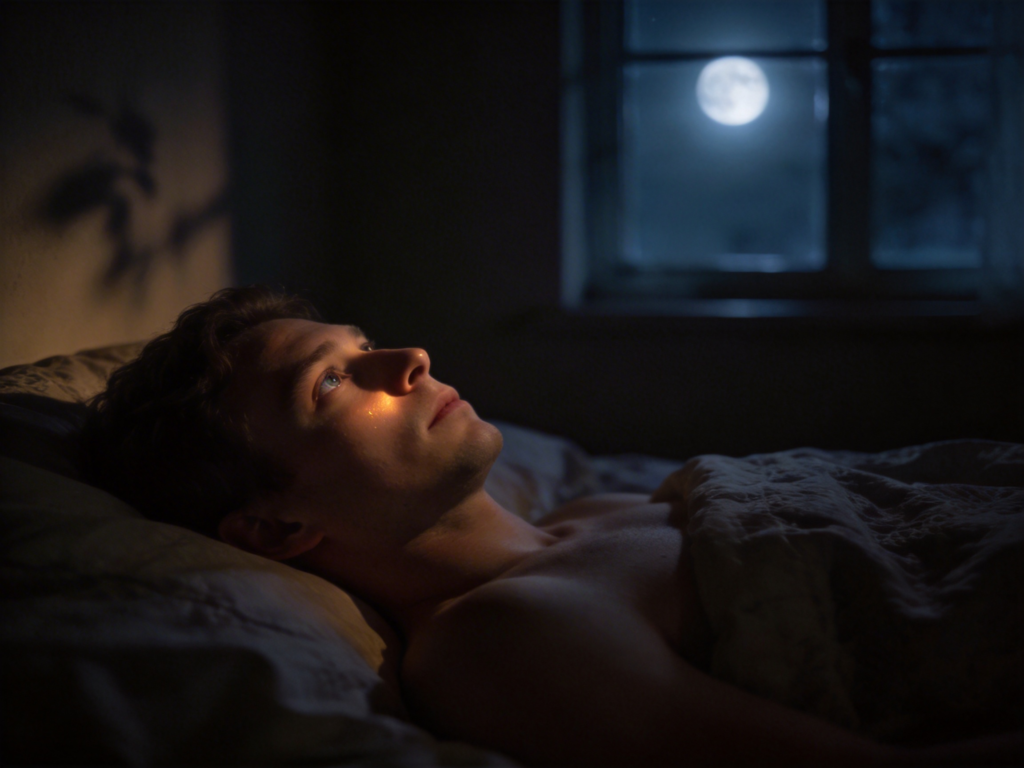
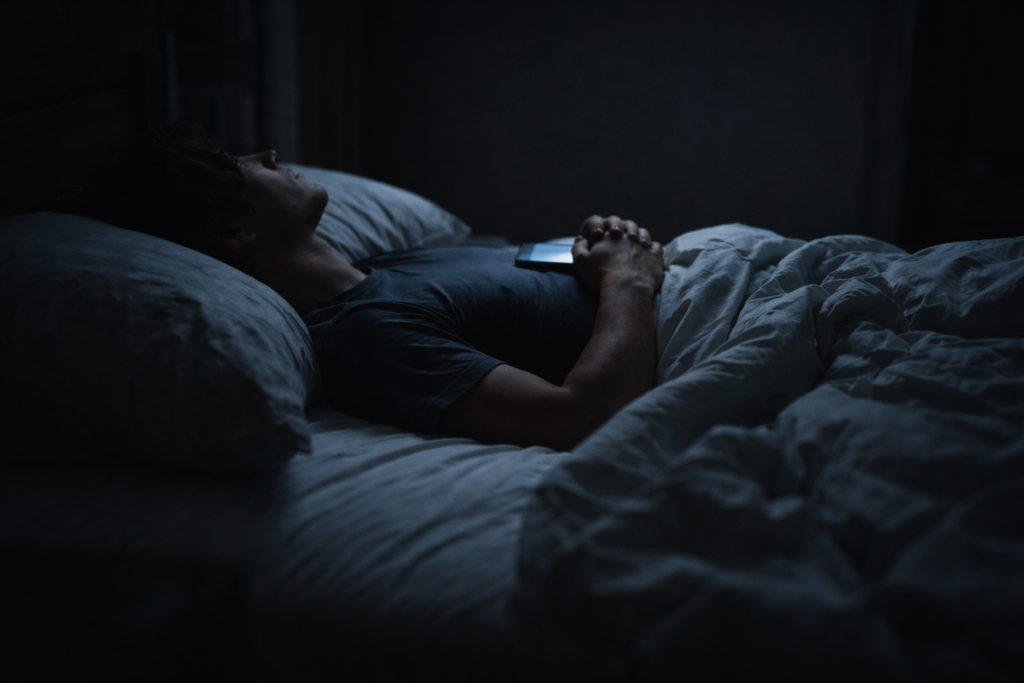
except it wasn’t simple. because I was doing the whole responsible-adult thing. getting into bed at a normal time. turning off the main light. telling myself tonight would be different. and then somehow my brain would wake up the second my head touched the pillow.
not excited awake. not even anxious awake exactly. just. weirdly switched on.
then one night I got up to use the bathroom, turned on the bright white light, and immediately felt like I’d been summoned to a dentist appointment. wide awake. personally attacked by a light bulb.
that was the moment I started wondering what color light helps you sleep, because apparently my bedroom was not cozy. it was running a tiny airport terminal after 10pm.
short answer first, because nobody needs a 1500-word mystery novel about a lamp: dim red light is usually the best color light for sleep. amber, soft orange, and warm yellow are also good. blue light and bright cool white light are the ones I would avoid at night if you’re trying to fall asleep like a normal human and not lie there negotiating with the ceiling.
but here’s the annoying little detail. the best light for sleep is still no light. darkness wins. red light is useful before bed. amber light is useful when you’re moving around at night. warm yellow is useful when you want your room to feel calm instead of clinical. but when you’re actually trying to sleep, the goal is still dark.
why red or amber light works better at night
your brain is very dramatic about light.
it doesn’t just see light and go, cool, now we can find the socks. it uses light to decide what time it is inside your body. bright light says daytime. darkness says sleep is coming. blue-heavy light says please stay alert, we may have spreadsheets to survive.
this is the circadian rhythm thing. your internal clock. the thing that decides when melatonin starts rising and when your body begins shifting into sleep mode.
red and amber light are gentler at night because they do not hit that wake-up system as hard as blue or cool white light. the CDC/NIOSH guide on light color and circadian rhythms says blue light has the strongest effect on the body clock, while dim red light has little effect. yellow and orange light also have less effect when they are very dim.
very dim is the part people skip.
a red light is not automatically good if it’s blasting across the room like you’re developing film in 1987. same with amber. same with orange. the color helps, yes, but brightness still matters. a tiny warm lamp across the room is better than a bright red LED strip shining straight into your eyes while you’re trying to convince your nervous system that life is peaceful.
blue light is not evil. it is just badly timed.
I used to hear blue light is bad and think okay, sure, another thing to feel guilty about.
but that’s not really the point. blue light during the day is useful. morning light, daylight, bright outdoor light, all of that helps your brain understand that the day has started. it can improve alertness. it can help your mood. it can help anchor your sleep schedule later.
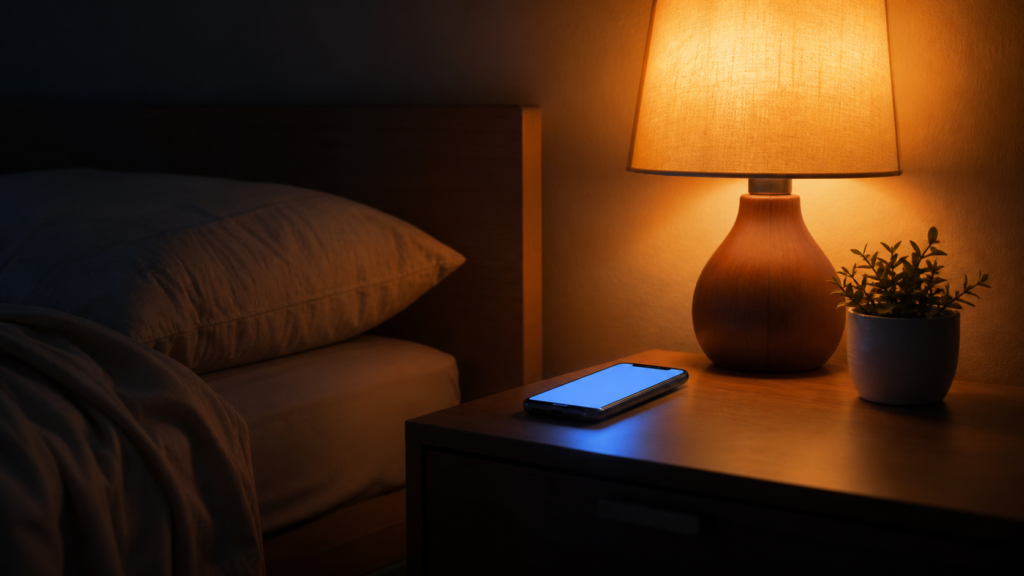
the problem is blue light at night. especially bright blue light. especially close to your face. especially when it’s coming from a phone that also contains email, bank notifications, bad news, group chats, and videos that somehow become forty minutes of your life.
Harvard Health explains that blue wavelengths can support alertness during the day, but at night they can interfere with melatonin and circadian timing. which makes sense. your brain is not sitting there calmly distinguishing between useful light and stupid scrolling light. it just gets the signal.
and if your sleep schedule is already drifting later, this matters even more. if you keep feeling tired at 9pm and then bizarrely awake at midnight, your light timing may be part of it. I would also read this CalmNightly article on how to fix your circadian rhythm, because the whole day matters. not just the last ten minutes before bed when you’re panic-adjusting your lamp settings.
what color light should you use before bed?
if you want the most sleep-friendly answer, use dim red. if red feels too weird, use amber. if amber still feels too specific, use soft orange or very warm yellow.
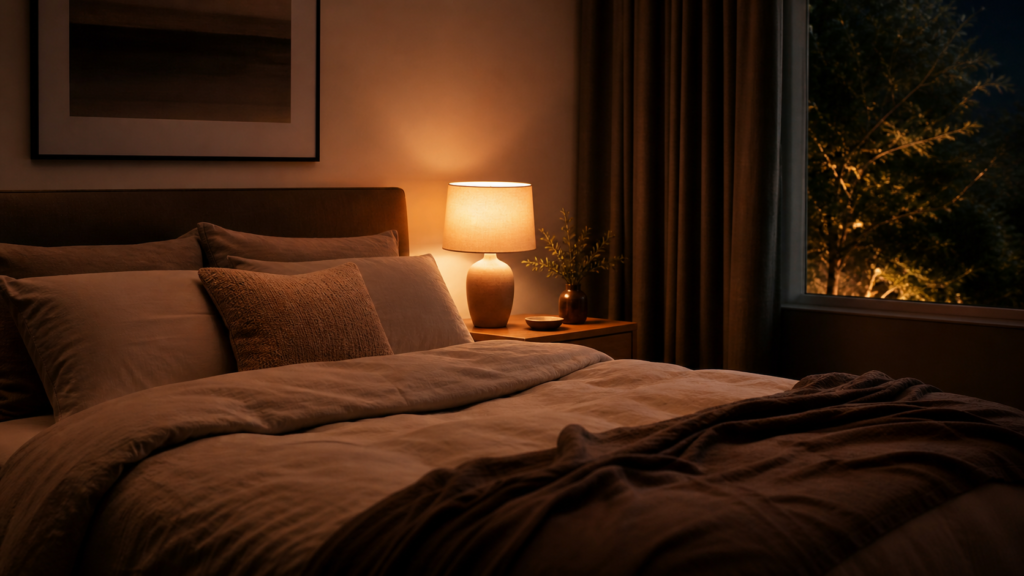
honestly, amber is probably the easiest one to live with. red can feel a little intense. some people like it. some people feel like they’re sleeping inside a warning sign. amber feels more normal. like candlelight. like a sunset. like a room where nobody is asking you to be productive anymore.
if you’re buying bulbs, look for warm color temperatures. 1800K to 2700K is usually the range you want at night. the lower number looks warmer. 5000K is the kind of bright white light that makes a bathroom feel like an interrogation room. useful in the morning. rude at 11:30pm.
this is where smart bulbs can actually help if you already have them. set them to warm and dim in the evening. not purple. not blue. not neon green because it looks cool. warm. boring. low. sleep does not need a nightclub.
should you sleep with red light on?
I would not, unless you really need it.
red light is better than blue light at night, yes. but better does not mean perfect. if you can sleep in darkness, sleep in darkness. your body is built for that.
a dim red night light can be useful in a hallway. it can be useful in the bathroom. it can be useful if total darkness makes you uncomfortable. it can be useful if you wake up at night and don’t want to ruin your chances of falling back asleep by turning on a bright white light.
but leaving a light on all night, even a dim one, can still bother some people. one study published in Psychiatry Investigation found that dim light during sleep was linked with lower total sleep time and lower sleep efficiency. not exactly the bedtime vibe we’re going for.
so my rule is: warm light before bed. darkness during sleep. tiny red or amber light only if you actually need it.
the bathroom light problem
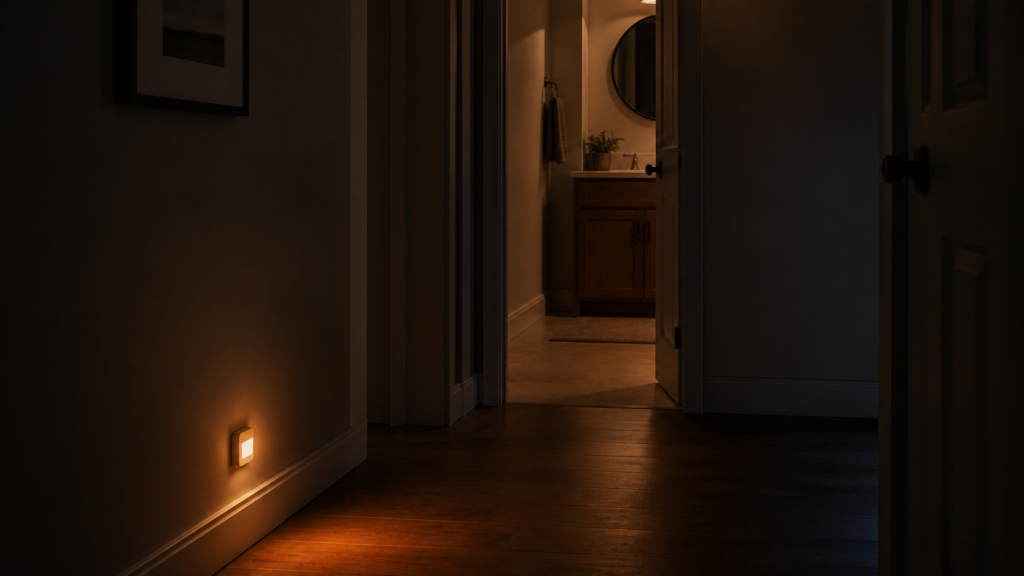
this is the one that got me.
I had made my bedroom sort of cozy, but my bathroom was still full crime-scene lighting. bright white. overhead. absolutely no mercy. I would brush my teeth under that light and then wonder why I felt less sleepy afterward.
that little routine matters. if the last thing your brain sees before bed is a cold bright bathroom, you’re basically ending the night with a mini sunrise.
the fix was embarrassingly simple. I stopped using the main bathroom light at night. I put a small warm night light near the floor. not cute. not expensive. just useful. now if I wake up at 3am, I can move around without fully waking myself up.
if you keep waking up too early or waking up during the night, light may not be the only reason, but it can be one of the easier things to fix. this CalmNightly guide on why you keep waking up too early is worth reading if morning light or early waking has become a pattern.
brightness matters more than people want it to
everyone wants the perfect color. I get it. it feels like a simple answer. buy the red bulb, solve the sleep.
but brightness is a big deal. maybe bigger than the exact shade.
a dim warm yellow lamp is usually better than a bright red one. a low amber night light is better than a glowing LED strip over your bed. a phone with night mode still turned up to full brightness is not exactly gentle just because the screen looks a little orange.
a field study published in Sleep found that light timing and intensity were connected with sleep timing and nighttime awakenings. which is a science way of saying your body notices when the lights are bright and when they show up.
so before you buy anything, try dimming what you already have. turn off overhead lights earlier. move the lamp farther from your face. lower your phone brightness until it feels almost too low. use one warm light instead of five random lights around the room.
boring advice. works anyway.
what about LED strip lights?
if you have LED lights in your bedroom, use red or amber at the lowest brightness. soft orange is fine too.
avoid blue close to bedtime. avoid cool white. avoid bright green. and be careful with purple, because a lot of purple LED settings are made by mixing red and blue. it looks relaxing, but your eyes may still be getting blue light.
also, please do not put the strip where it shines straight into your eyes. behind the headboard is better. under the bed is better. low on the wall is better. across the ceiling like a gaming cave at full power is probably not helping.
your bedroom lighting should get less interesting as bedtime gets closer. that sounds sad, but it’s true. the brain needs fewer signals, not more.
my actual bedroom setup now
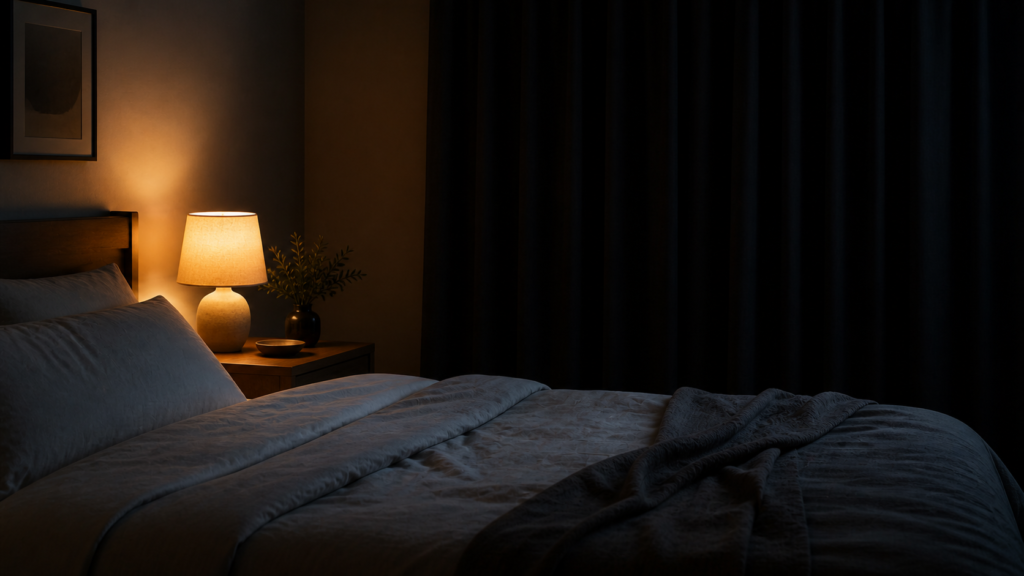
nothing fancy.
morning, I open the curtains. if I can stand outside with coffee for ten minutes, I do. I hate how well this works. it feels too simple to count, but it counts.
evening, I stop using the overhead light about an hour before bed. sometimes earlier if I’m already tired. I use one warm lamp. not bright. not directly beside my face. just enough to make the room feel human.
bathroom, I use a small warm night light instead of the main light.
phone, brightness down. warm mode on. ideally not in bed, but let’s not pretend I have become a monk. I just try not to let the phone be the last thing my brain sees.
sleep, lights off. room dark. tiny charger lights covered if they’re annoying. curtains closed. and because temperature also matters, I keep the room cool. if your bedroom runs warm, read this CalmNightly guide on the perfect temperature for sleep. light helps, but a hot room can still wreck the whole thing.
if you’re still wide awake
changing your light color can help. it may help a lot. but if you still take forever to fall asleep, don’t assume the lamp failed.
sleep is annoyingly layered. light is one layer. stress is another. caffeine. room temperature. inconsistent wake time. lying in bed too long. using the bed as a second office. eating late. worrying. trying too hard to sleep, which is somehow one of the most effective ways to stay awake. cruel design.
if the main issue is that you get into bed and your brain suddenly starts doing unpaid overtime, read why it takes so long to fall asleep. that problem is usually not solved by a bulb alone.
but lighting is still one of the easiest places to start because it is physical. you can change it tonight. no personality overhaul. no perfect routine. just make the room dimmer, warmer, quieter visually.
final answer
the best color light for sleep is dim red. amber, soft orange, and warm yellow are also good choices before bed. the worst choices are blue light, cool white light, and any bright light late at night.
use warm light as the runway. then sleep in darkness if you can.
that’s the whole thing really. not glamorous. not a miracle. just a clearer signal to your brain that the day is done.
and sometimes that is what sleep needs. not another supplement. not another app. just fewer daytime signals at night.
FAQs
what color light is best for sleep?
dim red light is usually the best color if you need light before bed. amber, soft orange, and warm yellow are also good options.
is red light better than blue light for sleep?
yes. red light is usually less disruptive at night than blue light. blue light is more likely to signal alertness and interfere with your natural wind-down process.
should I sleep with red light on?
darkness is better. use a dim red light before bed or for nighttime bathroom trips if needed, but avoid leaving a bright light on all night.
what color light should I avoid before bed?
avoid blue light, cool white light, and very bright lighting before bed. these can make your brain feel more awake when you want it to slow down.
are LED lights bad for sleep?
LED lights are not automatically bad. it depends on color, brightness, and timing. warm, dim LED light is much better at night than bright blue or cool white LED light.
This article is for informational purposes only and does not constitute medical advice. Always consult a qualified healthcare professional before making changes to your health routine.