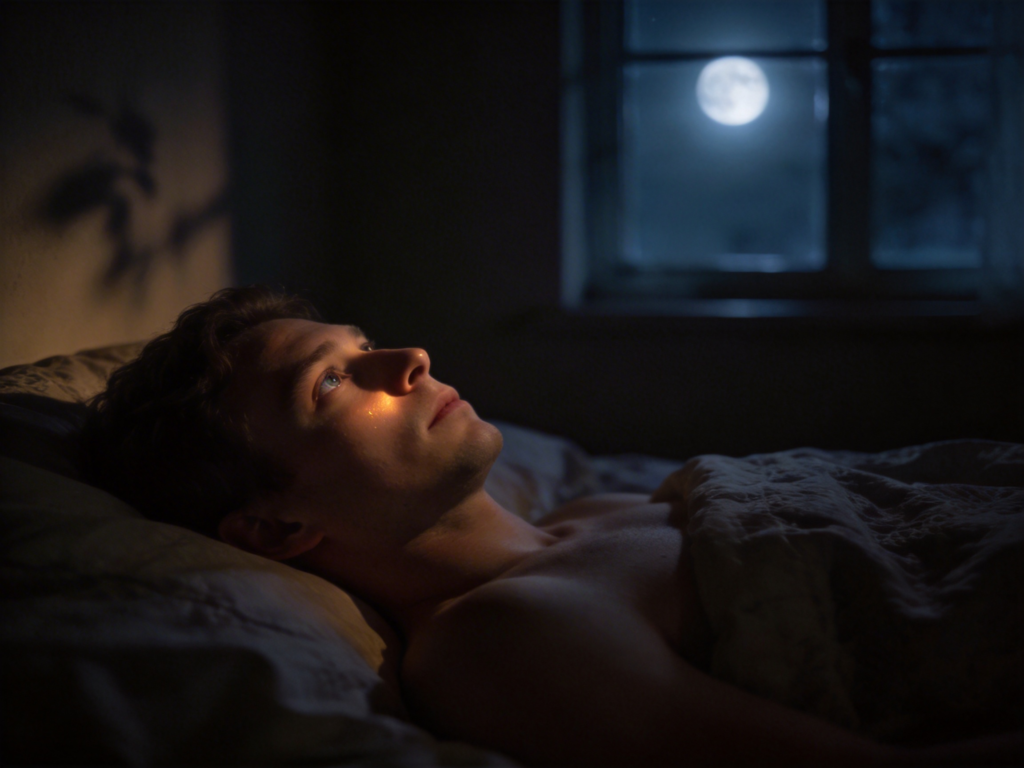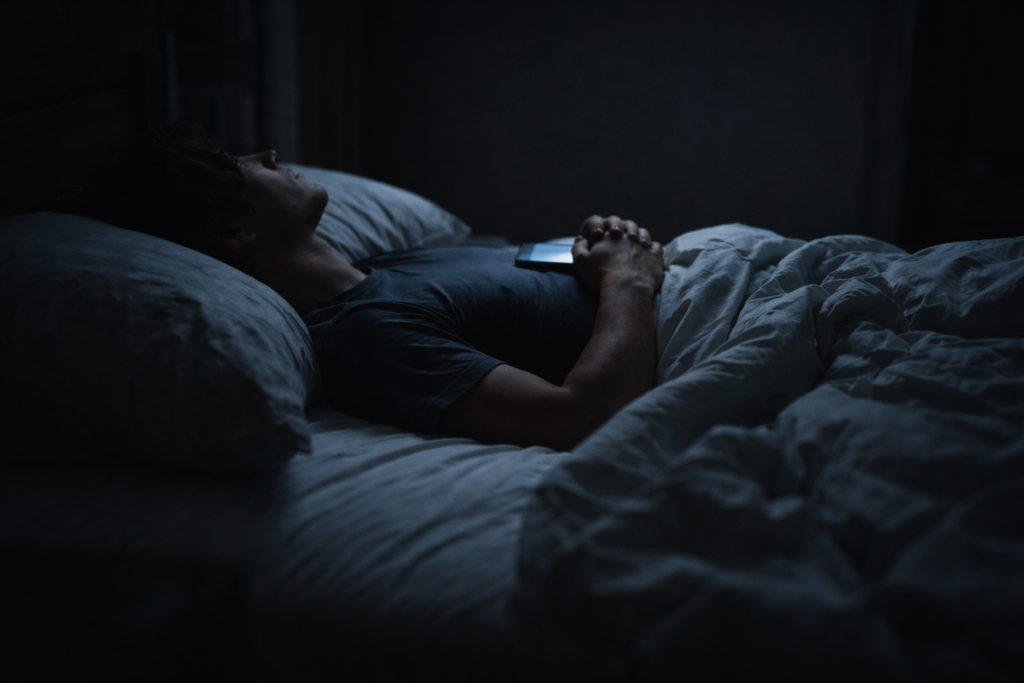
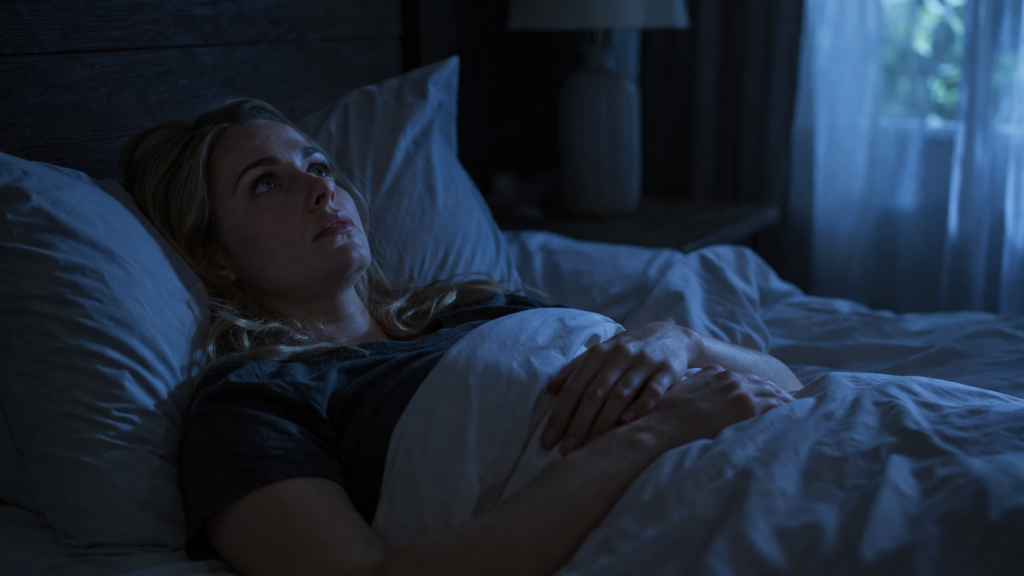
if you’re trying to figure out how to fall asleep with anxiety, you already know what it feels like — lying there exhausted, brain running at full speed, going nowhere.
it’s not even that you’re thinking about anything important. half the time it’s something completely dumb. a conversation from three days ago. an email you forgot to send. whether you actually locked the back door. the thoughts just keep cycling, and the more you notice you’re not sleeping, the more awake you become.
if that sounds familiar, you’re not alone — and it’s not just a willpower thing. anxiety and sleep don’t play nicely together. they make each other worse, in a pretty specific way.
why anxiety hits hardest at night
during the day, there’s noise everywhere. work, your phone, other people, movement. all of it drowns out the background hum of anxiety. but at night, when everything goes quiet, there’s nothing left to drown it out.
your nervous system doesn’t really distinguish between a looming deadline and an actual threat. it just reacts. and for a lot of anxious people, bedtime itself becomes the thing it reacts to — because you already know, before you even get into bed, that tonight might be a struggle. that anticipation alone is enough to start the spiral.
there’s also something physical happening. chronic anxiety keeps cortisol elevated — that’s the hormone that’s supposed to rise in the morning to wake you up. when it’s high at night, your body just can’t settle. heart rate stays up. muscles don’t release. brain stays switched on. if you’re waking up in the early hours too, that’s often part of the same picture — we go into it more in our piece on waking up at 3am and cortisol.
researchers at UC Berkeley found that even one night of bad sleep can push anxiety levels up by around 30%. the part of your brain that’s supposed to keep anxiety in check — the prefrontal cortex — becomes less active after poor sleep. so it’s genuinely circular. sleep less, feel more anxious. feel more anxious, sleep less. the Sleep Foundation calls it bidirectional — meaning you have to go at both sides of it, not just one.
how to fall asleep with anxiety: what actually works
most sleep hygiene advice is fine in theory. don’t drink caffeine late. make your room dark. consistent bedtime. you’ve heard it. and if you’re reading this, it probably hasn’t been enough.
what follows is less about general sleep tips and more about what tends to actually help when anxiety is the specific problem.
1. stop trying to sleep
counterintuitive, but this one matters a lot.
trying too hard to sleep is actually part of what keeps you awake. there’s a name for it in sleep research — sleep effort — and it’s more common than people realise. the brain treats the attempt to sleep like a task. and tasks require alertness. so the harder you push, the more switched on it gets. if you’ve been lying there for 30 or 40 minutes most nights wondering what’s wrong with you, this is probably worth reading about — we wrote about why falling asleep takes so long and this is usually part of it.
the reframe is simple, even if it takes a while to actually believe: you’re not trying to sleep. you’re just resting. eyes closed, body still, no target. the moment you take the pressure off, something in your body tends to ease up.
it sounds like a minor shift. it isn’t.
2. use the 4-7-8 breathing method
worth trying even if you’re skeptical — this one works through a different mechanism than most breathing exercises.
you inhale through your nose for four seconds. hold for seven. exhale slowly through your mouth for eight.
the exhale being longer is the important part. a long, controlled exhale activates your parasympathetic nervous system — basically the opposite of fight-or-flight. your body interprets it as a signal that the threat has passed. heart rate drops a little. muscles soften slightly. it’s not dramatic, but it’s real.
first few times it might feel forced or awkward. that’s fine. it tends to get easier and more effective with practice rather than worse.
3. try progressive muscle relaxation
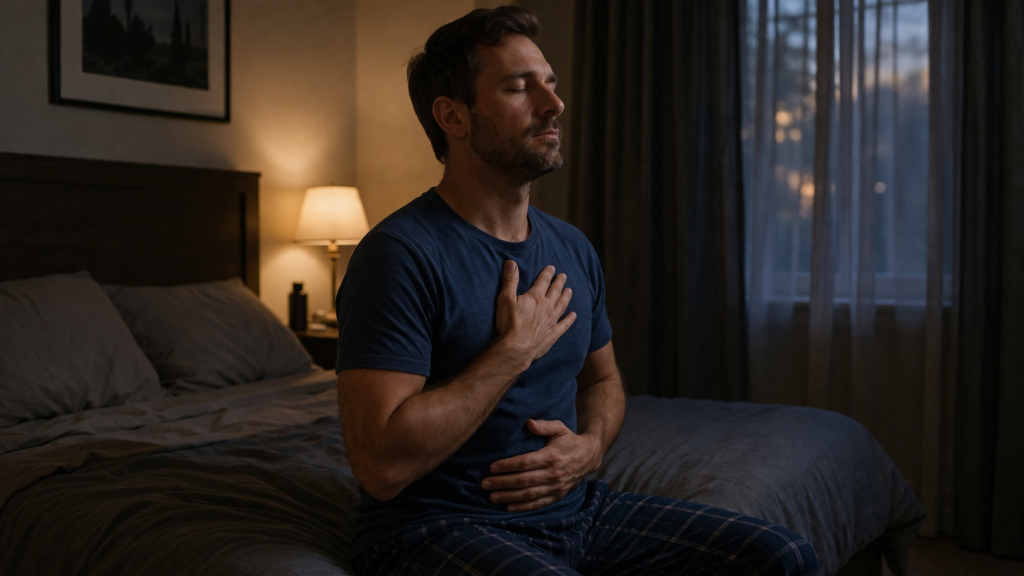
anxiety isn’t only in your head. your jaw clenches. your shoulders creep up. your chest gets tight. most people carrying that kind of tension have no idea — it’s just become the baseline. and as long as it’s there, your nervous system stays on. quieting your thoughts doesn’t fix it. you have to go through the body separately.
progressive muscle relaxation gives you a way to do that. you tense one muscle group at a time — hold it for about five seconds — then release. start at your feet and work upward. the release is what you’re after. it’s different from just telling yourself to relax, which usually doesn’t work. your muscles actually let go after being tensed. something about the contrast makes it land.
a lot of people don’t make it to the end before they’re asleep. Johns Hopkins Medicine recommends it specifically for stress-related sleep disruption, and it’s one of those things that tends to work better the more you use it — your nervous system learns what the pattern means.
4. write your worries down before bed
a lot of bedtime anxiety is task-based. things you haven’t done. things you might forget. things sitting on tomorrow’s list. your brain keeps running through them because it’s worried you’ll drop something.
there’s a study that found people who wrote a detailed to-do list before bed — not a journal, just a specific list of upcoming tasks — fell asleep faster than those who wrote about things they’d already completed. the act of writing it down seems to tell the brain it can stop holding onto it.
doesn’t need to be a notebook. your phone’s notes app works. five minutes, just get it out of your head and somewhere external.

5. get out of bed if you can’t sleep
this goes against instinct. but lying in bed while anxious is genuinely counterproductive — not just in the moment, but over time.
every night you spend awake and anxious in bed, you’re teaching your brain to associate the bed with that feeling. eventually just getting into it starts to trigger the anxiety response. the Cleveland Clinic suggests that if you’re still awake after about 20 minutes, getting up is the better move.
go to another room. keep the lights low. do something unstimulating — a physical book, a cup of herbal tea, just sitting quietly. not your phone. go back to bed when you actually feel sleepy, not just when you think you should.
feels wrong the first few nights. works better the longer you stick with it.
6. schedule a worry window earlier in the day
one reason anxiety floods in at night is that we suppress it all day. busy, distracted, push it aside — and then at 11pm there’s nothing left to push it aside with.
some therapists suggest giving the anxiety a designated slot earlier in the day. fifteen minutes, actual calendar entry, around 4 or 5pm. you sit with whatever’s worrying you, write it out, think it through. and then — this is the important part — when it shows up at bedtime, you can tell yourself you’ve already had that conversation today.
it doesn’t resolve the worries. that’s not the point. the point is giving your brain a container for them so it stops saving them for 1am.
7. rethink the evening drink
a glass of wine to wind down is pretty common, especially among people who are anxious. it does take the edge off — that part’s real. alcohol is a sedative and it does make it easier to fall asleep initially.
the problem shows up later. as your body processes the alcohol — usually around the three or four hour mark — there’s a rebound effect. your nervous system becomes more active than it was before. you wake up. sometimes it’s 3am, sometimes earlier. and the anxiety that felt quieter when you went to bed is now louder.
it’s one of those things where the short-term relief comes at a cost to the rest of the night. worth factoring in if the early morning waking is part of your pattern.
8. keep your wake time consistent — even after bad nights
this one won’t help tonight. but it might be the most important thing on this list for breaking the pattern long term.
sleep pressure builds the longer you’re awake. the more it builds, the easier sleep tends to come. if you sleep in after a rough night, you reset that clock — and the following night gets harder. getting up at the same time every day, even on bad days, keeps the pressure accumulating the way it should.
it’s genuinely difficult. but it’s one of the core mechanisms in CBT-I — cognitive behavioral therapy for insomnia — which has the best evidence of anything for anxiety-driven sleep problems. if your sleep timing has really fallen apart, our guide on how to reset your sleep schedule walks through it step by step.
9. know when the anxiety needs more than sleep tips
everything above is worth trying. some of it will help. but if you’ve been dealing with this for months, or it’s bleeding into your days and not just your nights, there’s a limit to what these strategies can do on their own.
CBT-I has the most evidence behind it for this specific kind of problem. it’s not comfortable — it asks you to do things that feel wrong at first. but it targets the cycle itself rather than just making you sleepy. Harvard Health lists it as a primary recommendation for anxiety-related sleep disruption, above medication.
a GP can usually refer you. some areas have it available online. worth asking about if things have been stuck for a while.
the short version
anxiety and sleep make each other worse — that’s the whole problem. most of what actually helps isn’t about eliminating the anxiety directly. it’s about interrupting the loop: taking the pressure off sleep itself, releasing the physical tension your body’s been holding, breaking the association between bed and dread, and letting sleep pressure build properly over time.
none of it works overnight. but most of it does work — given time, and some consistency.
Related reading: If the problem includes frequent movement or repeated awakenings, review the possible causes of restless sleep.
This article is for informational purposes only and does not constitute medical advice. Always consult a qualified healthcare professional before making changes to your health routine.