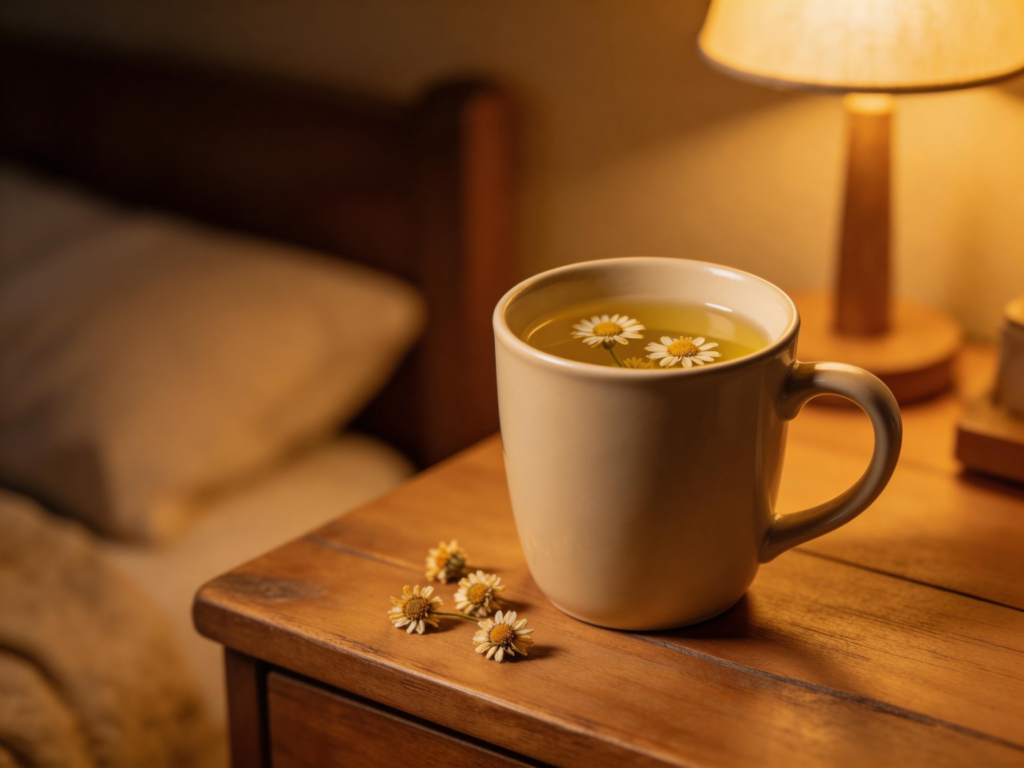
I started drinking chamomile tea before bed almost by accident. And honestly I’m still not totally sure how I feel about it.
A few years back sleep just… wasn’t working. Not in a dramatic way. I wasn’t lying there until 4am or anything. More like I’d get into bed, close my eyes, and my brain would just keep going. Replaying things. Half-thoughts about nothing important. That low hum of a day that hadn’t quite finished with me yet.
A friend mentioned she’d been making chamomile tea part of her evening routine. Said it helped her wind down. I remember thinking — okay, sure. That sounds like something people say when they’ve run out of real suggestions.
But I tried it. Because I was tired and out of better ideas.
Something shifted. I couldn’t tell you exactly what or when. I just noticed at some point that I was falling asleep a bit easier, and I kept doing it, and then at some point it became a thing I just… did every night.
So What Does Chamomile Tea Before Bed Actually Do?
Okay so I did go down the research rabbit hole on this. And the main thing that comes up is a compound called apigenin.
It’s a flavonoid — plant compound — and it binds to GABA receptors in your brain. GABA is basically your nervous system’s way of saying okay, slow down, we’re done for today. When apigenin hooks onto those receptors you get this mild sedative-adjacent effect. Not knock-you-out. Not even close. More like the mental equivalent of finally unclenching your jaw without realizing you’d been clenching it.
There’s actual research behind this which I found weirdly reassuring. One study — postpartum women drinking chamomile daily for two weeks — found real measurable improvements in sleep quality. Another one in older adults showed similar stuff. The effects weren’t massive. I want to be honest about that. But they kept showing up across different studies, which means it’s probably not nothing.
What it won’t do: fix insomnia, replace medication, sort out sleep apnea. If you go in expecting to be sedated you’ll be disappointed and annoyed. If you go in expecting a gentle nudge in the right direction — that part seems legit.
The Thing I Didn’t Expect
Here’s something I’ve been thinking about and I’m genuinely not sure how to explain it.
The ritual might matter as much as the compound.
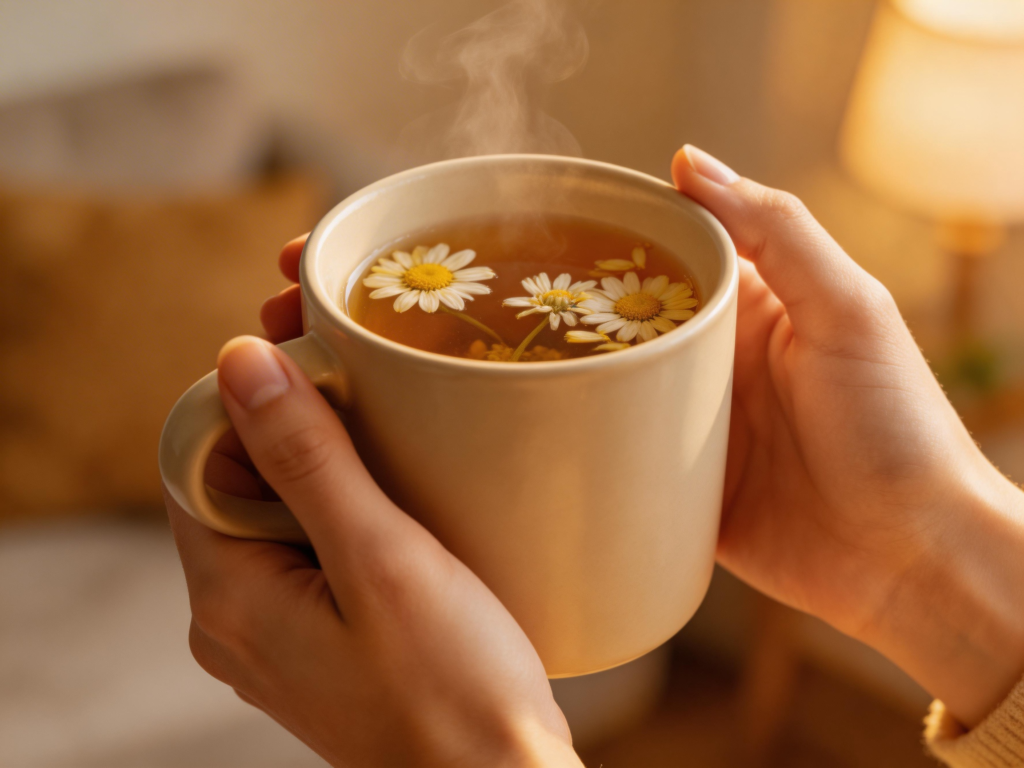
Like — think about what actually happens when you make chamomile tea before bed. You get up from whatever you were doing. You boil the kettle. You stand in the kitchen for a few minutes doing basically nothing. The mug gets warm in your hands. That smell — faintly floral, a little like dried grass in a good way — hits you before you even drink it.
I remember this one specific night, maybe six months in. I was having a rough week, stressed about something I can’t even remember now. Made the tea, sat on the couch without my phone, just held the mug. And at some point I noticed my shoulders had dropped. Just. Dropped. Without me deciding to relax.
I don’t know how much of that was the apigenin and how much was just ten minutes of quiet. Probably both. Probably the line between them doesn’t matter as much as I want it to.
Sleep researchers actually have a name for this — stimulus control. The idea that doing the same calm thing before bed consistently trains your brain to recognize that sleep is coming. Chamomile is good at this because the sensory stuff — warmth, smell, the slowing down — all hits at once.
How to Make It Actually Work
Not all chamomile is the same and this took me embarrassingly long to figure out.
The cheap supermarket stuff smells like faint hay. Fine. Whatever. But whole flower chamomile — loose leaf or bags with actual dried flower heads — is a completely different experience. Brands like Pukka or Traditional Medicinals, or just loose chamomile from any decent health food shop. The smell alone tells you it’s different.
Steeping time. This is the main thing. Everyone says three to five minutes. Ignore that. Go seven to ten. Cover your mug while it steeps — the compounds can literally escape with the steam if you leave it open. I know that sounds fussy. It makes a difference.
Drink it 30 to 45 minutes before you want to be asleep. Not right before. The warmth helps lower your core body temperature slightly which is part of how your body cues itself into sleep anyway. The timing matters more than I thought it would.
One practical thing — chamomile is a mild diuretic for some people. I learned this the annoying way at 3am. If you’re also waking up at 3am every night, I wrote about the real causes here. If you’re someone who wakes up to use the bathroom at night, maybe try a smaller amount, or drink it a bit earlier.
How It Compares to the Other Stuff
People always ask about melatonin. They’re not really doing the same thing.
Melatonin is a timing signal. Tells your brain it’s dark, time to shift gears. Most useful if your sleep schedule is off — jet lag, shift work, staying up too late consistently. If your problem is just that you can’t relax enough to fall asleep, melatonin isn’t really targeting that.
Chamomile is working on the GABA pathway. Which makes it better suited for that specific thing where you’re lying there, not anxious exactly, just… too much in your head. Can’t exhale. That’s a different problem and chamomile is actually addressing it.
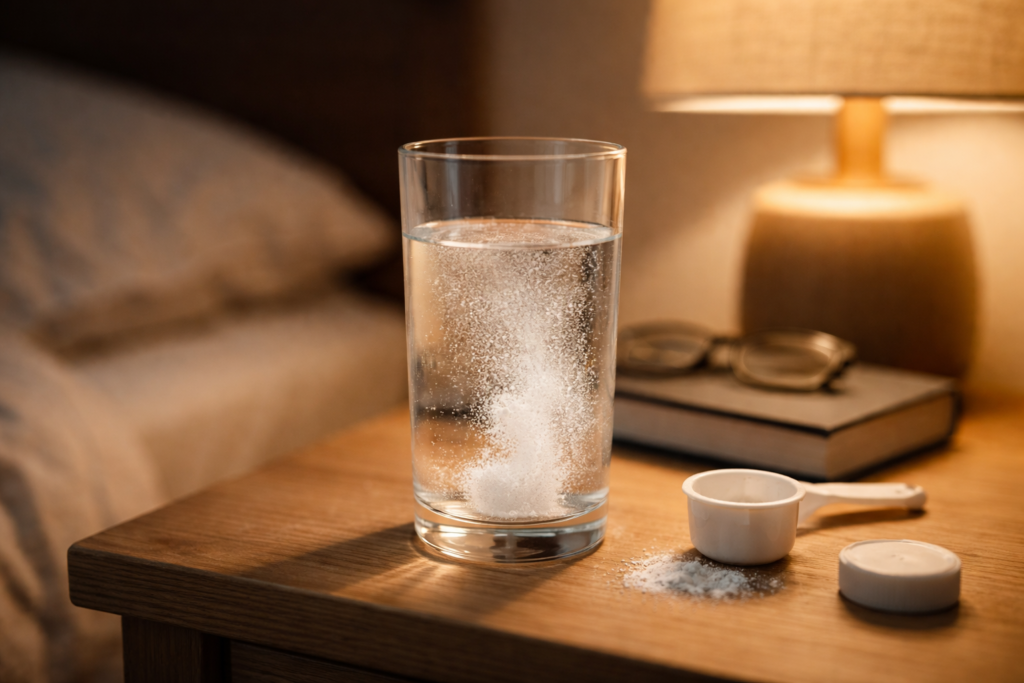
Magnesium glycinate does similar stuff, also via GABA. A lot of people find it more consistently effective for staying asleep through the night. I take both most nights and couldn’t honestly tell you which one is doing more work. Probably the magnesium. Maybe the combination matters.
Passionflower tea — less talked about, similar mechanism, solid research for anxiety-adjacent sleep issues. If chamomile doesn’t do much for you, passionflower is the next thing I’d try before giving up on the herbal route entirely.
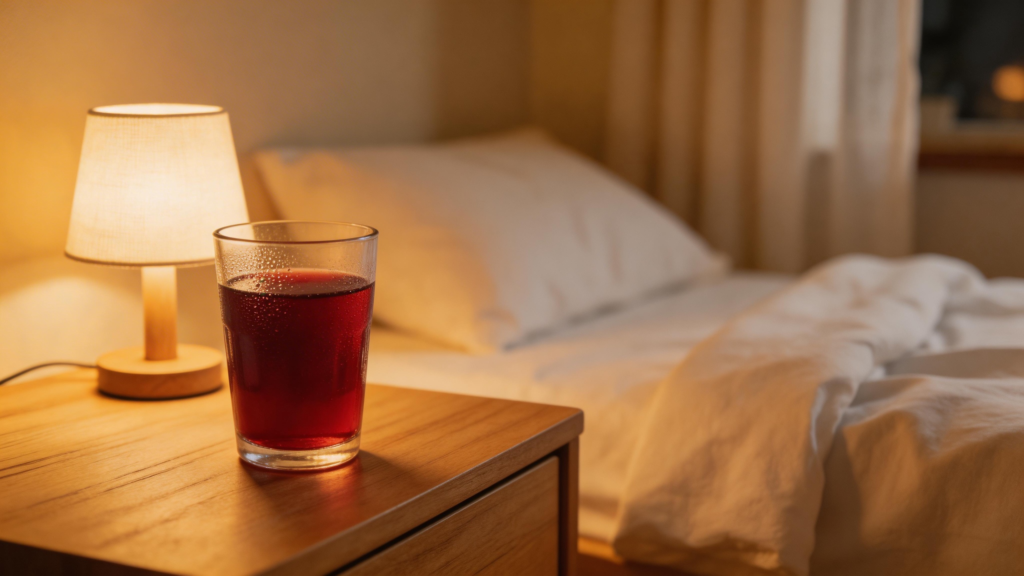
Tart cherry juice is different again — actual melatonin in food form, plus other compounds that seem to help with staying asleep rather than falling asleep. Small glass an hour before bed. Worth trying if you wake up in the night more than you struggle to fall asleep.
Who It’s Actually Going to Help
If your sleep problem is mainly about winding down — not clinical, not a disorder, just overstimulated from the day and unable to fully let go — chamomile is a pretty good fit.
It works better as part of something. Like if you’re already mostly doing the basics — room’s cool enough, not doom-scrolling until midnight, not drinking alcohol every night — adding chamomile to that tends to add something real. It’s not going to carry the whole load on its own.
Where it probably won’t help much: actual diagnosed anxiety disorder, sleep apnea, waking up repeatedly through the night for physical reasons. It’s gentle. That’s the point of it. That’s also its limit.
Worth knowing — chamomile is in the daisy family. If you have ragweed allergies, start small. Most people are completely fine. Some aren’t.
Where I Actually Land On This
Years in, still doing it most nights.
Not because it’s transformed my sleep or anything dramatic like that. Just because it works for what it works for — that specific problem of being too much in your own head at the end of the day. The apigenin is doing something. The ritual is doing something. Honestly at this point they’re kind of the same thing for me.
Get a decent brand. Steep it longer than the box says. Drink it 40 minutes before bed. Put your phone down while you drink it — not as a rule, just because it’s nicer that way.
That’s kind of all there is to it.
Related reading: Another commonly discussed calming herb is passionflower for sleep, although its evidence and safety profile differ from chamomile.
This article is for informational purposes only and does not constitute medical advice. Always consult a qualified healthcare professional before making changes to your health routine.