

if you’re trying to figure out which magnesium is best for sleep and anxiety, you’re not alone — and you’re also not crazy for being confused. so you’re standing in the supplement aisle — or more likely scrolling through amazon at like 11pm wondering why you’re still awake — and there are twelve different magnesium products and none of the labels are actually helping you figure out which one to get.
magnesium glycinate. magnesium citrate. magnesium oxide. magnesium l-threonate. magnesium taurate. they all just say magnesium but the prices are all over the place and nobody’s explaining what the difference actually is.
here’s the thing. the type matters. a lot. like, more than most supplement stuff where the differences are pretty marginal. with magnesium, picking the wrong form is kind of like… taking the right medicine for the wrong thing. you might feel something. just not what you were hoping for.
i went pretty far down this rabbit hole. here’s what i actually found.
why magnesium even matters for sleep and anxiety
quick background before getting into the types.
magnesium is involved in something like 300 different processes in the body. which sounds like a marketing claim but it’s genuinely true and a lot of those processes are nervous system stuff. it helps regulate GABA — that’s the neurotransmitter that tells your brain to settle down. when GABA activity is low, you get racing thoughts, anxiety, trouble falling asleep. magnesium also affects your cortisol response and plays some role in melatonin production.
the other thing is that a lot of people are actually deficient and don’t know it. a large national survey found roughly 48% of Americans don’t hit their daily magnesium needs through diet alone. processed food, stress, soil depletion — it all chips away at your levels faster than you’d expect. the research on this is pretty consistent.
so there’s a real reason this keeps coming up in sleep conversations. it’s not just supplement companies trying to sell you something.
the part nobody explains — why the form matters so much
magnesium can’t just exist on its own in a pill. it has to be bound to something. and that something — whatever compound it’s attached to — determines how much of it actually gets absorbed and where it ends up in your body.
magnesium oxide is the most common form. it’s in a huge percentage of cheap supplements and a lot of multivitamins. absorption rate is somewhere around 4%. four. percent. the other 96% goes through your gut without doing much, which is why it’s actually an effective laxative. useful for that. not great for sleep.
the forms worth knowing about have much higher bioavailability and — more importantly — they have specific properties that make them useful for anxiety and sleep specifically. that’s really what determines which magnesium is best for sleep and anxiety. not just the amount. the form.
which magnesium is best for sleep and anxiety — broken down by type
magnesium glycinate — start here
if someone’s asking which magnesium is best for sleep and anxiety and i had to give one answer, it’s glycinate. not because it’s popular right now. because of the actual mechanism.
glycinate means the magnesium is bound to glycine. glycine is an amino acid. it’s also a neurotransmitter that has its own sleep-promoting effects — it activates certain receptors that help bring down core body temperature slightly, which is one of the signals your brain uses to initiate sleep. so you’re getting the magnesium doing its thing and the glycine doing its thing at the same time.
the Sleep Foundation has a good breakdown of the research here — magnesium supplementation has been shown to improve sleep quality, especially in people who are deficient or older adults dealing with insomnia. glycinate specifically is also the gentlest form on the stomach, which matters if you’re taking it every night long term.
absorbs well. doesn’t wreck your digestion. actually reaches the nervous system. this is the one. 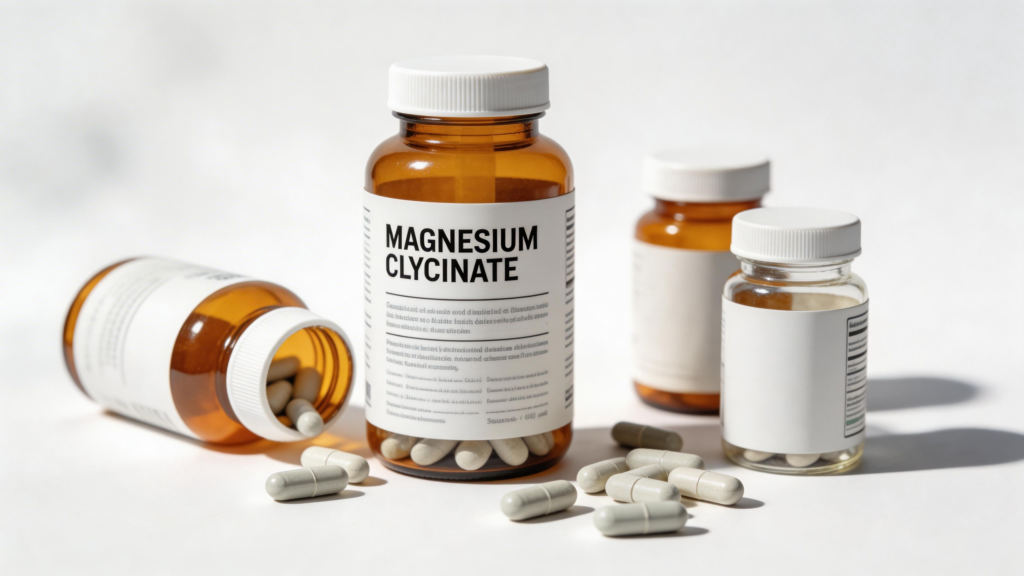
dose-wise — most people start at 200mg of elemental magnesium and go up to 400mg if needed, taken about 30 to 60 minutes before bed.
magnesium l-threonate — the brain-specific one
this one is newer. it was actually developed specifically to cross the blood-brain barrier more effectively than other forms. most magnesium supplements raise your blood and tissue levels but don’t do much directly in the brain. threonate is different in that way.
early research published in Neuron showed it could raise brain magnesium levels and improve synaptic density — human trials are smaller but have shown some effects on memory and cognitive flexibility.
where this is useful for anxiety is when it’s very cognitive — the kind where you’re stuck in a loop, ruminating, can’t stop the thoughts. for that kind of brain-based anxiety it might be worth trying. for sleep support on its own, glycinate is probably still the better primary option.
one thing worth knowing — some people actually feel slightly stimulated from threonate. not in a bad way necessarily but if you’re sensitive, taking it at night could backfire. try it earlier in the day or pair a smaller amount with glycinate in the evening.
magnesium taurate — if the anxiety feels more physical
taurate combines magnesium with taurine. taurine has GABA-like properties — it binds to GABA receptors and has an inhibitory effect on the nervous system. it also has some cardioprotective effects and seems to help with cortisol.
if your anxiety shows up as more physical stuff — racing heart, chest feels tight, that wired-and-exhausted-at-the-same-time feeling — taurate is worth considering over glycinate. it’s also decent for anxiety that comes in spikes in response to stress rather than the lower-level chronic kind.
harder to find than glycinate. tends to cost more. but if you’re figuring out which magnesium is best for sleep and anxiety and the physical symptoms are the main thing, taurate is worth trying.
magnesium citrate — if your gut is also a problem
citrate absorbs reasonably well. better than oxide, not as targeted as glycinate. it’s also mildly laxative — it pulls water into the intestines, which moves things along.
for sleep and anxiety specifically, it’s fine but it doesn’t have the nervous system synergy of the forms above. the place where it actually shines is if constipation and sleep problems are happening together, which is more common than people talk about. citrate can help both at once.
if glycinate causes any stomach issues for whatever reason (uncommon, but it happens to some people), citrate is a reasonable alternative.
magnesium oxide — honestly just skip it
4% absorption. it’s cheap. it’s everywhere. it’s not going to do much for your anxiety or your sleep. fine as an occasional laxative. not the right tool here.
what about getting magnesium from food
pumpkin seeds. dark chocolate. almonds. spinach. black beans. avocado. these are all genuinely solid sources and worth eating more of regardless. 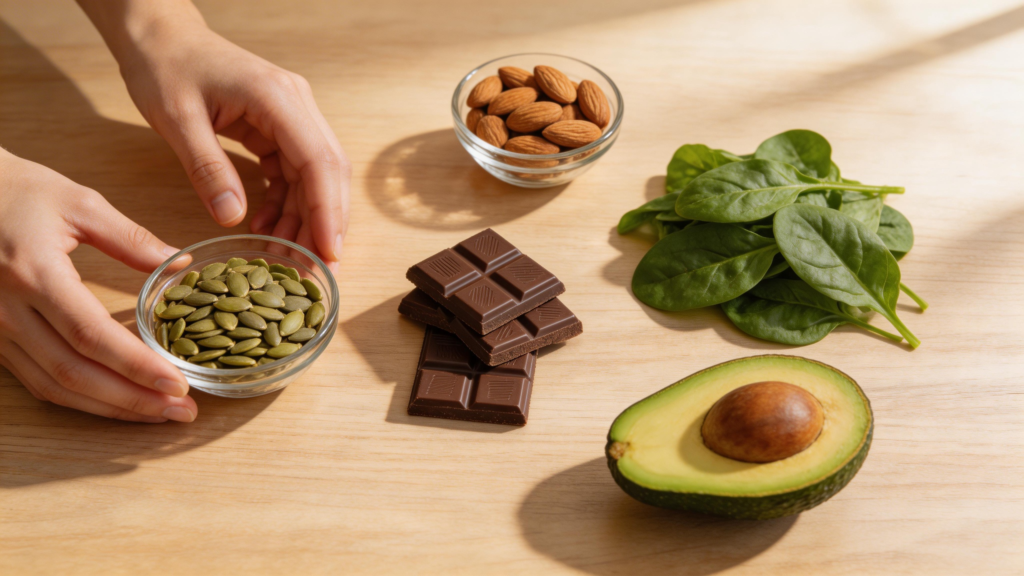
the issue is that if you’re already deficient — which is likely if sleep and anxiety are problems — it’s hard to close the gap through food alone fast enough to feel a difference. supplements get you there quicker. eating more magnesium-rich food is a good long-term habit on top of that. just probably not a replacement for supplementing when things are already off.
a few things worth knowing before you start
magnesium doesn’t work like melatonin or a sleep drug. there’s no noticeable hit the first night usually. most people who respond to it start noticing something after a week or two of consistent use — less tension when trying to fall asleep, sleeping through a bit more solidly, maybe a lower general anxiety baseline during the day.
if you’re also waking up at 3am specifically with that anxious-jolt feeling, magnesium might help but the cortisol piece is probably what’s actually driving it. there’s more on that whole thing in the cortisol and 3am waking article.
on safety — the NIH puts the upper limit for supplemental magnesium at 350mg per day for adults. above that is where you’re more likely to get digestive side effects. if you’re on antibiotics, diuretics, or anything for acid reflux (PPIs), worth checking with a doctor first since magnesium can interact with absorption in both directions.
so which one
for most people asking which magnesium is best for sleep and anxiety — glycinate. that’s the answer. it works for both, it’s widely available, it’s gentle on the stomach, and the research behind it is the most solid of the options here.
if your anxiety is very cognitive and thought-loop-y, consider adding l-threonate during the day. if it’s more physical and stress-reactive, try taurate instead.
the thing that trips people up with magnesium is expecting it to feel like something immediately. it doesn’t. it’s a slow, quiet kind of effect — you just gradually notice you’re a bit less activated at bedtime, staying asleep a little more consistently, running slightly calmer through the day. that’s what it’s supposed to feel like. not dramatic. just better.
and if falling asleep is the main thing — not the waking up anxious part — there’s more on that in the why it takes so long to fall asleep piece. magnesium is one piece. usually not the only one. but if you’re still figuring out which magnesium is best for sleep and anxiety, glycinate is almost always the right place to start.
This article is for informational purposes only and does not constitute medical advice. Always consult a qualified healthcare professional before making changes to your health routine.