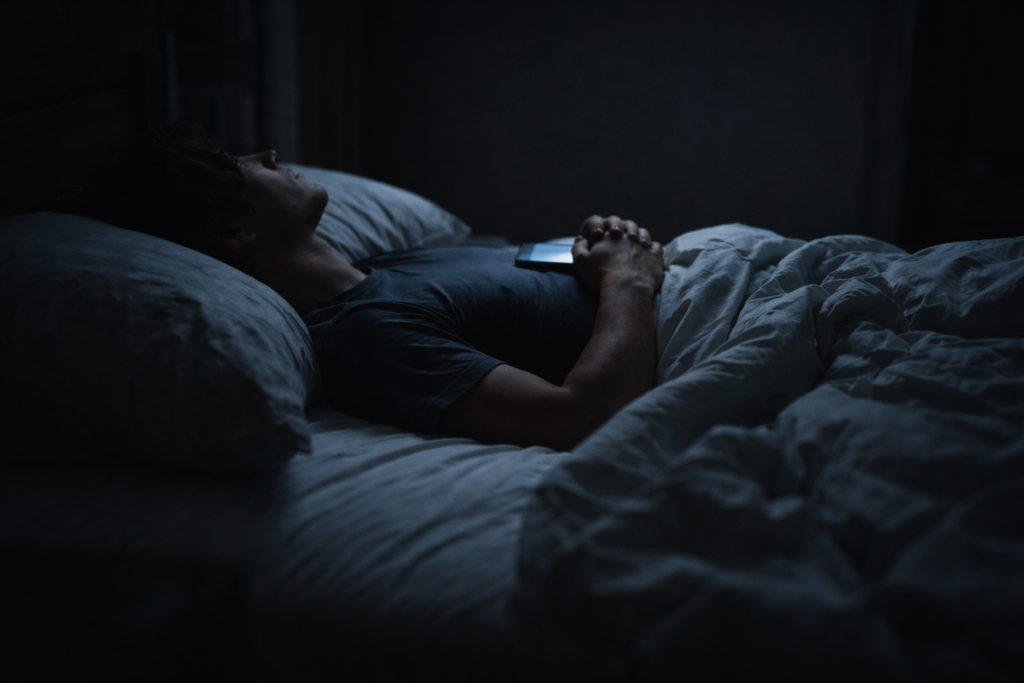
Waking around 3 AM usually does not point to one specific organ, hormone, or hidden problem. Sleep naturally becomes lighter at several points during the night, and many factors can turn a brief awakening into a repeated pattern. Common possibilities include insomnia, stress, alcohol, an uncomfortable environment, pain, hot flashes, medicines, sleep apnea, restless legs syndrome, and an early body clock.
The exact time is less important than what happens before and during the awakening, how often it occurs, whether you can return to sleep, and how you function the next day.
Why you may wake at roughly the same time
Sleep alternates through non-REM and REM phases. Brief awakenings can occur between cycles, and the later part of the night generally contains more REM and lighter sleep. Noise, light, temperature, physical symptoms, breathing interruptions, or an alert thought may therefore wake you more easily than during deep sleep earlier in the night.
Your schedule also creates consistency. If bedtime, alcohol timing, a medication, room temperature, a pet, traffic noise, or a physical symptom occurs on a similar schedule each night, the awakening may also occur at a similar time.
Once you begin checking the clock and expecting 3 AM, the time itself can become a cue for anxiety. You may remember awakenings near 3 AM while forgetting shorter awakenings at other times.
Is waking at 3 AM a form of insomnia?
It can be. Insomnia may involve difficulty falling asleep, staying asleep, waking too early, or getting poor-quality sleep despite adequate time and an appropriate environment. It also causes daytime impairment.
One brief awakening is not automatically insomnia. Chronic insomnia generally occurs at least three nights a week for three months or longer. Repeated worry, clock watching, spending long periods awake in bed, and changing the schedule dramatically after a bad night can help maintain the cycle even after the original trigger has passed.
Cognitive behavioral therapy for insomnia, or CBT-I, is the recommended initial treatment for chronic insomnia. It combines behavioral and cognitive methods that rebuild the association between bed and sleep. It is more than general “sleep hygiene.”
Common reasons for waking during the night
Stress, anxiety, and conditioned alertness
Stress does not need to produce a conscious nightmare or panic attack to affect sleep. It can make the nervous system more responsive to normal sounds, sensations, and transitions between sleep stages. After several difficult nights, fear of another awakening can become a trigger itself.
Nighttime thoughts often feel more urgent because you are tired and there are fewer distractions. Avoid making major decisions at 3 AM. Write a short note if necessary and reconsider it in daylight.
Alcohol
Alcohol may shorten the time it takes to fall asleep, but sedation is not normal sleep. It can contribute to lighter, more fragmented sleep later in the night and may worsen snoring or sleep apnea.
If awakenings are common after drinking, compare several alcohol-free evenings with your usual pattern. Do not assume the problem is a “liver detox” process tied to a particular clock time.
Caffeine, nicotine, and other substances
Caffeine can remain active for hours, and sensitivity varies. Nicotine is a stimulant, while overnight nicotine withdrawal may also disturb sleep. Cannabis and sleep products can change sleep and alertness in different ways depending on dose, timing, frequency, and the individual.
Test changes one at a time and record the result. A universal afternoon caffeine cutoff does not fit everyone.
Bedroom conditions
Intermittent noise, dawn light, excessive heat or cold, notifications, and disruptions from another person or pet may repeatedly wake you. There is no single ideal bedroom temperature for every person. Aim for a dark, quiet, comfortable room rather than chasing one exact thermostat setting.
Pain and physical symptoms
Reflux, coughing, allergies, back or joint pain, hot flashes, itching, and frequent urination can become more noticeable during lighter sleep. Treating the underlying symptom is usually more useful than adding a sedating supplement.
Medicines
Some prescription and over-the-counter medicines can affect alertness, breathing, urination, temperature, leg movements, or sleep continuity. Timing can also matter.
Do not stop a prescribed medicine abruptly. Ask the prescriber or pharmacist whether a medicine, dose, timing change, withdrawal effect, or interaction may be contributing.
Sleep apnea
Sleep apnea causes breathing to stop and restart repeatedly during sleep. It can produce brief awakenings that the sleeper may not remember. Clues include loud snoring, witnessed breathing pauses, gasping, dry mouth, morning headaches, and excessive daytime sleepiness.
A phone app, a partner’s absence, or a normal-looking consumer oxygen reading cannot rule it out. A healthcare professional can determine whether a home sleep apnea test or an in-lab study is appropriate.
Restless legs syndrome and limb movements
An uncomfortable urge to move the legs that begins or worsens at rest, improves temporarily with movement, and is worse in the evening suggests restless legs syndrome. Periodic limb movements during sleep may also fragment sleep without being obvious to the sleeper.
Do not take iron simply because sleep is restless. Iron studies may be appropriate when symptoms suggest restless legs syndrome, and supplementation should be based on results and clinical advice.
Menopause and hormonal changes
Hot flashes and night sweats can interrupt sleep during perimenopause and menopause. Mood changes, sleep apnea risk, and other conditions may also contribute. A clinician can help distinguish the causes and discuss appropriate treatment.
An early circadian rhythm
If you become sleepy very early in the evening and wake early feeling alert, your body clock may be shifted earlier than your desired schedule. Light exposure and sleep timing may be relevant. Significant or persistent circadian problems are best assessed by a sleep clinician.
Does waking at 3 AM mean you have a liver problem?
No. The clock time alone does not diagnose a liver condition. The liver helps regulate blood glucose and performs many other functions around the clock, but there is no standard medical rule that liver glycogen runs out at 3 AM in healthy adults or that a 3 AM awakening means the liver is “detoxing.”
Traditional Chinese medicine organ-clock interpretations sometimes associate certain nighttime intervals with the liver or lungs. These are traditional concepts, not validated diagnostic tests. Do not use them to diagnose liver disease, grief, toxin buildup, or another medical condition.
Actual liver disease may cause symptoms such as jaundice, abdominal swelling, dark urine, pale stool, itching, nausea, or unexplained fatigue, depending on the condition. It requires medical evaluation and blood tests; sleep timing cannot confirm or exclude it.
Is low blood sugar waking you?
Hypoglycemia is real and can cause sweating, shaking, a fast heartbeat, hunger, confusion, or nightmares. It is particularly important for people who use insulin or certain diabetes medicines. Alcohol, exercise, illness, and medication timing can affect risk.
However, waking at 3 AM does not prove hypoglycemia. A light dinner or several hours without food does not mean a healthy liver has necessarily “run out of fuel.” Routine bedtime snacks are not an evidence-based universal treatment for nighttime waking and may worsen reflux or add unnecessary calories.
If you have diabetes, follow the personalized hypoglycemia plan from your healthcare team and discuss overnight symptoms or glucose readings. If you do not have diabetes but experience repeated symptoms suggestive of low glucose, seek medical evaluation rather than diagnosing the problem from the time alone.
Does cortisol cause the awakening?
Cortisol follows a daily rhythm and generally rises toward morning. It is not simply a “stress hormone,” and a normal circadian rise is not proof that stress caused a specific awakening.
A 3 AM awakening cannot diagnose a cortisol disorder. Consumer cortisol tests and online charts do not identify the cause of insomnia. Testing is appropriate only when a clinician suspects a specific endocrine condition based on the full clinical picture.
What to do when you wake up
- Avoid checking the clock repeatedly. Sleep calculations increase alertness without improving sleep.
- Keep light low. Avoid bright screens, work, news, and stimulating content.
- Use a calm response. Slow breathing or a brief body scan may reduce the struggle, although it does not need to force sleep.
- Leave bed if wakefulness becomes prolonged. Do a quiet activity in dim light and return when sleepy. This is a CBT-I stimulus-control principle.
- Keep the next wake time reasonably consistent. Sleeping very late after a bad night can make the next night more difficult.
Do not watch the clock to enforce an exact “20-minute rule.” The point is to leave when you are clearly awake and frustrated, not to create another performance test.
How to find the cause
Use a sleep diary for one to two weeks. Record:
- Bedtime, estimated sleep time, awakenings, and final wake time
- Whether you checked the clock and how long wakefulness seemed to last
- Alcohol, caffeine, nicotine, medicines, and supplements
- Naps, exercise, pain, reflux, hot flashes, and nighttime urination
- Snoring, gasping, leg discomfort, or unusual movements
- Daytime sleepiness, mood, and concentration
Change one likely factor at a time. For example, compare several alcohol-free nights, move caffeine earlier, or address bedroom noise. Multiple simultaneous changes make the result difficult to interpret.
What may help prevent repeated awakenings
- Allow enough time for sleep and keep a reasonably consistent wake time.
- Reduce evening alcohol and avoid using it as a sleep aid.
- Adjust caffeine timing based on your sensitivity.
- Keep the bedroom dark, quiet, and comfortable.
- Address pain, reflux, hot flashes, allergies, and urinary symptoms.
- Review medicines and supplements with a pharmacist or prescriber.
- Use CBT-I for persistent insomnia rather than relying on increasingly strict rituals.
No supplement has been established as a universal treatment for 3 AM waking. Magnesium, glycine, melatonin, ashwagandha, tart cherry products, and herbal mixtures have different evidence, indications, and risks. Do not stack products or assume the awakening proves a nutrient deficiency.
When to seek medical care
Arrange an evaluation when awakenings persist for weeks, occur several nights a week, or impair work, mood, memory, relationships, or driving. Seek help sooner for:
- Loud snoring, witnessed breathing pauses, choking, or gasping
- Dangerous daytime sleepiness or drowsy driving
- Nighttime shaking, sweating, confusion, or documented low glucose
- Chest pain, fainting, or significant palpitations
- Persistent pain, reflux, hot flashes, or frequent urination
- An urge to move the legs or repeated nighttime limb movements
- Severe anxiety, depression, or thoughts of self-harm
- Insomnia occurring at least three nights a week for three months
Do not drive when sleepy. Chest pain, severe breathing difficulty, confusion, or another medical emergency requires urgent care.
Frequently asked questions
Why is it always close to 3 AM?
Your sleep schedule, repeated environmental triggers, physical symptoms, alcohol or medicine timing, and clock checking can create a consistent pattern. The time does not identify one universal cause.
Should I eat a snack before bed?
Not automatically. A bedtime snack is important in some personalized diabetes plans, but it is not a universal insomnia treatment. It may worsen reflux or conflict with other health goals. Discuss suspected overnight hypoglycemia with a clinician.
Should I take magnesium or melatonin?
Neither is a universal solution for staying asleep. Melatonin is mainly involved in circadian timing, and supplement quality and dose vary. Magnesium is appropriate for a documented need or specific clinical situation, not because the clock reads 3 AM. Review supplements and interactions with a qualified professional.
Can a wearable tell me why I woke up?
No. Wearables may help show broad sleep and timing trends, but they cannot diagnose insomnia, sleep apnea, hypoglycemia, a cortisol disorder, or liver disease.
Bottom line
Repeated 3 AM waking is a symptom pattern, not a diagnosis. Look for insomnia, stress, alcohol, environmental disruption, physical symptoms, medicines, sleep apnea, restless legs syndrome, menopause, and circadian timing. Do not assume your liver has run out of glycogen or that cortisol or low blood sugar is responsible without appropriate evidence. A sleep diary, targeted changes, CBT-I, and medical evaluation when indicated are more reliable than clock-based explanations.
Sources
- National Heart, Lung, and Blood Institute: Insomnia
- National Heart, Lung, and Blood Institute: Insomnia Diagnosis
- National Heart, Lung, and Blood Institute: Insomnia Treatment
- National Heart, Lung, and Blood Institute: Sleep Apnea
- National Institute of Diabetes and Digestive and Kidney Diseases: Low Blood Glucose
- National Heart, Lung, and Blood Institute: Sleep Diary
- American College of Physicians: Management of Chronic Insomnia Disorder in Adults
This article is for general educational purposes and is not a diagnosis or a substitute for care from a qualified healthcare professional.
Related sleep guides
- Spiritual interpretations of waking at 3 AM, examined alongside the evidence
- Cortisol and nighttime awakenings
- Managing 3 AM waking caused by jet lag
- Reasons you may wake too early
- How to reset a shifted sleep schedule
This article is for informational purposes only and does not constitute medical advice. Always consult a qualified healthcare professional before making changes to your health routine.