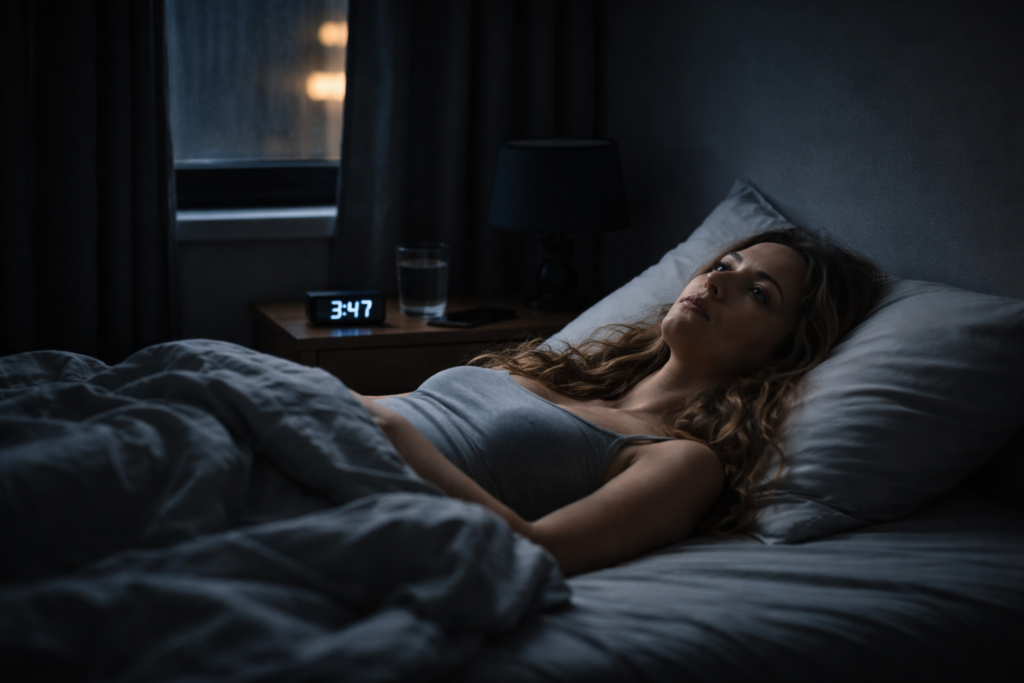
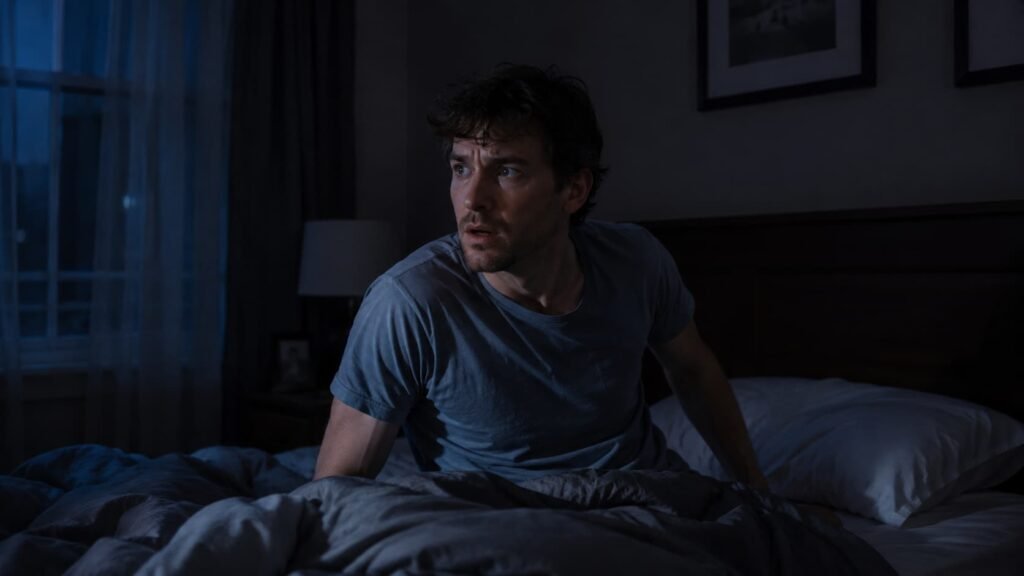
Sleep apnea and anxiety often occur together, but the relationship is not simple. Obstructive sleep apnea (OSA) repeatedly narrows or blocks the airway during sleep. The resulting sleep fragmentation, breathing distress, and drops in oxygen may produce symptoms that feel like anxiety, including a racing heart, abrupt awakenings, poor concentration, and a sense of panic. At the same time, anxiety can make sleep disruption feel more intense and can complicate treatment.
Research supports an association between OSA and anxiety symptoms, but it does not prove that sleep apnea is the cause of every person’s anxiety. A proper evaluation matters because anxiety disorders, insomnia, medication effects, and several medical conditions can produce overlapping symptoms.
Can sleep apnea cause anxiety?
It may contribute to anxiety symptoms in some people. A systematic review and meta-analysis of 73 studies estimated that anxiety symptoms were present in about 32% of people with OSA. However, the studies varied considerably, and an association alone cannot establish which condition came first.
Several mechanisms could help explain the overlap:
- Repeated arousals: The brain briefly wakes the body to restore airflow. These arousals may occur without a clear memory of waking, but they still disrupt restorative sleep.
- Fight-or-flight activation: Breathing obstruction can activate the sympathetic nervous system, increasing heart rate and alertness.
- Intermittent low oxygen: Repeated oxygen changes may affect mood, attention, and stress regulation, although individual responses differ.
- Chronic sleep loss: Poor sleep can reduce emotional resilience and make worry, irritability, and physical anxiety sensations harder to manage.
- Distressing awakenings: Waking while choking, gasping, or short of breath can feel similar to a nocturnal panic attack.
These mechanisms are biologically plausible, but they do not mean that OSA is the only explanation for anxiety. Both conditions should be assessed on their own merits.
Signs that sleep apnea may be part of the problem
Anxiety by itself does not diagnose sleep apnea. OSA becomes more likely when anxiety-like symptoms occur alongside recognizable sleep-related breathing signs.
Common warning signs include:
- Loud, frequent snoring
- Breathing pauses witnessed by another person
- Waking while gasping, choking, or short of breath
- Morning headaches or a dry mouth
- Unrefreshing sleep despite spending enough time in bed
- Excessive daytime sleepiness, fatigue, or concentration problems
- Frequent nighttime urination
- High blood pressure, especially when difficult to control
Not everyone with OSA snores, and some people primarily report fatigue, insomnia, or mood symptoms. Women, older adults, and people without obesity can also have sleep apnea. Symptoms and risk factors can guide testing, but they cannot confirm or exclude the condition.
Sleep apnea or a nocturnal panic attack?
Both can cause a sudden awakening with a pounding heart, sweating, chest discomfort, or shortness of breath. The pattern around the event offers useful clues.
A breathing event related to OSA is more likely when someone else notices snoring or pauses in breathing, when episodes recur throughout the night, or when daytime sleepiness and morning headaches are also present. A nocturnal panic attack may occur without snoring or witnessed breathing pauses and may be accompanied by panic attacks or persistent fear during the day.
The two can coexist. A sleep study can detect breathing events, while a clinician or mental health professional can evaluate panic and anxiety symptoms. Do not rely on a consumer sleep tracker to make either diagnosis.
Does anxiety cause sleep apnea?
Anxiety is not considered a direct cause of obstructive sleep apnea. OSA occurs when the upper airway repeatedly becomes too narrow or collapses during sleep. Anatomy, body weight, age, alcohol, sedating medicines, nasal obstruction, and other factors can influence that process.
Anxiety can still worsen the overall sleep problem. It may make it harder to fall back asleep after an apnea-related awakening, increase attention to physical sensations, or reduce tolerance of a CPAP mask. Treating anxiety can therefore remain important even when OSA is also present.
Will treating sleep apnea reduce anxiety?
Treating OSA reliably improves breathing during sleep when the treatment is effective and used consistently. The effect on anxiety is less predictable.
A systematic review of positive airway pressure studies found that anxiety and depression scores often improved from before to after treatment, but improvements were not consistently greater than those seen with sham treatment or dental appliances. A randomized trial in adults with coronary artery disease and nonsleepy OSA also did not find a clear anxiety benefit from CPAP in its main analysis.
The practical conclusion is that OSA treatment should not be presented as a guaranteed cure for anxiety. Some people may feel calmer as sleep and breathing improve, while others need separate treatment for an anxiety disorder, panic attacks, insomnia, or another condition.
How sleep apnea is checked
A clinician will review symptoms, medical history, medicines, and risk factors. Diagnosis generally requires objective testing rather than a symptom checklist.
- Home sleep apnea test: Appropriate for some adults with a higher likelihood of uncomplicated moderate-to-severe OSA.
- In-lab polysomnography: Records sleep, breathing, oxygen, heart activity, and other signals. It may be preferred when another sleep disorder or certain medical conditions are possible.
If a home test is negative or unclear but symptoms remain concerning, follow up with the ordering clinician. A negative home test does not always settle the question.
What to do next
- Record the pattern for one to two weeks. Note snoring, gasping, awakenings, morning symptoms, daytime sleepiness, alcohol use, and medication timing.
- Ask a bed partner what they observe. Witnessed breathing pauses are important information.
- Discuss testing with a healthcare professional. This is especially important when symptoms are frequent or daytime alertness is impaired.
- Address anxiety directly. Do not postpone mental health care while waiting for a sleep evaluation. Evidence-based options may include cognitive behavioral therapy and, when appropriate, medication prescribed by a clinician.
- Avoid driving when dangerously sleepy. Sleepiness related to untreated OSA can increase crash risk.
When to seek urgent care
Call emergency services for severe or persistent breathing difficulty, fainting, new weakness, blue or gray lips, or chest pain that could represent a medical emergency. New suicidal thoughts or an inability to stay safe also require immediate help through emergency services or the 988 Suicide & Crisis Lifeline in the United States.
Frequently asked questions
Can sleep apnea feel like anxiety in the morning?
Yes. Fragmented sleep and repeated breathing events can be followed by a racing heart, headache, fatigue, irritability, or a tense feeling on waking. These symptoms are not specific to OSA, so recurring symptoms should be evaluated rather than self-diagnosed.
Can sleep apnea cause panic attacks?
OSA can cause abrupt, frightening awakenings that resemble panic. Evidence does not show that every such episode is a panic attack or that OSA is the sole cause of panic disorder. Both sleep-related breathing and anxiety should be considered.
Can a smartwatch diagnose sleep apnea?
No. Wearables may identify patterns worth discussing with a clinician, but they do not replace a validated home sleep apnea test or an in-lab sleep study.
Should I try CPAP just to see whether my anxiety improves?
CPAP should be prescribed and adjusted for diagnosed sleep apnea. Anxiety improvement is possible but not guaranteed, and persistent anxiety deserves its own evaluation.
Bottom line
Sleep apnea can plausibly contribute to anxiety-like symptoms, and anxiety symptoms are common among people with OSA. The overlap is real, but it is not proof that one condition caused the other. Look for breathing-related warning signs, obtain appropriate sleep testing, and treat persistent anxiety directly rather than assuming that one intervention will solve both problems.
Sources
- National Heart, Lung, and Blood Institute: Sleep Apnea
- Garbarino et al. Association of Anxiety and Depression in Obstructive Sleep Apnea Patients: A Systematic Review and Meta-Analysis
- Gupta and Simpson. Obstructive Sleep Apnea and Psychiatric Disorders: A Systematic Review
- Povitz et al. Positive Airway Pressure and Depression, Anxiety, and Other Subjective Symptoms: Systematic Review and Meta-Analysis
- Thunström et al. CPAP Treatment and Anxiety in the RICCADSA Trial
This article is for general educational purposes and is not a diagnosis or a substitute for care from a qualified healthcare professional.
Related sleep guides
- Best sleep positions for sleep apnea
- Night sweats and sleep apnea
- Why you may wake with a racing heart
- Common causes of restless sleep
This article is for informational purposes only and does not constitute medical advice. Always consult a qualified healthcare professional before making changes to your health routine.