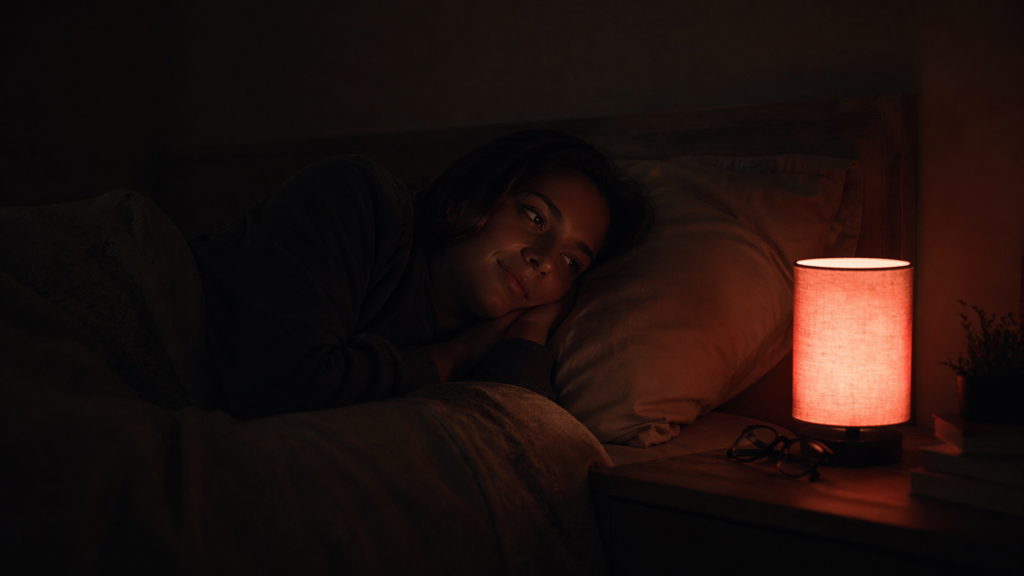
does red light help you sleep? I asked myself the same thing about six months ago when I swapped my bedside lamp to a warm red bulb — not because I’d done any research, honestly because it looked nice and someone on the internet said it was better for sleep and I was at the point where I would have tried literally anything.
did it help? maybe. I genuinely wasn’t sure. the problem with making one change at a time is that you can never fully tell what’s doing the work — the lamp, or the fact that you went to bed twenty minutes earlier that week, or the thing you stopped eating at 9pm, or just the placebo effect of feeling like you’re doing something about the problem.
so I went and actually read the research. and what I found was more nuanced than the TikTok version of this topic, which is either “red light is magic” or “it’s all a scam.” the answer is somewhere in the middle, and it actually matters which kind of red light you’re using and when.
here’s what I found — across 5 things that actually matter.
1. why light matters for sleep at all. the short version.
your brain decides when to start producing melatonin — the hormone that signals your body it’s time to sleep — based largely on light. specifically, it’s looking at the wavelength and intensity of the light hitting your retina. in evolutionary terms, your brain learned to read the sun: bright, blue-toned light means daytime, dim and warm means evening, darkness means sleep.
the problem is that modern lighting — phones, laptops, overhead LEDs, most artificial bulbs — sits in the blue-white part of the spectrum. it reads as “daytime” to your brain even at 10pm. so your melatonin production gets delayed, you don’t feel properly tired when you should, and the whole process of falling asleep takes longer than it needs to.
this is why falling asleep takes so long for a lot of people — the light environment they’re in before bed is actively working against the biological process that needs to happen. the nervous system can’t complete its wind-down because the signals it’s receiving say the day isn’t over yet.
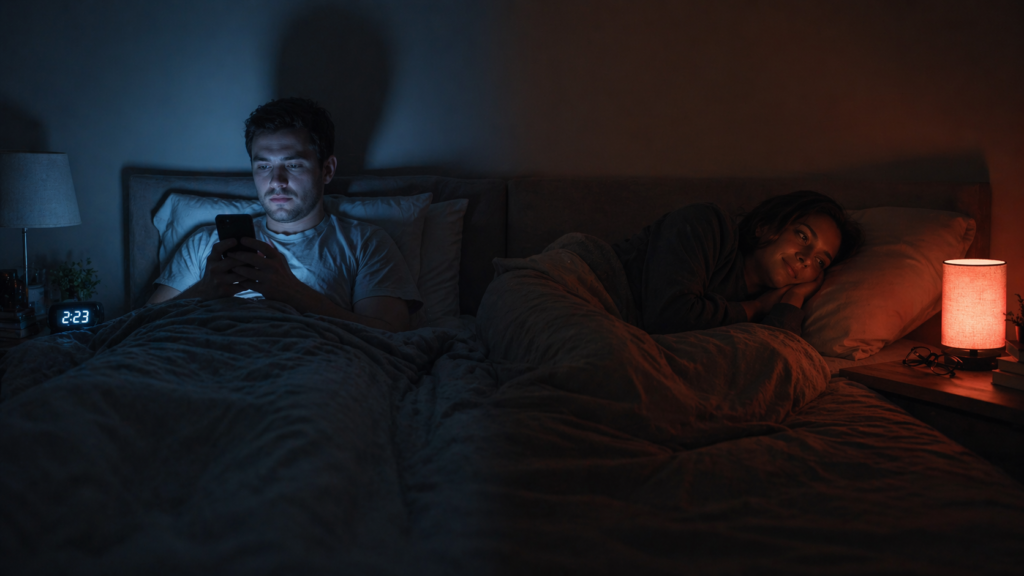
red light sits at the opposite end of the visible spectrum. it has a long wavelength and relatively low intensity. and crucially, it has minimal effect on melatonin suppression compared to blue and white light. your brain, at a biological level, doesn’t read red light as “daytime.” this is the core reason people ask does red light help you sleep — and why the answer starts here, with what your brain is actually responding to.
2. does red light help you sleep? what the research actually shows.
there are two separate things people mean when they say “red light for sleep” and it’s worth keeping them distinct, because the evidence for each is quite different.
the first is ambient red light — using red-toned bulbs or lamp covers in your bedroom in the evening instead of regular white lighting. the logic here is basically light hygiene: if you reduce blue light exposure before bed, you remove a barrier to melatonin production and your body can do what it’s trying to do. this isn’t really controversial. the evidence that blue light suppresses melatonin is solid and well-replicated. removing that suppression by switching to red-wavelength ambient light makes mechanistic sense, and it’s low-risk enough that it’s worth trying.
the second is red light therapy — specific devices that emit near-infrared or red wavelength light at a therapeutic intensity, usually used for 10 to 20 minutes before bed. this is a different thing entirely. a 2012 study published in the Journal of Athletic Training looked at female basketball players who underwent red light therapy and found improvements in sleep quality and melatonin levels compared to a control group. the sample was small — 20 athletes — and the results were promising but not conclusive. a handful of other small studies have suggested benefits for sleep latency and sleep quality, but the research base is still limited. according to the Sleep Foundation’s review of red light and sleep, the existing evidence is encouraging but not yet strong enough to make definitive recommendations.
the honest summary: ambient red light in the evening has solid indirect evidence behind it. red light therapy devices have interesting early findings but not enough large, well-controlled trials. so does red light help you sleep? the careful answer is: it removes a barrier, and in some studies it does more than that — but the evidence isn’t settled enough to make sweeping claims.
3. the colour temperature thing. this is the part most people skip.
not all “warm” light is actually red light. this trips people up.
colour temperature is measured in Kelvin. regular daylight is around 5000–6500K — cool, blue-toned. a standard “warm white” bulb is around 2700–3000K — still white, just with more yellow in it. actual red-toned light is getting down toward 1800–2200K or lower. candle flame is about 1800K, for reference.
if you’ve switched to a “warm white” LED and called it red light, you’ve made a real improvement but you’re not getting the full effect. the meaningful shift in terms of melatonin suppression happens when you get into genuinely warm, low-Kelvin territory — and ideally you combine that with keeping the light dim, not just warm.
brightness matters as much as colour. even a red-toned light at high brightness can have some suppressive effect on melatonin. the goal in the evening is dim and warm, not just warm. a bright red bulb isn’t automatically better than a dim warm-white bulb. you want both.
4. should you actually sleep with red light on?
this is a different question from using red light before bed, and the answer is different too.
sleeping in complete darkness is generally better for sleep quality than sleeping with any light on. your melatonin production peaks during the night and even low-level light exposure during sleep can suppress it and affect sleep architecture — the way you cycle through sleep stages. deep sleep in particular is sensitive to light disturbance in ways you might not consciously register as waking up.
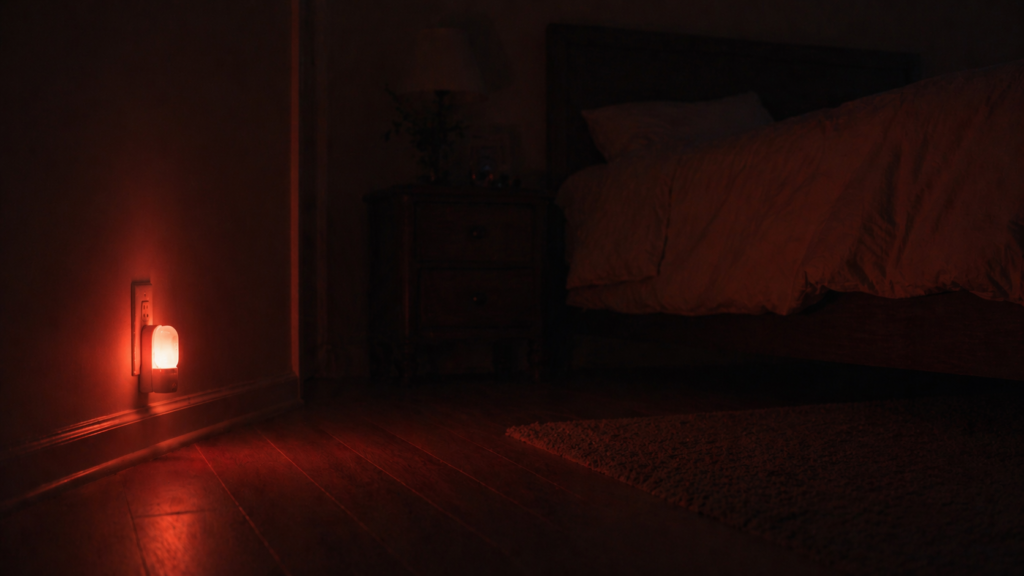
if you need some light — because you have young children, or you get up in the night, or complete darkness causes anxiety — red is genuinely the least disruptive colour. a very dim red night light will interfere less with melatonin and sleep architecture than a white or blue one. but “least disruptive” isn’t the same as “good.” darkness is still better than any light for sleep quality, red included.
the practical answer: use red or very warm light in the one to two hours before bed. sleep in darkness. if you must have some light during sleep, keep it dim and red, but don’t expect it to actively improve your sleep the way darkness would.
5. what colour light is actually best for sleep — and what to do tonight.
if you’re optimising your light environment for sleep, the general hierarchy looks like this:
complete darkness during sleep is the gold standard. before bed, red and deep amber tones (under 2200K, low brightness) are least disruptive to melatonin. warm white (2700–3000K, dimmed) is better than bright white but not as good as genuinely warm red tones. cool white and blue-toned light (4000K+) is the most disruptive and should be avoided in the last two hours before sleep.
screens are their own category. the blue light from phones and laptops is concentrated and close to your eyes, which makes it more suppressive than ambient room lighting of the same colour. using your phone in a dark room is particularly bad — your pupils dilate in the dark, letting in more of that blue wavelength light. if you’re going to use a screen before bed, at minimum use night mode or a blue light filter, and try to have some ambient light in the room. but the research on restless sleep is fairly consistent that screen use in the hour before bed contributes meaningfully to sleep disruption regardless of what filter you have on.
if you’re starting from scratch: turn off overhead lights at 9pm and switch to a single warm lamp. blackout curtains if street lights are an issue. phone face-down on the nightstand. none of these require buying anything new. and resetting your circadian rhythm through light management is one of the more evidence-based sleep interventions available — which makes it worth taking seriously even if the specific “red light therapy” piece is still developing.
so, does red light help you sleep? the honest answer.
yes — with caveats.
ambient red light in the evening helps by not suppressing melatonin the way blue and white light does. it removes a barrier rather than actively improving sleep — but removing the barrier is genuinely useful if you’re currently sitting under bright overhead lighting until 10pm wondering why you’re not tired.
red light therapy devices have promising early research behind them but not enough large studies to make confident recommendations. they’re not harmful. they might help. the evidence base isn’t there yet to say “definitely do this.”
sleeping with red light on is better than sleeping with white light on, but worse than sleeping in darkness. if you have the option, go for darkness.
the most important thing when asking does red light help you sleep is to separate the question into two parts: does it avoid making things worse? yes, clearly. does it actively improve sleep beyond that? maybe, but the research isn’t settled. start with the light hygiene basics — that part has the strongest evidence and costs nothing.
the red bulb by my bed isn’t magic. but I’m fairly confident it’s not nothing, either.
This article is for informational purposes only and does not constitute medical advice. Always consult a qualified healthcare professional before making changes to your health routine.